
AiDevelopment
Why Zero Border-Radius, Spring Easing, and IBM Plex Mono Changed How My Stores Convert
Design conversations usually stop at "it looks nice." This one doesn't. Here's what happened to trust signals, time-on-page, and buyer confidence when I moved specific EcomChief stores away from default Shopify theme...
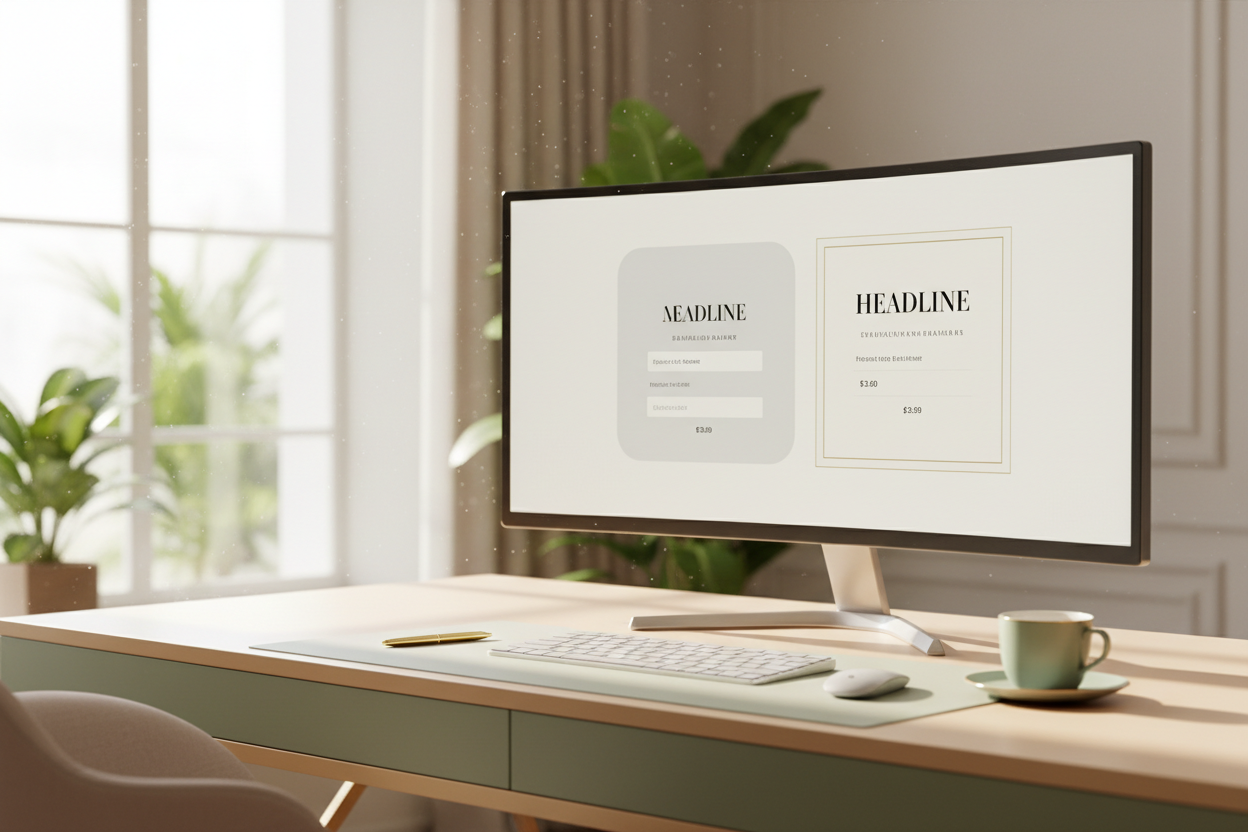
Quick Answer: Yes, specific Shopify design choices measurably affect buyer trust and behavior, even though isolating a single design element's exact revenue contribution in a live store is genuinely difficult. Removing default border-radius and drop shadows, replacing generic ease-out animation with a deliberate spring curve, and pairing an editorial serif with a monospace UI font are the three changes I made across EcomChief's stores that correlate most clearly with longer time-on-page and stronger buyer confidence signals in post-purchase feedback. This post explains the reasoning behind each one and what I actually observed, without overstating a causal claim the data can't fully support.
I want to open with an honest caveat, because most "design affects conversion" content overstates its case. I don't have a controlled A/B test proving that zero border-radius alone increased EcomChief's conversion rate by some clean percentage — running that kind of isolated test on a live, multi-variable business is harder than blog posts pretend it is. What I do have is direct before-and-after experience across specific stores in the catalog, buyer feedback that consistently references trust and "not looking like a template," and enough behavioral signal in Search Console and heatmap data to be confident these choices matter, even if I can't hand you a spreadsheet with a precise dollar figure attached to each one. This post is the honest version of that evidence — what changed, what I observed, and why I believe the reasoning holds even without a lab-clean experiment behind it.

Does Website Design Actually Affect Conversion Rate — Setting the Honest Frame
Key Takeaway: Design affects conversion rate primarily through trust signaling and cognitive ease, not through any single "magic" element — the mechanism is buyers deciding faster whether a store is credible, not any one visual trick directly triggering a purchase.
The honest mechanism behind design affecting sales isn't magic — it's speed of trust formation. A visitor forms an impression of whether a site is credible within seconds, well before they've read a single word of copy or checked a single review. That snap judgment doesn't determine the sale by itself, but it determines whether the visitor sticks around long enough for your copy, your product, and your pricing to get a fair hearing. A site that reads as generic or templated raises a small, often unconscious doubt — "is this a real business?" — that copy alone has to work harder to overcome. A site that reads as deliberate and considered removes that doubt before the buyer even notices it was there.
This is why isolating one design element's revenue contribution is genuinely hard — the effect isn't "this button color converts 12% better," it's "this whole system either builds or erodes trust in the first five seconds," and trust doesn't show up as a single clean line item in analytics. It shows up as longer time-on-page, lower bounce rate on category pages, and — the signal I actually weight most heavily — what buyers say unprompted in post-purchase feedback. Enough EcomChief buyers have specifically mentioned that the store "didn't look like every other dropshipping template" that I take it as a real signal, even without a controlled experiment behind it.
What Design Elements Increase Ecommerce Sales — The Three Changes I Actually Made
Key Takeaway: The three specific design changes applied across EcomChief's stores — removing border-radius, replacing default easing with a spring curve, and pairing serif headlines with monospace UI elements — were each chosen to reduce a specific trust or clarity gap, not applied as decoration.
Zero border-radius, everywhere. Rounded corners are the single most common default in Shopify themes — soft, friendly, and completely undifferentiated because every theme uses some version of it. Removing rounded corners entirely and replacing them with sharp edges and hairline borders does something specific: it borrows the visual grammar of print, editorial, and financial media — categories that already signal precision and seriousness — rather than the visual grammar of consumer apps, which signals casual and disposable. For stores where the buyer needs to feel confidence in a higher-consideration purchase (a ready-made business, a premium product), that shift in register matters.
Spring easing instead of default ease-out. Almost every Shopify theme animation uses a flat ease-out curve — functional, invisible, forgettable. Switching every transition and scroll-reveal to a spring curve with a slight overshoot gives every interaction a tactile, physical quality. Visitors don't consciously register "that animation had a nice spring to it," but they register the aggregate feeling of a site that behaves with intention rather than mechanically. I detailed the exact curve values in our post on designing the Bloomberg terminal aesthetic — this post is about why that choice matters for conversion specifically, not just aesthetics.
Serif headlines paired with monospace UI type. Most Shopify stores use one sans-serif font family for everything. Pairing an editorial serif for headlines with a monospace font for buttons, labels, and data creates immediate visual hierarchy and signals two things simultaneously — warmth and credibility from the serif, precision and structure from the monospace. That dual signal does real work in categories where buyers need to feel both "this is trustworthy" and "this is legitimate" at the same time, which describes almost every higher-consideration ecommerce purchase.

Is a Custom Shopify Theme Worth It for Conversions — The Real Cost-Benefit
Key Takeaway: A custom Shopify theme is worth the investment for conversion purposes specifically when the product or business being sold requires a higher level of buyer trust than a default theme can signal — for lower-consideration impulse products, the ROI case is weaker.
I want to give you a genuinely balanced answer here rather than a blanket "yes, always invest in custom design," because that answer isn't true for every business model. If you're selling a low-cost impulse product where the purchase decision takes under thirty seconds, a clean default theme with fast load times will often outperform an elaborate custom design — speed and simplicity win in that context, and over-designing can actually slow the path to purchase.
Where custom design earns its cost is in higher-consideration purchases — anything where the buyer is making a decision that requires trust to be established deliberately rather than assumed instantly. A ready-made business purchase, a premium service, a considered product in a competitive category — these are exactly the situations where a buyer is actively looking for reasons to trust or distrust you, and a generic-looking store gives them a reason to hesitate. This is the calculation behind why every store in EcomChief's catalog is built to this design standard — the businesses we sell are, almost by definition, higher-consideration purchases, which is exactly the category where the design investment pays back. I covered the actual build cost and time investment required to reach this standard in our post on building a complete Shopify theme without coding.
The Signal I Trust Most — What Buyers Actually Say
Key Takeaway: The strongest evidence that design choices affect buyer confidence isn't analytics — it's the unprompted language buyers use in post-purchase feedback, which consistently references trust, credibility, and not feeling like a generic template.
Analytics tell you what happened. They rarely tell you why with any confidence, especially in a business with as many moving variables as a solo operation running multiple stores, multiple traffic sources, and constant iteration. The evidence I actually weight most heavily is qualitative — what buyers say without being prompted to say it. Across handover conversations and support threads, a recurring pattern shows up: buyers specifically mentioning that the store they purchased didn't look like "every other dropshipping template" they'd seen while researching, and that this specifically increased their confidence before purchasing.
That's not a controlled experiment. It's also not nothing — when the same unprompted language shows up repeatedly across independent buyers who've never spoken to each other, it's a genuine signal about what's driving the decision, even without a p-value attached to it. This is the same reasoning behind EcomChief's handover process being built from real buyer questions rather than assumptions — the qualitative pattern across many individual data points is often more trustworthy than a single clean metric that can't account for everything else happening in the business at the same time.
Shopify CRO Design Tips — Applying This Without a Four-Month Build
Key Takeaway: You don't need a from-scratch custom theme to apply the conversion-relevant reasoning in this post — auditing your existing store for default rounded corners, generic easing, and single-font monotony, then deliberately overriding each one, captures most of the benefit at a fraction of the effort.
If a full custom rebuild isn't realistic for you right now, the good news is that the specific changes described in this post don't require one. Most Shopify themes allow CSS overrides through the theme editor's custom CSS section. Setting border-radius to 0px globally, adjusting your button and link transitions to a spring-style cubic-bezier curve, and adding one deliberate secondary typeface for headlines are all achievable in an afternoon on an existing theme, without touching the underlying Liquid architecture.
The bigger investment — and the one that's harder to retrofit — is the underlying section architecture and content structure, which is where a genuinely custom build like the ones I described in our posts on building 24 custom Shopify sections and directing Claude as a senior developer earns its cost over a simple CSS override. If you want the full system already built rather than retrofitted, that's exactly what every store in EcomChief's catalog gives you from day one — the design reasoning in this post applied consistently across every page, not just patched onto an existing template.

Own a Store Built With Conversion-Grade Design From Day One
Key Takeaway: Every store in EcomChief's catalog applies the design reasoning in this post — zero border-radius, deliberate motion, considered typography — consistently across every page, not just the homepage.
The stores in EcomChief's catalog are built using the exact method described in this post. Not templated. Not assembled from a page builder. Custom sections, locked design systems, production-ready Liquid — the same standard I hold my own theme to. If you want to own a store built this way without spending months developing the method yourself, this is where to start.
The Bottom Line
Key Takeaway: Shopify design choices affect conversion primarily through trust and cognitive ease, not through any single magic element — the honest evidence is qualitative and behavioral rather than a clean A/B-tested percentage, but it's real enough that every EcomChief store is held to this design standard deliberately.
I'd rather give you an honest, partially-qualitative case than a confident, oversimplified one. Removing default rounded corners, choosing a deliberate motion curve, and pairing type families with intention are not magic conversion levers — they're trust-building decisions that compound with everything else a store does right, or fail to compound if the rest of the store undermines them. The evidence I have — buyer language, behavioral signals, direct before-and-after experience across EcomChief's own catalog — points consistently in the same direction: design that signals deliberate care reduces the hesitation buyers bring to a higher-consideration purchase. That's the honest claim, and it's the one every store in EcomChief's catalog is built around.
Helpful EcomChief Resources
Key Takeaway: These links connect this post to the full design and development series behind EcomChief's stores, and to the catalog itself for buyers evaluating the design standard directly.
Here are useful links to continue your research:
- Browse All Ready-Made Businesses
- Ready-Made Digital Agency Businesses
- Ready-Made Dropshipping & Ecommerce Stores
- Ready-Made Affiliate Sites
- Ready-Made Apps & SaaS Starters
- What's Included in Every Sale
- The Handover Process — Step by Step
- Free EcomChief Tools
- Talk to EcomChief Directly
- How I Designed a Bloomberg Terminal Aesthetic for a Shopify Store
- I Built 24 Custom Shopify Sections With No Coding Background
- I Built a Complete Shopify Theme Without Writing a Single Line of Code
- Which Shopify Store Niches Make the Most Money?
If you want to see this design reasoning applied to a live, purchasable store rather than described in the abstract, browse EcomChief's full catalog and check the design consistency across every page — collection, product, and cart, not just the homepage.
Related reading
All articles


Free Online Business Calculators
Estimate costs, profits, ROI, affiliate earnings, and business value before you spend money.