
Marketing
Gaming Dropshipping in 2026: Products, Suppliers and Store Setup
A practical guide to gaming dropshipping in 2026: product selection, supplier checks, compatibility risks, unit economics, store positioning, and a 30-day launch sequence.
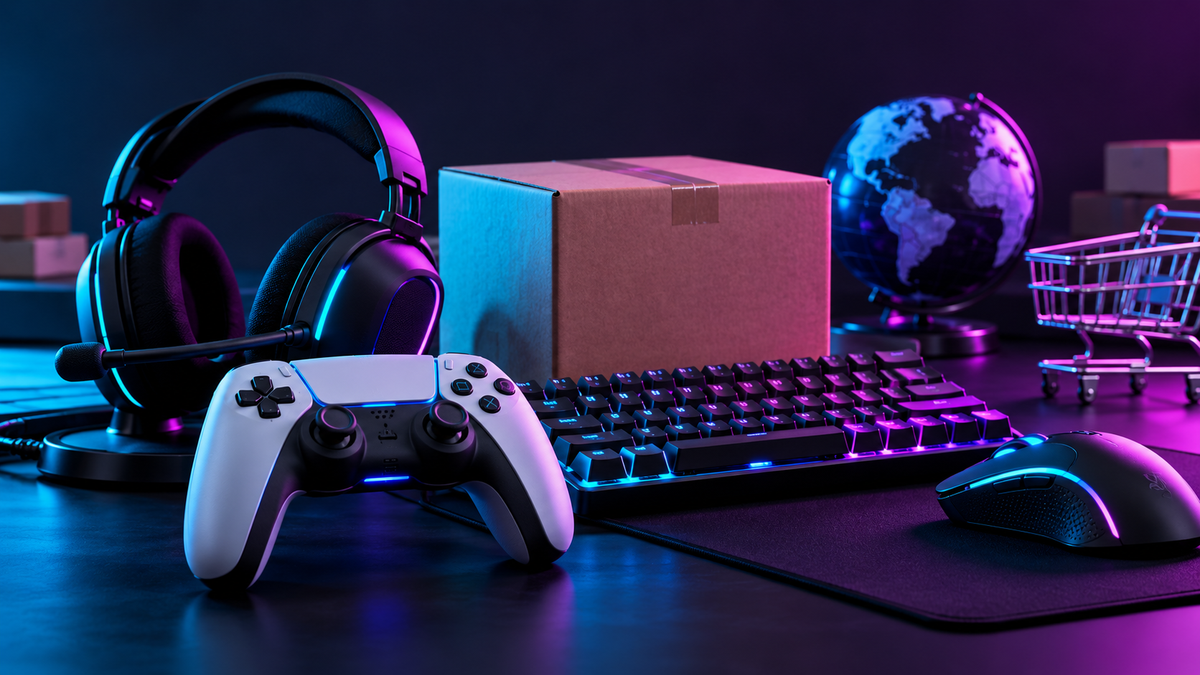
Gaming dropshipping can work in 2026, but the niche is not simply “add gaming products and run ads.” A viable store needs a defined gamer audience, products with manageable compatibility and return risk, suppliers you have tested, and enough margin for shipping, refunds, payment fees and customer acquisition. Start with a narrow accessory angle, validate the supplier and the numbers, then expand from real order data.
What This Means for You
If you are considering gaming dropshipping, the opportunity is less about finding one supposedly “winning” gadget and more about building a reliable retail system around gamers. The store is the storefront; the operating work is product selection, supplier management, pricing, content, customer support and marketing.
Shopify describes dropshipping as a fulfillment model in which the seller does not hold the inventory and a supplier ships orders directly to customers. That can reduce the need to buy stock upfront, but the merchant still owns the customer relationship. Shopify’s current guidance also recommends checking delivery speed, inventory reliability, returns and supplier performance before committing to a supplier. Shopify’s 2026 dropshipping guide is a useful primary reference for that operating model.
For gaming products, those checks matter because customers often care about compatibility, feel, latency, platform support, dimensions, connectivity and build quality. A vague listing for a decorative item may create a minor complaint; a vague listing for a controller, headset or charging accessory can create a return.
How Gaming Dropshipping Works
A gaming dropshipping store follows the same basic order flow as other dropshipping businesses:
- You list gaming products on your ecommerce store.
- A customer places an order and pays your store.
- The order is sent to, or placed with, your supplier.
- You pay the supplier’s product and shipping charges.
- The supplier packs and ships the order to the customer.
- You remain responsible for the customer experience, including product questions, tracking, refunds and disputes.
Shopify currently supports several sourcing approaches, including dropshipping apps, supplier relationships and Shopify’s own sourcing ecosystem. The specific method matters less than whether you can verify the product, stock information, delivery process and return path. Shopify’s explanation of the dropshipping model makes the same distinction: fulfillment can be outsourced, but the seller remains the point of contact for the buyer.
That is why “zero inventory” should not be confused with “zero responsibility.” Automation can reduce repetitive tasks, but it cannot decide whether a supplier’s latest batch is acceptable, whether a product description is accurate, or whether a customer deserves a replacement.

What Gaming Products Make Sense to Test?
Shopify’s current product-sourcing guidance recommends choosing products with a clear customer use case rather than building a random catalog. That principle is especially useful in gaming. A focused store is easier to position, easier to explain and easier to create content for than a site that sells every possible gadget.
For a first test, look for accessories where you can verify the specification and demonstrate the benefit clearly. Examples can include controller accessories, desk mats, headset stands, cable-management products, handheld cases, keyboard accessories, mouse accessories, storage solutions and setup décor. More complex electronics may still be viable, but they deserve stricter testing because compatibility, faults and warranty expectations can increase support work.
| Product type | Why it can fit a gaming store | Main check before listing |
|---|---|---|
| Desk and setup accessories | Easy to merchandise around a visual gaming setup | Dimensions, materials and actual finish |
| Controller accessories | Clear use case and strong audience relevance | Exact controller/platform compatibility |
| Cases, stands and storage | Practical add-on products for specific devices | Model fit, measurements and packaging quality |
| Keyboard and mouse accessories | Useful for PC-gaming and desk-setup positioning | Size, connector or fit details where applicable |
| Headset and audio accessories | Natural fit for streaming and gaming setups | Connector, platform and microphone specifications |
| Complex electronic devices | Can create higher perceived value | Sample testing, warranty path, compliance, compatibility and defect handling |
A useful rule: do not list a product until you can explain exactly who it is for, what it works with, what is included in the package and what happens if it fails. Also avoid unlicensed merchandise, copied brand marks or unsupported “official” compatibility claims. A gaming audience notices technical inaccuracies quickly.
The Gaming-Specific Risks to Plan For
Gaming accessories overlap with the broader electronics category, but they create their own customer expectations. Before choosing products, plan for the following:
- Compatibility risk: a product may fit one console generation, controller revision, connector or operating system but not another.
- Specification drift: suppliers can change materials, chipsets, cables, packaging or included accessories without making the change obvious in a marketplace listing.
- Quality sensitivity: switches, buttons, hinges, connectors, microphones and wireless components can turn small defects into immediate complaints.
- Expectation gaps: product photos can make RGB lighting, materials or size look better than the delivered item. Your own sample is more reliable than a supplier image alone.
- Fast product cycles: accessories tied to a specific device can become less useful when platforms or form factors change.
- Support burden: customers may ask setup and troubleshooting questions even when your supplier handles the shipment.
EcomChief’s separate guide on how to dropship electronics covers the broader technical risks, including batteries, plugs, warranties and device compatibility. Use that guide when your gaming catalog moves beyond simple accessories into powered or wireless products.

How to Vet Gaming Dropshipping Suppliers
A supplier page is not evidence that the supplier will work for your store. Order samples and test the process. Shopify’s 2026 guidance specifically calls out delivery speed, inventory reliability, returns and performance history as supplier-selection factors. EcomChief’s supplier-vetting framework applies the same evidence-first approach in another niche.
For gaming accessories, add compatibility and specification accuracy to that checklist:
- Order the exact SKU. Do not test a similar product and assume the listed item is identical.
- Measure what arrives. Check dimensions, connectors, materials, included parts and packaging against the product page.
- Test the real use case. If a product claims compatibility with a device or platform, verify it rather than repeating the supplier’s claim.
- Run a delivery test. Record processing time, tracking quality, packaging condition and final delivery.
- Ask a fault question. Find out what evidence the supplier needs for a replacement, who pays return shipping and how long the process takes.
- Check stock behavior. Ask how inventory updates reach you and what happens if an order is placed after stock disappears.
- Keep a backup source. Do not build paid traffic around a single fragile supply path when an equivalent source can be verified.
The EcomChief Gaming Supplier Scorecard
Score each area from 0 to 2: 0 = not verified, 1 = partly verified, 2 = verified with direct evidence. This is a planning framework, not a guarantee of supplier performance.
| Check | 0 points | 1 point | 2 points |
|---|---|---|---|
| Sample quality | No sample | Photos/video only | Exact SKU tested |
| Compatibility | Unclear | Supplier claim only | Claim verified on the intended device/platform |
| Delivery | No test order | Estimate only | Tracked test completed |
| Returns and faults | No clear process | Policy exists | Cost, evidence and replacement path confirmed |
| Stock and communication | Unreliable | Manual but usable | Responsive supplier plus dependable stock updates |
A low score means you still have unanswered operational questions. A high score means the basic checks are stronger, not that future orders are risk-free. Continue monitoring real deliveries, defects, refunds and supplier response times after launch.
Work Out the Unit Economics Before You Buy Traffic
Gaming gear can look attractive when you compare only the retail price with the supplier price. That is not your real margin. Your planning model should include product cost, supplier shipping, payment fees, refund and replacement allowance, apps or tools, and customer-acquisition cost.
A simple contribution calculation is:
Contribution before fixed costs = selling price − product cost − shipping − payment fees − expected refund/replacement cost − customer-acquisition cost.
For example, imagine an accessory sells for $45. If the supplier charges $17, shipping is $5, payment-related charges are $2, you reserve $3 for expected refunds or replacements, and customer acquisition costs $12, the remaining contribution is $6 before fixed costs and taxes. These are hypothetical planning numbers, not a benchmark or an EcomChief result.
Use the EcomChief Dropshipping Profit Calculator with your own figures before spending on ads. Test an expected case, a more expensive acquisition case and a higher-refund case. If the product only works in the most optimistic scenario, improve the price, cost structure or product choice before scaling.
Mid-article next step: if you want to compare a faster starting point instead of building every page and collection from zero, you can browse EcomChief’s ready-made ecommerce and dropshipping store foundations. Treat them as starter assets, not established revenue-producing businesses; you still need to validate products, suppliers, pricing and demand.
Build the Store Around a Clear Gaming Audience
A generic “gaming store” is broad. A better merchandising decision is to choose a customer and a use case. You might build around PC desk setups, console accessories, handheld gaming travel gear, streaming setups or budget setup upgrades. The purpose is not to lock the store into one product forever; it is to give the customer a reason to understand the brand quickly.
That focus should change the way the store is built:
- Navigation: organize by use case or platform instead of a random supplier catalog.
- Product pages: put compatibility, dimensions, included parts and delivery expectations where customers can see them.
- Bundles: group genuinely complementary products rather than adding unrelated upsells.
- Content: create setup guides, comparison content, short demos and troubleshooting answers that match the products you sell.
- Creative: show the product in a believable gaming environment rather than relying only on supplier cutouts.
Shopify’s 2026 dropshipping product guide recommends using product research to inspire a focused catalog rather than treating a long supplier list as a strategy. For gaming, that means your catalog should feel curated around a gamer’s problem or setup—not like a general marketplace with a gaming label.

A 30-Day Gaming Dropshipping Launch Sequence
The objective of the first month is not to prove that the entire niche works. It is to reduce uncertainty around a small number of products, one audience and one supplier process.
- Days 1–3: choose the angle. Define the gamer, platform or setup problem you want the store to serve.
- Days 4–7: shortlist products. Pick a small group with clear specifications and a reason to exist together.
- Days 8–12: order samples. Test packaging, quality, compatibility, instructions and delivery.
- Days 13–15: model the numbers. Calculate contribution under normal, expensive-acquisition and higher-refund scenarios.
- Days 16–20: build the merchandising. Improve product pages, compatibility information, collections, FAQs and trust elements.
- Days 21–25: create traffic assets. Produce short demos, setup content, comparison angles and product-specific creative rather than generic “buy now” ads.
- Days 26–30: run a controlled test. Start small, record customer questions, delivery issues, refund signals and conversion friction, then decide what deserves more budget.
Do not use the first month to import hundreds of untested products. More SKUs create more stock changes, more descriptions to verify, more support questions and more ways for supplier data to become stale.
Build From Scratch or Start With a Ready-Made Store?
Both paths can work. The difference is where you spend your time at the beginning.
| Area | Build from scratch | Ready-made store foundation |
|---|---|---|
| Brand and layout | You design and configure it | Core structure is already prepared |
| Products and collections | You research and build them from zero | A starting catalog/structure may be included; verify the exact listing |
| Supplier setup | You source and connect suppliers yourself | Supplier direction or setup may be included; confirm what transfers |
| Launch speed | Depends on your build process | Can reduce the blank-page setup work |
| Ongoing operation | Your responsibility | Your responsibility after handover |
| Sales, traffic and profit | Not guaranteed | Not guaranteed |
EcomChief’s guide on what “supplier included” means in a ready-made dropshipping store explains this distinction in more detail. A prepared storefront can save setup time, but it does not transfer the responsibility for supplier monitoring, marketing or customer service.
If you are comparing starter assets with established ecommerce businesses, keep the distinction clear. A starter asset is a prepared foundation. An established business would require evidence of operating history, traffic, customers, revenue and other transferable business records. Do not value the two as though they are the same thing. Flippa’s current ecommerce due-diligence checklist is useful background when you are evaluating an established business acquisition rather than a starter store.
Gaming Dropshipping Checklist Before You Launch
Before you spend meaningful money on traffic, make sure you can answer these questions with evidence:
- Who is the exact gamer or setup audience for the store?
- Which 3–10 products are you testing first, and why do they belong together?
- Have you ordered the exact SKUs you plan to sell?
- Are compatibility and included parts clearly stated?
- Have you completed at least one supplier delivery test?
- Do you understand the fault, refund and replacement process?
- Can you calculate contribution after shipping, fees, refunds and acquisition cost?
- Does the store explain delivery and return expectations clearly?
- Do you have a backup plan if the supplier changes price or runs out of stock?
- Are your marketing claims based on what you actually tested?
The practical conclusion: gaming dropshipping is a retail operating model, not a shortcut around product validation. Start narrow, test the products and supplier, model your economics, and build content around a clearly defined gaming audience. Once real customer and order data show what works, expand deliberately.
If you prefer to start with the storefront structure already prepared, review EcomChief’s current ready-made ecommerce and dropshipping stores. Check each listing for the exact assets and supplier setup included, then use the EcomChief buyer FAQ to understand ownership, handover and what still remains your responsibility after purchase.
Related reading
All articles


Free Online Business Calculators
Estimate costs, profits, ROI, affiliate earnings, and business value before you spend money.