
Marketing
Online Business Marketing Tools in 2026: What You Need
A practical guide to choosing essential marketing tools, measuring performance, selecting one traffic channel, and using EcomChief’s included marketing resources effectively.
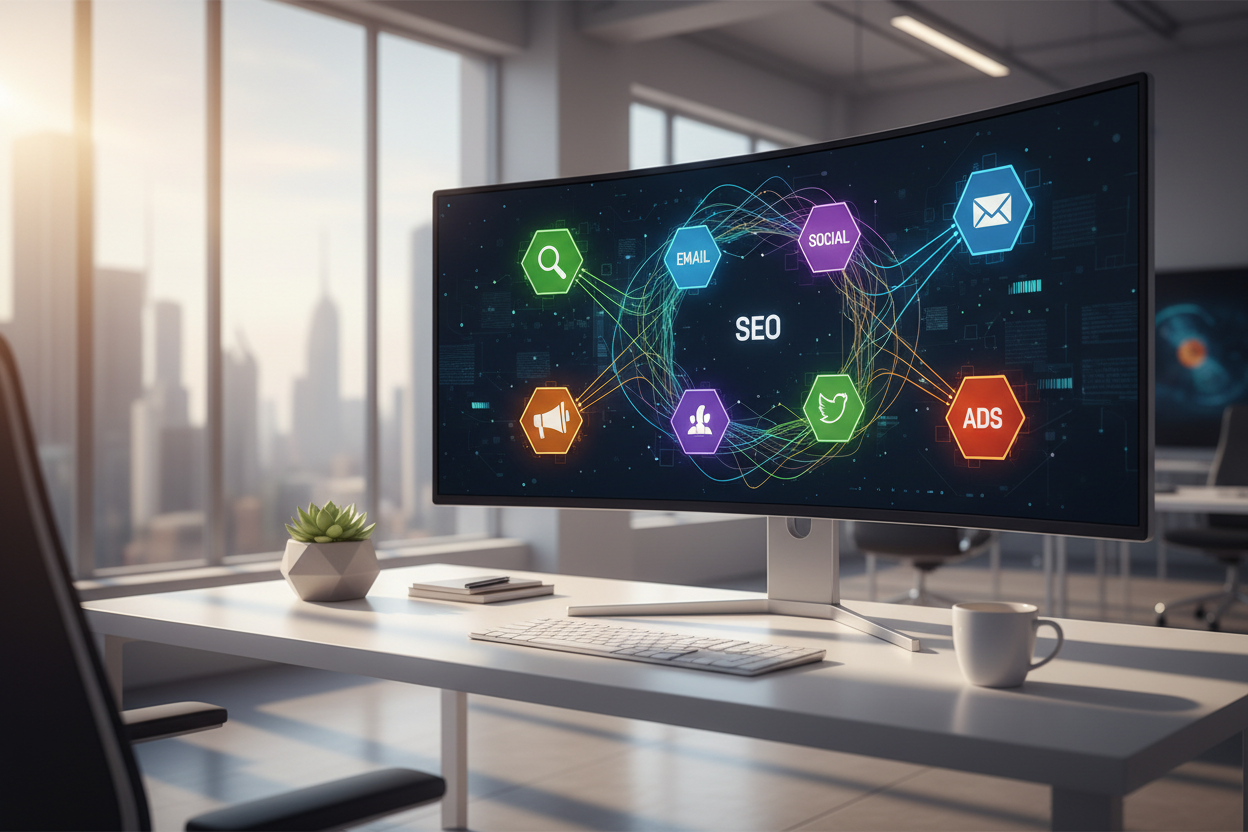
Quick Answer: online business marketing tools should help you understand customers, create useful content, attract qualified visitors, capture leads, measure results, and improve conversion. Beginners do not need every available platform. Start with analytics, one traffic channel, basic content production, email capture, and a clear testing plan. EcomChief provides launch resources and templates that reduce preparation work, but the owner must still execute and improve the marketing.
Online business marketing tools are debated constantly on Reddit, where new founders often share long software lists before they have identified their customer or generated one useful visitor. A large tool stack does not create a marketing strategy. Tools are valuable only when they help you perform a specific task, measure an important result, or remove repeated manual work. The better approach is to start with a small system: understand the audience, choose one main traffic channel, create a focused message, track what happens, and improve using evidence.

1. Build the measurement foundation before choosing more tools
Key Takeaway: Define the customer, goal, and measurement process before paying for marketing software.
Before choosing software, decide what the business needs marketing to achieve. An ecommerce store may need purchases. An affiliate website may need qualified outbound clicks. An agency may need booked calls. A SaaS-style app may need registrations or paid users.
These outcomes require different channels and different measurements. A social post receiving likes may be useful for awareness, but it does not prove that the campaign generated customers.
Your measurement foundation should include:
- A clear target customer
- One primary commercial goal
- Website analytics
- Conversion or event tracking
- Traffic-source reporting
- A simple campaign record
- A weekly review process
Common website analytics tools include Google Analytics, Shopify Analytics, Google Search Console, and behaviour tools such as Microsoft Clarity. You do not need to inspect every report daily. Focus on the measurements closest to the business goal.
| Tool category | Main purpose | Useful measurement |
|---|---|---|
| Customer research | Understand problems, language and buying reasons | Repeated needs and objections |
| Analytics | Measure traffic and website action | Qualified visits and conversions |
| SEO | Reach people searching for solutions | Impressions, clicks and enquiries |
| Content production | Create articles, graphics and videos | Engagement and assisted conversion |
| Social distribution | Build visibility and test messages | Profile visits, clicks and leads |
| Email marketing | Follow up with interested visitors | Clicks, orders and repeat action |
| Paid advertising | Test audiences and offers faster | Acquisition cost and return |
| Conversion improvement | Turn more existing visitors into action | Conversion rate and completion rate |
Plan before spending: Use EcomChief’s free online business calculators to estimate startup costs, marketing return, margins, earnings, and business value.
2. Use SEO and content tools to answer real customer questions
Key Takeaway: Search marketing works when useful pages match the specific questions and buying intentions of potential customers.
Search marketing begins with understanding what people want, not inserting the same keyword into every paragraph.
SEO tools for online business can help identify search queries, page performance, technical problems, competitor topics, and content gaps. Useful options include Google Search Console, Google Keyword Planner, Ahrefs, Semrush, and Ubersuggest.
You do not need every SEO platform. Search Console can show which queries already generate impressions and clicks. One additional research tool may be enough when you need deeper competitor or keyword analysis.
Build content around intent:
- Beginner guides for people learning the topic
- Comparison pages for people choosing between options
- Buying guides for people evaluating products or services
- Frequently asked questions for people resolving uncertainty
- Product or service pages for people ready to act
- Case studies and examples for people seeking evidence
Content marketing tools such as document editors, AI writing assistants, design platforms, and editorial calendars can make production faster. They should not replace original experience, accurate information, or useful judgement.
Every article should lead somewhere. Link naturally to a relevant collection, product, service, calculator, email signup, or buyer guide. Traffic without a next step produces limited commercial value.
At EcomChief, current website and store packages include two SEO blog posts based on the buyer’s topics. These provide a starting point, but ongoing search growth normally requires additional useful content and regular improvement.
Choose the right channel: Read the guide to the best traffic source for each ready-made business model.
3. Create social content that tests messages and builds trust
Key Takeaway: Social media tools should help you publish useful content consistently—not fill every platform with identical promotions.
Social media marketing tools can assist with design, short-form video, scheduling, caption planning, creator research, and performance reporting.
Examples include Canva for graphics, CapCut for video editing, and native scheduling tools inside platforms such as Instagram, Facebook, TikTok, Pinterest, LinkedIn, and YouTube.
Choose platforms according to the business model:
- Visual ecommerce can use demonstrations, transformations, lifestyle clips, and creator content.
- Affiliate sites can use comparisons, product explainers, and short buying guides.
- Digital agencies can publish audits, service explanations, client problems, and practical advice.
- AI agencies can demonstrate workflows, automations, and before-and-after processes.
- SaaS-style businesses can show product demos, tutorials, and use cases.
A simple content system can use four repeating themes:
- Education: Explain a problem, process, or buying decision.
- Demonstration: Show the product, service, or software in use.
- Trust: Answer objections, show processes, or explain policies.
- Offer: Present the product, service, collection, or next action.
Do not measure success using followers alone. Track profile visits, website clicks, email subscriptions, enquiries, add-to-cart activity, and orders.
For websites and stores, the current EcomChief marketing bundle includes 25 social captions, 10 Reel ideas, and an influencer outreach kit with scripts. These resources can reduce planning time, but buyers should adapt them to their niche and audience.
Build your content plan: Read the updated Instagram marketing guide for ready-made businesses.

4. Build email systems that follow up without spamming
Key Takeaway: Email marketing gives you a way to continue the conversation after a visitor leaves the website.
Email marketing software can collect subscribers, segment audiences, send campaigns, automate follow-up, and measure customer action. Common platforms include Shopify Email, Klaviyo, Mailchimp, and Brevo.
Choose a platform based on the business model and complexity. A new store may only need a welcome sequence, abandoned-cart reminders, post-purchase communication, and occasional campaigns.
A service agency may need a lead magnet, enquiry follow-up, consultation reminders, and a short educational sequence. An affiliate website may use newsletters, buying guides, product comparisons, and new-content alerts.
Useful email automations include:
- Welcome and brand introduction
- Lead-magnet delivery
- Abandoned cart or incomplete enquiry
- Post-purchase information
- Product or service education
- Review or feedback requests where appropriate
- Re-engagement for inactive subscribers
Do not buy random email lists or send unsolicited bulk messages. Build permission-based audiences and make it easy for recipients to understand why they are receiving the communication.
Track meaningful behaviour. Open rates can be affected by privacy features and should not be the only measurement. Pay closer attention to clicks, enquiries, orders, repeat action, and unsubscribe patterns.
EcomChief packages currently include email flows, campaigns, and templates for websites and stores. Buyers should connect these resources to their own email provider, update the branding, and test every link before sending.
See the complete package: Review everything included with an EcomChief website or store.
5. Use paid advertising only when the offer and tracking are ready
Key Takeaway: Paid advertising accelerates testing, but it also exposes weak offers and weak pages faster.
Paid advertising tools include platforms such as Google Ads, Meta Ads, TikTok Ads, Pinterest Ads, LinkedIn Ads, and the advertising systems inside large marketplaces.
The correct platform depends on customer intent. Search advertising can reach people already looking for a solution. Social advertising can introduce a visual product or new idea to an audience that was not actively searching.
Before launching a paid campaign, confirm:
- The target customer is defined.
- The offer is easy to understand.
- The landing page matches the advertisement.
- The website works properly on mobile.
- Shipping, pricing, and policies are visible.
- Conversion tracking has been tested.
- The product or service leaves enough margin for acquisition.
- A clear budget and stopping rule have been set.
Start with one audience, offer, landing page, and creative angle. Launching many campaigns simultaneously makes it difficult to understand what caused the result.
Measure the complete journey:
- Cost per click
- Landing-page engagement
- Add-to-cart or enquiry rate
- Checkout or booking completion
- Customer-acquisition cost
- Revenue or value generated
- Refunds, cancellations, and lead quality
- Profit after advertising
Retargeting can remind previous visitors about an offer, but it cannot repair a confusing page or unsuitable product. Improve the main customer experience before repeatedly advertising to the same audience.
The EcomChief marketing bundle currently includes Facebook, Instagram, and Google ad copy plus a 30-day traffic action plan. These are starting materials rather than live managed campaigns.
Calculate before scaling: Use the marketing ROI and ROAS calculator before increasing your advertising budget.
6. Build a lean marketing stack around one repeatable channel
Key Takeaway: The best beginner tool stack is the smallest system that creates reliable information and supports consistent action.
A lean beginner stack may contain:
- Analytics: One website analytics platform and tested conversion tracking.
- Research: Search Console, customer reviews, communities, and one keyword tool.
- Content: One writing system, one design tool, and one video editor.
- Distribution: One main traffic channel and one supporting channel.
- Email: One permission-based list and a small set of automations.
- Planning: One calendar and one weekly performance review.
A dropshipping store may begin with short-form product demonstrations supported by email capture. An affiliate website may prioritise search content supported by Pinterest or YouTube. A digital agency may rely on targeted outreach supported by proof-based content.
The purpose of the first 30 days is not to master every platform. It is to identify one customer-acquisition process that produces useful signals and can be repeated.
At EcomChief, the current website and store package includes:
- Two SEO blog posts based on your topics
- Email flows, campaigns, and templates
- Facebook, Instagram, and Google ad copy
- A 30-day daily traffic action plan
- 25 social captions and 10 Reel ideas
- An influencer outreach kit and scripts
- An AI tools and marketing growth bundle
- A Shopify merchant management guide
- Lifetime support
These materials reduce preparation. They do not guarantee rankings, traffic, advertising performance, customers, sales, leads, or profit. The owner must adapt the materials, publish them, test the audience, track the response, and improve the strategy.
Choose a business you can promote: Compare the current EcomChief ready-made business models and match the model to the marketing work you prefer.

Start With the Business and Marketing Foundation Prepared
Key Takeaway: Reduce technical setup and move sooner into audience research, traffic testing, and customer acquisition.
The stores in EcomChief's catalog are built using the exact method described in this post. Not templated. Not assembled from a page builder. Custom sections, locked design systems, production-ready — the same standard I hold my own theme to. Every store starts at $99, with an optional $148 traffic package if you want marketing support from day one. If you want to own a store built this way without spending months developing the method yourself, this is where to start.
Trust signals: 5.0/5 based on 3,979 reviews and 247+ businesses sold.
The Bottom Line
Key Takeaway: online business marketing tools work best when they support one clear customer journey and one measurable business goal.
Do not build your marketing strategy around software subscriptions. Start with the customer, offer, and outcome. Install basic analytics, choose one primary traffic source, create useful content, capture interested visitors, and review the results each week. Add paid tools only when they provide better information, reduce repeated work, or support a channel that is already producing evidence. EcomChief can provide the website foundation, initial content, email templates, advertising copy, social ideas, influencer scripts, traffic plan, and support. Those resources help you begin faster. Consistent publishing, testing, customer understanding, conversion improvement, and financial discipline determine whether the marketing becomes sustainable.
Helpful EcomChief Resources
Key Takeaway: These resources help you choose a business, calculate marketing costs, select a traffic channel, and understand what comes with your purchase.
Here are useful links:
- Browse all ready-made online businesses
- Browse ecommerce and dropshipping stores
- Browse ready-made affiliate websites
- Browse digital and AI agency businesses
- Browse ready-made apps and SaaS assets
- See the included marketing resources
- Review the order and handover process
- Use all free online business calculators
- Calculate marketing ROI and ROAS
- Estimate online business startup costs
- Read 150 online business buyer questions
- Choose the right traffic source
- Read the Instagram marketing guide
- Compare useful Shopify apps
Begin with the marketing ROI calculator, then choose the traffic channel that best matches your business model.
Related reading
All articles


Free Online Business Calculators
Estimate costs, profits, ROI, affiliate earnings, and business value before you spend money.