
BuyingGuide
Which Traffic Source Should You Use After Buying a Ready-Made Online Business?
The best first traffic source depends on what you bought. Dropshipping, affiliate, Amazon, agency, AI and SaaS businesses each need a different launch strategy.
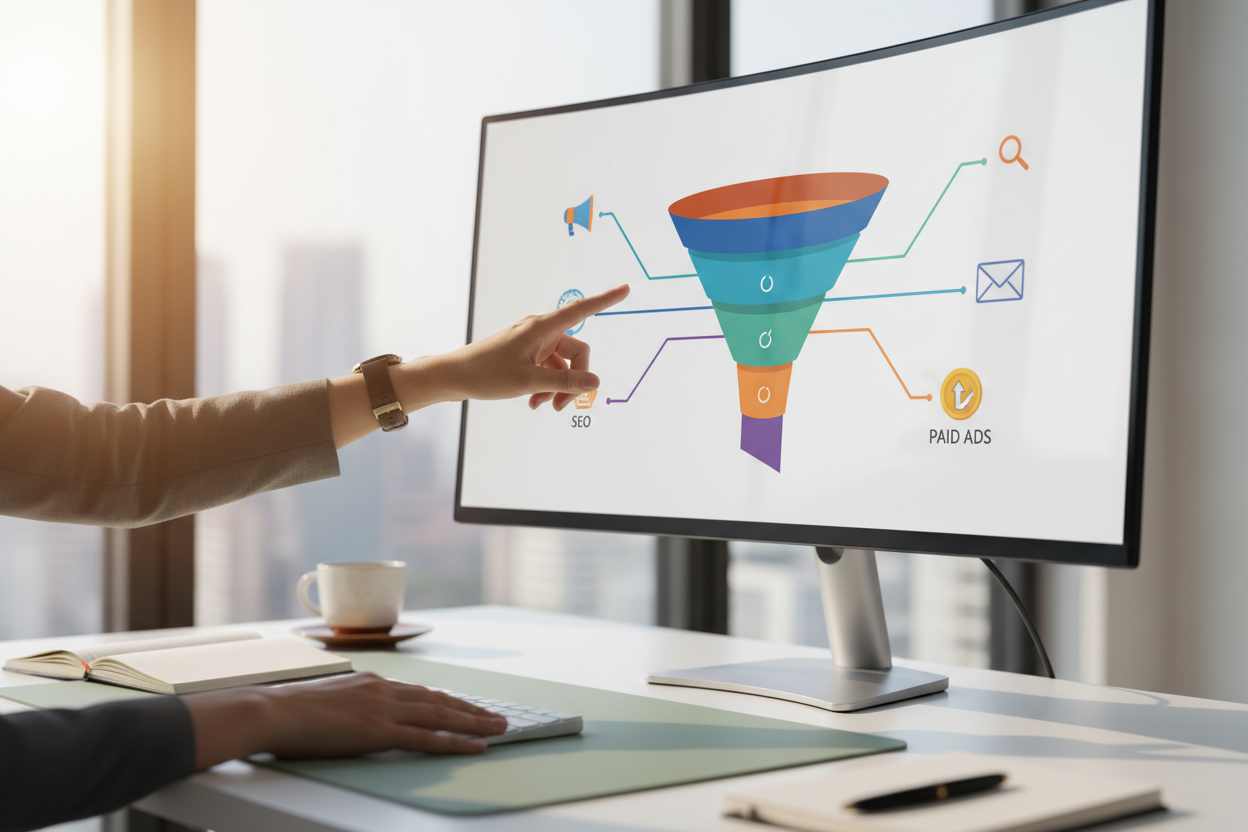
Quick Answer: Traffic for a ready-made online business should be selected according to the business model, customer intent and speed of feedback you need. Dropshipping stores usually benefit from short-form social content and controlled paid testing. Affiliate websites rely more heavily on SEO and useful content. Agencies need direct outreach, while AI and SaaS businesses often grow through demonstrations, partnerships and targeted customer acquisition. Reddit's ecommerce and entrepreneur communities regularly warn beginners against using the same marketing plan for every type of online business.
Reddit's ecommerce, affiliate marketing and entrepreneur communities see this mistake constantly: someone buys or launches a professional website and then assumes they should immediately run Facebook ads.
That advice may work for a visual consumer product. It may be completely wrong for an Amazon affiliate website, a B2B agency or a micro SaaS product.
A ready-made online business gives you the vehicle. Your traffic strategy determines where you drive it, how quickly you receive feedback and how much money you risk while testing.
The correct first traffic source depends on four questions:
- What type of business did you buy?
- Where are customers already searching for the solution?
- How quickly do you need feedback?
- Do you have more time, more money or an existing audience?
This guide explains how to market a ready-made online business without following one generic strategy for dropshipping, affiliate, Amazon, agency, AI and software businesses.
Why Every Business Model Needs a Different Traffic Plan
Key Takeaway: The best traffic source is the channel where your ideal customer already looks for that type of product, recommendation, service or software.
Every marketing channel captures a different level of customer intent.
Someone searching Google for “best standing desk for a home office” already knows what they want. That visitor may be ideal for an affiliate buying guide.
Someone scrolling Instagram may not be actively searching for a portable blender, but a strong demonstration video can create demand. That visitor may be ideal for a dropshipping store.
A business owner who needs an AI receptionist may not search for one by name. They may respond better to a personalised email showing how missed calls are costing their business leads.
This is why the same channel can produce completely different results across different models.
| Business Model | Best First Traffic Source | Strong Second Channel | Avoid Starting With |
|---|---|---|---|
| Dropshipping store | Short-form product content | Controlled Meta, TikTok or Google testing | Waiting months for SEO before testing products |
| Amazon affiliate website | SEO-led buying guides | Pinterest, YouTube or short-form content | Sending expensive ads directly to low-commission pages |
| Amazon FBA product | Amazon search and PPC | Creator content and external audiences | Broad external ads before the listing converts |
| Digital agency | Personalised direct outreach | LinkedIn content and referrals | Broad consumer social ads |
| AI agency or AI service | Demonstration-led outreach | LinkedIn, webinars and partnerships | Generic “AI can change your business” messaging |
| Micro SaaS or ready-made app | Niche outreach and product demos | Communities, partnerships and SEO | Large paid campaigns before onboarding works |
A buyer reviewing a ready-made online business for sale should therefore think about customer acquisition before choosing the model. The right website and the wrong traffic strategy can still produce poor results.

Best First Traffic Source for Dropshipping Stores
Key Takeaway: Start with short-form product demonstrations to validate the product angle, then use paid traffic only after you know which creative earns attention.
The best early traffic for a dropshipping store is usually visual, fast and measurable.
Customers often discover dropshipping products before they actively search for them. A useful, surprising or visually satisfying demonstration can create interest that did not exist a few seconds earlier.
Good starting channels include:
- Instagram Reels.
- TikTok.
- YouTube Shorts.
- Facebook Reels.
- Pinterest for products connected to fashion, beauty, gifts, decor, food, weddings or home improvement.
Create multiple angles rather than posting the same product video repeatedly.
For example:
- Show the problem before showing the product.
- Demonstrate the product in under ten seconds.
- Compare the old method with the new method.
- Show an unexpected use case.
- Answer a common objection.
- Use a customer-style unboxing or reaction.
The goal of organic content is not only free sales. It is also creative research. A video that earns stronger watch time, saves, comments or profile visits may be a better candidate for paid promotion.
When Should a Dropshipping Store Use Paid Ads?
Use paid traffic when:
- The product has enough margin to absorb customer-acquisition costs.
- The website works properly on mobile.
- The product page clearly explains the benefit.
- The shipping information is visible.
- You have at least three to five different creatives to test.
- You understand your target customer and primary buying angle.
Meta and TikTok advertising can work for visual discovery products. Google Shopping and search campaigns may be stronger when people already search for the product by name or problem.
Do not treat every dropshipping business for sale in the same way. A novelty gift, fitness accessory, chandelier and car diagnostic tool attract customers through different behaviour.
For more context, read Dropshipping in 2026: Is Buying a Ready-Made Shopify Store Worth It?
Best Traffic Strategy for Amazon Affiliate Websites
Key Takeaway: Amazon affiliate website traffic should begin with useful search-led content because affiliate visitors need a reason to trust the recommendation before clicking.
An Amazon affiliate business for sale usually earns when visitors read product content, click an affiliate link and complete a qualifying purchase on Amazon.
That makes SEO, buyer-intent content and product comparison pages the strongest long-term channels.
Useful content formats include:
- Best products for a specific customer or use case.
- Product A versus Product B comparisons.
- Gift guides.
- Product reviews.
- “What to look for” buying guides.
- Alternatives to a popular product.
- Problem-solving tutorials with relevant recommendations.
- Seasonal shopping guides.
A weak article targets a broad phrase such as “best headphones.” A stronger article may target “best noise-cancelling headphones for shared offices” because the need, customer and use case are clearer.

Can Social Media Help an Affiliate Website?
Yes, but the content should send visitors to useful articles rather than publishing only product links.
Good supporting channels include:
- Pinterest pins linking to buying guides.
- YouTube product comparisons.
- Short videos answering one product question.
- Email newsletters featuring updated guides.
- Relevant community participation without spam.
Paid advertising is often difficult for low-commission affiliate offers because the cost of a click can exceed the expected commission. Build the economics before buying traffic.
Buyers considering an affiliate marketing business for sale should read What Content Process Created This Traffic? How to Audit Affiliate SEO and Affiliate Marketing Trends 2026.
How Amazon FBA Products Receive Traffic
Key Takeaway: Amazon FBA traffic usually begins inside Amazon because shoppers already have strong purchasing intent when they search the marketplace.
An Amazon FBA business has a different traffic environment from an Amazon affiliate website.
The customer is already on Amazon and may be actively comparing products. The primary traffic sources therefore include:
- Amazon organic search.
- Sponsored Products advertising.
- Sponsored Brands where available.
- Related-product placements.
- Deals, promotions and coupons.
- Existing brand searches.
Before sending external traffic, improve the listing:
- Use clear product images.
- Strengthen the title and benefit-led bullet points.
- Answer common objections.
- Review pricing against genuine competitors.
- Confirm inventory is available.
- Make sure the listing converts reasonably before scaling promotion.
External creator content, influencer marketing, email and social media can support an FBA product. However, those channels work better when the Amazon listing already builds trust and makes the purchase decision easy.
Do not confuse Amazon FBA traffic with Amazon affiliate website traffic. One sends customers to your product listing. The other sends readers through recommendation content to third-party products.
For a clearer explanation, read Amazon Affiliate Business for Sale: What Buyers Must Know Before Purchasing.
Best Client Acquisition Method for Agency Websites
Key Takeaway: Digital agency client acquisition should begin with focused, personalised outreach instead of waiting for strangers to discover a new website.
A ready made digital agency website gives you credibility, service pages and a professional destination for prospects. It does not automatically produce leads.
The fastest first channel is normally direct outreach to a narrow customer segment.
Instead of saying:
“We offer digital marketing, web design and SEO. Would you like to work with us?”
Use a specific observation:
“I noticed your booking page is difficult to use on mobile and your Google profile sends visitors to an outdated service page. I recorded a two-minute audit showing three changes that could improve enquiries.”
This works because it demonstrates attention before asking for a meeting.
Strong Agency Acquisition Channels
- Personalised cold email.
- LinkedIn connection and follow-up sequences.
- Short video audits.
- Local business outreach.
- Referral partnerships.
- Industry communities.
- Educational LinkedIn or YouTube content.
- Niche landing pages targeting a particular profession.
Choose one niche before choosing one hundred services.
“Website design for businesses” is generic. “Conversion-focused websites for independent dental clinics” gives your outreach, portfolio, examples and service offer a clear direction.
EcomChief buyers can explore ready-made digital agencies and read Ready Made Digital Agency Website: Launch Your Agency Faster.
How to Market an AI Business
Key Takeaway: AI business marketing should sell a measurable outcome, not artificial intelligence as an abstract idea.
An AI agency business for sale may offer chatbots, lead qualification, appointment booking, customer support, workflow automation or content systems.
The buyer does not care that the system uses AI. The buyer cares whether it:
- Responds to leads faster.
- Reduces missed enquiries.
- Books more appointments.
- Handles repetitive support questions.
- Reduces manual administrative work.
- Improves follow-up consistency.
The strongest first traffic source is demonstration-led outreach.
Build a simple demonstration for one industry. For example:
- An AI booking assistant for beauty salons.
- A missed-call follow-up system for plumbers.
- An enquiry qualification chatbot for property agencies.
- An appointment reminder assistant for clinics.
- A customer-support assistant for Shopify stores.
Then use direct email, LinkedIn, industry groups, webinars and strategic partnerships to show the system working.
Avoid generic claims such as “Transform your company with the power of AI.” Every AI company says that. Show the workflow, the problem and the business outcome.
For a deeper strategy, read How to Launch an AI Automation Agency in 2026.
Best Channels for Launching Micro SaaS
Key Takeaway: Micro SaaS customer acquisition should begin with a narrow user group and direct product feedback before scaling paid advertising.
No code SaaS starter kits and ready-made apps can reduce the time spent building software. They do not remove the need to find users.
A new software business should first identify:
- Exactly who the user is.
- What repeated task the product improves.
- What the user currently does instead.
- How quickly the user experiences value.
- Why the user should pay rather than continue with the existing method.
Strong early acquisition channels include:
- Personal outreach to ideal users.
- Niche Facebook, Slack, Discord or professional communities.
- LinkedIn demonstrations.
- YouTube tutorials.
- Industry newsletters.
- Partnerships with agencies or consultants.
- Product directories and launch communities.
- SEO pages targeting the exact problem or alternative solution.
For example, a generic appointment-booking app enters a crowded market. A booking tool positioned specifically for mobile dog groomers has clearer language, outreach targets, feature priorities and partnership opportunities.
Do not spend heavily on ads before confirming that users can understand the product, complete onboarding and reach the main benefit without constant assistance.
Explore EcomChief's ready-made apps and SaaS businesses and read How to Start a White-Label SaaS Business Without Writing Code.
SEO Versus Paid Ads
Key Takeaway: SEO compounds slowly while paid ads provide faster data, but neither channel fixes a weak offer or unconvincing website.
| Factor | SEO | Paid Ads |
|---|---|---|
| Speed of feedback | Slow | Fast |
| Upfront cash requirement | Lower if you create content yourself | Higher because every test requires budget |
| Ongoing value | Strong content can attract visits repeatedly | Traffic normally slows when spending stops |
| Control | Rankings cannot be switched on instantly | Campaigns can be activated, paused and adjusted quickly |
| Best suited to | Affiliate content, SaaS problems and search-led products | Product testing, proven offers and measurable funnels |
| Main risk | Waiting months while targeting the wrong keywords | Spending quickly without learning from the data |
SEO is strongest when customers already search for information, comparisons or solutions related to your business.
Paid advertising is strongest when the offer is easy to understand, conversion can be tracked and the economics leave enough margin for customer acquisition.
The strongest long-term businesses often combine both. Paid traffic provides faster testing while SEO, content and email reduce dependency on continuous advertising.
Read Will Revenue Collapse If Ads Stop? Auditing Ecommerce Traffic Sources before building a business that depends entirely on one advertising account.
Social Media Versus Search Traffic
Key Takeaway: Social media creates attention, while search traffic captures existing demand.
Social media traffic is interruption-based. The user is scrolling for entertainment, news or connection. Your content must earn attention before it can earn a click.
Search traffic is intent-based. The user is already looking for an answer, product, service or tool. Your page must match that intent and build enough trust to earn the next action.
Choose Social Media First When:
- The product is visually demonstrable.
- The result can be shown quickly.
- The audience follows creators in the niche.
- The customer may not know the product exists.
- You can publish frequently and test multiple angles.
Choose Search First When:
- The customer already searches for the solution.
- The purchase requires comparison or research.
- The topic supports useful evergreen content.
- The product solves a clearly defined problem.
- The service is connected to a location, profession or urgent need.
A ready-made Shopify store selling unusual home accessories may benefit from social discovery. A cybersecurity agency, business calculator or specialist SaaS tool may receive stronger traffic from problem-led search queries.
For a practical social strategy, read Instagram Marketing in 2026: Grow a Ready-Made Online Business.

When to Use Cold Email and Direct Outreach
Key Takeaway: Direct outreach is strongest when each customer is valuable enough to justify personalised contact.
Cold outreach works best for agencies, B2B software, AI services, consultants and high-value products.
It is less suitable for inexpensive consumer products because contacting each potential buyer individually would cost too much time.
Use direct outreach when:
- You can identify the person or company that needs the offer.
- The problem is visible from public information.
- The value of one customer is meaningful.
- You can personalise the first message.
- You have a credible website, demonstration or audit to show.
- You can follow up professionally without spamming.
A simple outreach sequence may include:
- A personalised observation.
- A clear business problem.
- A short explanation of the solution.
- A relevant example or demonstration.
- One low-friction next step.
- Two or three respectful follow-ups.
Do not send thousands of generic messages before speaking to ten real prospects. Early conversations reveal objections, pricing concerns and language that can improve the entire offer.
When Influencer Marketing Makes Sense
Key Takeaway: Influencers work best when the product naturally fits their content and the creator's audience trusts their demonstrations.
Influencer marketing can support dropshipping products, fashion, beauty, fitness, pets, home decor, food, apps and consumer-facing SaaS.
Smaller niche creators may be more useful than large accounts because their audience can be more focused and their fees more realistic.
Before paying a creator, check:
- Whether recent posts receive genuine comments.
- Whether the audience matches your target country and customer.
- Whether the creator has successfully demonstrated similar products.
- Whether you receive permission to reuse the content in ads.
- Whether tracking links or discount codes can measure results.
- Whether the agreement covers deadlines and deliverables.
Do not judge a creator by follower count alone. A focused creator who produces strong reusable content may provide more value than a larger account with weak buyer relevance.
Where Email Marketing Fits
Key Takeaway: Email is usually a retention and follow-up channel, not the first source of visitors for a business with no existing audience.
Email marketing becomes powerful after people have visited the website, requested information, downloaded a resource, abandoned a basket, joined a waitlist or purchased.
Useful email automations include:
- Welcome sequences.
- Abandoned basket or checkout reminders.
- Product education.
- Post-purchase follow-up.
- Review requests.
- Affiliate content newsletters.
- Agency lead nurturing.
- SaaS onboarding and activation reminders.
- Trial-expiry and upgrade sequences.
Email helps you capture more value from traffic you already earned. It does not remove the need for a discovery channel such as search, social media, advertising, partnerships or outreach.
How Much Should You Test Before Changing Channels?
Key Takeaway: Do not abandon a traffic source after one advertisement, one email or three social posts, but do not keep spending without a clear learning objective.
Beginners often change direction too quickly. They run one advertisement, receive no sale and conclude that paid traffic does not work. Or they publish four articles, receive no Google traffic and conclude that SEO is dead.
A useful test should isolate the variables.
For Short-Form Content
- Test at least three different content angles.
- Create multiple openings or hooks for each angle.
- Review watch time, completion, saves, comments and profile visits.
- Do not judge the channel from one post.
For Paid Advertising
- Test several creatives rather than only changing audiences.
- Give each campaign one clear conversion goal.
- Check whether people click, view products, add to basket and begin checkout.
- Fix the stage where the largest drop occurs.
- Set a fixed learning budget before launching.
A small beginner test might use a controlled total budget of approximately £200 to £500, divided across several creatives and audiences rather than spent on one advertisement. This is not a guaranteed or universal budget. Product price, margins, country, platform and advertising costs can make a smaller or larger test more appropriate.
For SEO and Content
- Publish a connected cluster rather than isolated articles.
- Target specific questions and use cases.
- Link related pages together.
- Measure impressions and ranking movement before expecting sales.
- Update pages based on actual search-query data.
For Cold Outreach
- Contact a focused list rather than multiple unrelated industries.
- Test different observations, offers and calls to action.
- Track replies, positive replies, meetings and proposals.
- Speak to prospects before automating at scale.
The purpose of testing is not to prove that your first idea was correct. It is to discover what the market responds to.
How to Diagnose a Traffic Problem
Key Takeaway: More visitors will not fix every problem. Find out whether the weakness is traffic, messaging, trust, pricing or conversion.
| What You See | Likely Problem | What to Test |
|---|---|---|
| Almost no visitors | Insufficient distribution | More content, outreach, ads or partnerships |
| Views but few clicks | Weak hook or targeting | New creative angle, headline or audience |
| Clicks but immediate exits | Mismatch between promotion and landing page | Message continuity, page speed and mobile layout |
| Product views but no basket activity | Weak offer, price, trust or product fit | Benefits, proof, price, delivery and guarantees |
| Basket activity but no purchases | Checkout friction or unexpected costs | Shipping, payment options, checkout and recovery email |
| SaaS signups but no activation | Onboarding or value problem | First-use experience, tutorials and activation emails |
| Agency replies but no meetings | Unclear offer or weak call to action | Narrower outcome, stronger proof and simpler next step |
A business can have a traffic problem, a conversion problem or both. Buying more traffic before diagnosing the funnel can multiply the cost without improving the result.
A Simple 30-Day Traffic Plan for Beginners
Key Takeaway: Spend the first month building one primary channel, one supporting channel and a basic measurement system.
Days 1–7: Prepare the Foundation
- Choose one target customer.
- Choose one primary offer or product category.
- Confirm the website works properly on mobile.
- Connect analytics and conversion tracking.
- Review pricing, delivery, calls to action and trust information.
- Choose one primary traffic channel.
- Choose one supporting channel only.
Recommended primary channels:
- Dropshipping: short-form social content.
- Amazon affiliate: SEO content.
- Amazon FBA: Amazon search and PPC.
- Agency: personalised outreach.
- AI business: demonstration-led outreach.
- Micro SaaS: niche user outreach and product demos.
Days 8–14: Create the First Campaign Assets
- Dropshipping: create five to ten short product videos.
- Affiliate: publish two strong buying guides and one supporting article.
- FBA: improve the listing and prepare controlled Amazon campaigns.
- Agency: build a list of 50 focused prospects and create one audit format.
- AI: produce one working industry demonstration.
- SaaS: recruit ten potential users for feedback or trial access.
Days 15–21: Launch and Measure
- Publish consistently rather than all at once.
- Track clicks, enquiries, signups, basket activity and purchases.
- Record common customer questions and objections.
- Identify the strongest content, message or prospect segment.
- Avoid making major decisions from one day's performance.
Days 22–30: Improve and Repeat
- Produce more variations of the strongest creative.
- Update weak landing-page sections.
- Follow up with interested prospects.
- Improve high-impression SEO pages.
- Add email capture and basic automation.
- Pause tactics that produce no useful signal.
- Set the next 30-day plan using actual results.
The purpose of the first month is not to master every platform. It is to find one repeatable customer-acquisition motion.

Common Traffic Mistakes After Buying a Ready-Made Business
Key Takeaway: Most beginners fail by spreading limited attention across too many channels before proving one.
- Trying every channel simultaneously. Posting on six platforms, running ads, writing a blog and sending outreach makes it difficult to identify what works.
- Expecting the website to create its own audience. Turnkey websites reduce setup work, not customer-acquisition work.
- Running ads before checking conversion. Traffic exposes weak pages faster; it does not repair them.
- Targeting everyone. Broad audiences usually produce generic messaging.
- Copying competitors without understanding the offer. Similar creatives do not guarantee similar margins, trust or conversion.
- Changing strategy too quickly. One poor post or advertisement is not enough evidence.
- Continuing without a testing limit. Patience does not mean unlimited spending.
- Ignoring email capture. Most visitors will not purchase or enquire during their first visit.
- Buying fake traffic. Low-quality visits distort analytics and do not create genuine customers.
- Confusing activity with progress. Publishing more is not useful when the message, audience or offer is wrong.
EcomChief's Zero-Traffic Trap guide explains why buying the business foundation does not automatically provide customers.
Start With the Business Model That Fits Your Marketing Strengths
Key Takeaway: A ready-made foundation lets you move faster into traffic testing, but your business model should match how you prefer to acquire customers.
EcomChief offers ready-made dropshipping stores, Amazon businesses, affiliate websites, digital and AI agencies, and ready-made apps. Every model requires marketing, but you do not have to spend weeks building the technical foundation before beginning. Browse live business options, compare how each model acquires customers and choose the route that fits your skills, available time and budget. Businesses start from $99, with handover guidance and support included.
Frequently Asked Questions
Key Takeaway: Choose one channel that matches customer intent, then test it long enough to produce useful evidence.
What is the best traffic source for a ready-made online business?
There is no single best channel for every model. Dropshipping often benefits from social content and controlled ads. Affiliate websites rely more on SEO. Agencies need direct outreach, while SaaS and AI offers often need demonstrations, partnerships and targeted prospecting.
Should I use free traffic or paid traffic first?
Use free or low-cost methods when you still need to validate the message, audience or creative. Use paid traffic when the offer, tracking, margins and website are ready for controlled testing.
How do I get traffic to a new Shopify store?
Begin with short-form product demonstrations, relevant social content, creator partnerships and carefully controlled advertising. Search-led products may also benefit from Google Shopping and product-focused SEO.
Is SEO suitable for a new ready-made Shopify store?
Yes, but SEO is normally a longer-term strategy. Use it alongside faster product-testing channels rather than waiting for rankings before learning whether customers want the offer.
What is the best traffic source for an affiliate website?
Search-led content is normally the strongest foundation because affiliate visitors often research products before clicking. Pinterest, YouTube, email and short-form content can support that strategy.
How should a digital agency find its first client?
Choose one niche, identify a visible business problem and send personalised outreach supported by a short audit, example or demonstration.
Should I advertise a new micro SaaS product immediately?
Usually, it is better to speak with a small group of ideal users first. Confirm that the positioning, onboarding and product value are clear before increasing paid acquisition.
How long does traffic take to generate sales?
There is no fixed timeline. Paid campaigns can produce data quickly, while SEO may require considerably more time. Results depend on the offer, channel, niche, targeting, website, trust and execution.
Does buying a ready-made business include guaranteed traffic?
No. Unless a specific traffic service is clearly included, buyers should expect to market the business themselves. No legitimate seller can guarantee sales, rankings, commissions or profit.
The Bottom Line
Key Takeaway: Match the channel to the business model, prove one acquisition method and expand only after you understand the numbers.
Traffic for a ready-made online business should never begin with “Which platform is most popular?” It should begin with “Where does this customer naturally discover or search for this offer?”
A dropshipping buyer should usually test visual product angles. An Amazon affiliate buyer should build useful search content. An FBA owner should strengthen Amazon visibility. A digital agency should speak directly to qualified prospects. AI businesses need demonstrations of real outcomes. Micro SaaS businesses need focused users, feedback and repeatable activation.
The objective is not to be everywhere. The objective is to find one channel that can repeatedly move the right person from attention to action.
Once that channel works, add a second source to reduce dependency and create more stable growth.
Before choosing a business, read How to Choose the Right Online Business to Buy in 2026. The best model is not only the one you can afford. It is the one you are prepared to market consistently.
Helpful EcomChief Resources
Key Takeaway: Use these resources to compare models, understand post-purchase marketing and choose the right starting channel.
Here are useful links:
- Browse All Ready-Made Businesses
- Browse Dropshipping Stores
- Browse Amazon Businesses
- Browse Affiliate Businesses
- Browse Digital and AI Agencies
- Browse Ready-Made Apps and SaaS Businesses
- How EcomChief Works
- 150 Online Business Buyer Questions
- EcomChief Help Centre
- Talk to EcomChief Before You Buy
- The Zero-Traffic Trap
- Will Revenue Collapse If Ads Stop?
- How to Audit Affiliate SEO Traffic
- Instagram Marketing in 2026
- Ready-Made Digital Agency Website Guide
- How to Launch an AI Automation Agency
- How to Start a White-Label SaaS Business
Still deciding which traffic plan fits your business? Contact EcomChief and share the model, niche, target country and monthly marketing budget you are considering.
Related reading
All articles
Free Online Business Calculators
Estimate costs, profits, ROI, affiliate earnings, and business value before you spend money.