
Marketing
Cosmetics Dropshipping in 2026: Products, Suppliers, Compliance and Store Setup
A practical 2026 guide to cosmetics dropshipping: product selection, supplier checks, compliance, unit economics, store setup, and a 30-day launch plan.
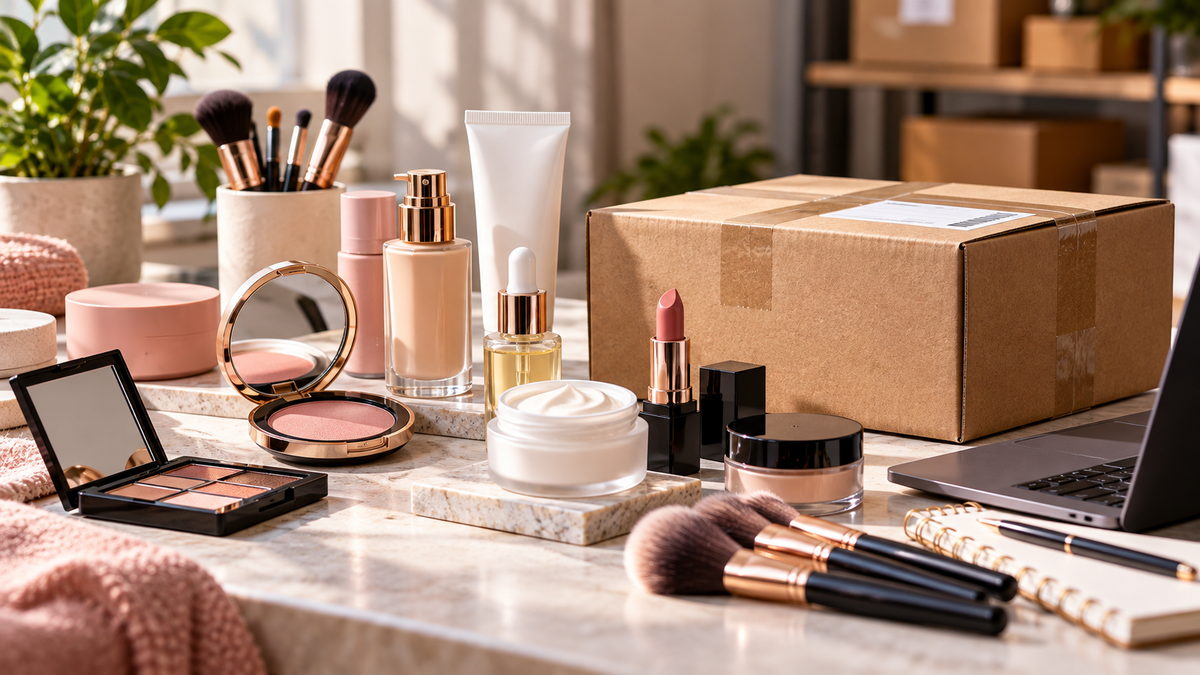
Cosmetics dropshipping can be a practical way to launch a beauty ecommerce store without holding inventory, but beauty products require more care than a generic accessory catalog. You need products that are clearly documented, suppliers that can support safety and labeling requirements, realistic shipping conditions, disciplined marketing claims and enough margin to absorb refunds, payment fees and customer acquisition. Start narrow, verify the supplier, and treat compliance as part of product selection.
What This Means for You
If you are considering cosmetics dropshipping, the main advantage is operational simplicity: the supplier holds stock and fulfills customer orders while you control the storefront, positioning, merchandising, marketing and customer relationship. The trade-off is that you do not directly control every batch, storage condition, packing decision or dispatch time.
That matters more in beauty than in many low-risk accessory categories. Makeup, skincare and personal-care products can involve ingredient lists, shelf-life questions, heat sensitivity, leakage, labeling requirements and claims that may change how a product is regulated. Shopify’s current guidance on sourcing beauty products specifically recommends checking supplier legitimacy, product authenticity, inventory freshness, storage, shipping and regulatory compliance before committing to a source.
The practical goal is not to import hundreds of products. It is to build a small, understandable beauty assortment that you can verify and explain accurately.
How Cosmetics Dropshipping Works
The order flow is simple:
- You list beauty products on your Shopify or ecommerce store.
- A customer pays your store.
- The order is passed to the supplier, manually or through an app/integration.
- You pay the supplier for the item and fulfillment charges.
- The supplier ships directly to the customer.
- You remain responsible for the customer experience, including product information, support, refunds and dispute handling.
Dropshipping removes the need to pre-purchase inventory, but it does not remove merchant responsibility. You still decide which products to list, which claims to repeat, what customers see on the product page and what delivery expectations you set.
For beauty, this means supplier data cannot simply be copied into your store without review. If a supplier changes an ingredient list, package size, shade set, formula, container or shipping method, your storefront can become inaccurate unless you monitor it.

Which Cosmetics and Beauty Products Are Easier to Test?
A first catalog should favor products that are easy to describe, easy to verify and unlikely to create complex claims or compatibility questions. Beauty tools and accessories can therefore be useful starting points, while makeup dropshipping and skincare dropshipping require more diligence because formulas, labels and claims matter.
| Product group | Why it can fit | Main checks before listing |
|---|---|---|
| Makeup brushes and applicators | Clear use case, visual content potential, lower formula risk | Material quality, shedding, dimensions, packaging |
| Cosmetic bags and organizers | Simple specifications and low regulatory complexity | Measurements, materials, closures, product photos |
| Beauty tools | Strong demonstration potential | Instructions, safe-use guidance, materials and claims |
| Makeup products | High beauty relevance and repeat-purchase potential | Ingredients, shades, labeling, authenticity, shelf life |
| Skincare | Can support routine-based merchandising | Ingredients, claims, storage, safety documentation, labeling |
| Fragrance | Strong gifting and discovery angle | Authenticity, transport restrictions, leakage, ingredient/label details |
Avoid assuming that a product is low risk because it looks simple. A topical product with aggressive acne, hair-growth or anti-aging claims may fall into a different regulatory category depending on the market and the claim. In the United States, FDA guidance explains that claims about treating disease or affecting the structure or function of the body can cause a product marketed as a cosmetic to be regulated as a drug. See the FDA’s cosmetics labeling claims guidance.
If you are still deciding what to sell, EcomChief’s guide to finding profitable product ideas for an online store provides a broader product-validation framework before you narrow the catalog to beauty.
How to Vet Cosmetics Dropshipping Suppliers
The best cosmetics dropshipping suppliers are not simply the cheapest sources. They are suppliers whose exact products, documentation, fulfillment process and communication you can verify before customer orders depend on them.
For a beauty store, a supplier should be evaluated as an operating partner, not just a low price in a marketplace search. Shopify’s August 2026 beauty-sourcing guide emphasizes legitimacy, inventory freshness, shelf life, storage, shipping and compliance. Those checks become even more important when you do not physically inspect every unit before it reaches the customer.
Ask a potential supplier for information that helps you verify the exact SKU:
- manufacturer and distributor details;
- full ingredient information where applicable;
- current packaging and label photos;
- batch or lot-code approach where relevant;
- manufacturing date, shelf-life or expiration information where supplied;
- storage and temperature requirements;
- shipping method and leakage/breakage protection;
- fault, refund and replacement process;
- stock-update method and expected processing time;
- documentation supporting any safety, testing or regulatory claims the supplier makes.
Order the exact products yourself. Check packaging, seals, smell, texture, shade, instructions and whether the delivered item matches the listing. If the supplier sells branded goods, verify authenticity and authorization rather than assuming a wholesale-looking listing is legitimate.

The EcomChief Cosmetics Supplier Scorecard
Use a simple 0–2 scoring system before you trust a product with paid traffic: 0 = not verified, 1 = partly verified, 2 = verified with direct evidence. This is a practical screening framework, not a guarantee of product safety or regulatory compliance.
| Check | 0 points | 1 point | 2 points |
|---|---|---|---|
| Exact sample | Not ordered | Photos/video only | Exact SKU received and inspected |
| Product documentation | Missing | Partial | Ingredients/specifications and current label supplied |
| Storage and shipping | Unknown | General answer | Conditions, packaging and delivery test verified |
| Returns and faults | No clear process | Policy exists | Costs, evidence and replacement path confirmed |
| Compliance evidence | Unsupported claims | Supplier assurances only | Relevant records/documentation provided and independently reviewed where appropriate |
A scorecard helps you find unanswered questions. It does not replace regulatory review, product testing or professional advice where those are required.
Cosmetics Compliance: What Dropshippers Need to Understand
Beauty compliance depends on the product and the countries where it is marketed. If you sell into the United States, the Modernization of Cosmetics Regulation Act of 2022 (MoCRA) expanded FDA authority over cosmetics. FDA states that the “responsible person” named on a cosmetic label has obligations that can include serious adverse-event reporting and maintaining safety-substantiation records; manufacturing or processing facilities and responsible persons also have registration and product-listing requirements in applicable circumstances. Review the current FDA MoCRA guidance for the exact rules.
A dropshipping merchant should therefore know who manufactures the product, who appears on the label, who the responsible person is, and which party maintains the required records. Do not treat the supplier’s statement “FDA registered” as equivalent to product approval. In September 2026, FDA specifically reiterated that cosmetic facility registration and product listing are not an FDA approval program.
Marketing claims also matter. A description that says a moisturizer “hydrates dry-looking skin” is different from claiming that a product “treats eczema” or changes the body’s structure or function. FDA says therapeutic or disease-treatment claims can make a product subject to drug requirements.
If you sell internationally, do not assume U.S. rules cover every destination. Labeling, ingredients, responsible-party requirements, product notification and restricted substances can differ by jurisdiction. Either restrict the markets you sell into or verify the applicable rules before opening checkout to those locations.
Build the Unit Economics Before You Run Ads
Beauty products often look attractive because the difference between supplier price and retail price appears large. That difference is not profit. Your model should include product cost, shipping, payment fees, refunds, replacements, app costs, customer acquisition and any taxes or duties that apply to your setup.
Contribution before fixed costs = selling price − supplier cost − shipping − payment fees − expected refund/replacement allowance − customer-acquisition cost.
For example, suppose a beauty product sells for $38. If the supplier cost is $11, shipping is $5, payment-related charges are $2, you allow $3 for refunds/replacements and customer acquisition costs $12, the remaining contribution is $5 before fixed costs and taxes. Those figures are only a planning example, not a benchmark or EcomChief performance claim.
Use the EcomChief Dropshipping Profit Calculator with your own numbers. Run at least three cases: expected acquisition cost, a more expensive acquisition case, and a higher-refund case. If the product only works in the optimistic case, fix the economics before scaling.
Mid-article next step: if you want a faster starting point, you can inspect EcomChief’s ready-made Beauty & Makeup Shopify dropshipping business. Treat it as a starter business asset and launch foundation, not as an established revenue-producing business. You still need to validate the current products, supplier arrangements, compliance requirements and marketing economics for your own operation.
How to Build a Beauty Store Customers Can Trust
Beauty shoppers need more than attractive product photos. A trustworthy beauty dropshipping store or Shopify beauty store needs enough information to help customers understand what they are buying and how to use it. Product pages should make the basics obvious: size or volume, ingredients where applicable, directions, warnings, what is included, shipping expectations and a clear return policy.
Build the store around a defined beauty customer rather than an enormous catalog. Examples include beginner makeup tools, travel-friendly beauty accessories, minimalist skincare routines, beauty storage, or one specific aesthetic. A tighter position makes product selection and content creation easier.
Useful trust-building content can include:
- how-to-use demonstrations;
- shade or size explanations where accurate;
- routine guides that avoid unsupported medical claims;
- ingredient education based on reliable sources;
- real product photography from samples;
- clear delivery and return expectations;
- answers to common product questions gathered from customer support.
Do not copy supplier claims blindly. Rewrite descriptions around verified features and realistic benefits. In beauty, an exaggerated claim can create both compliance risk and disappointed customers.

A 30-Day Cosmetics Dropshipping Launch Plan
- Days 1–3: define the customer. Choose one beauty audience and the problem or routine your store will serve.
- Days 4–7: shortlist products. Start with a small set that belongs together and can be documented properly.
- Days 8–12: order exact samples. Inspect quality, packaging, labels and delivery.
- Days 13–16: complete supplier and compliance checks. Identify manufacturer/distributor details, required records, applicable market rules and any claims that need to be removed or rewritten.
- Days 17–20: model the economics. Calculate contribution under realistic shipping, refund and acquisition-cost assumptions.
- Days 21–24: build the merchandising. Improve collections, product pages, policies, FAQs and trust elements.
- Days 25–27: create content. Film samples, product-use demonstrations and educational material based on verified features.
- Days 28–30: run a controlled traffic test. Start small, record conversion behavior, support questions, delivery issues and refund signals, then decide what deserves more budget.
The objective of the first month is evidence, not catalog size. Five well-understood products are more useful than 100 products whose labels, claims and supplier reliability you have never checked.
Build From Scratch or Start With a Ready-Made Store?
| Area | Build from scratch | Ready-made store foundation |
|---|---|---|
| Brand and layout | You design and configure everything | Core store structure is prepared |
| Catalog | You source and build it from zero | A starting product/catalog structure may be included; verify the listing |
| Supplier setup | You find and connect suppliers | Supplier setup may be included; confirm current details and your obligations |
| Compliance review | Your responsibility | Still your responsibility after handover |
| Marketing | You create the system | Starter assets may be included; ongoing customer acquisition remains yours |
| Revenue and profit | Not guaranteed | Not guaranteed |
EcomChief’s guide to what “supplier included” means in a ready-made dropshipping store explains why a supplier connection is only a starting point. You still need to understand supplier terms, test current fulfillment and keep alternative sources in mind.
If you are evaluating an established ecommerce business rather than a starter asset, the diligence standard is different. You would need evidence for revenue, traffic, customer acquisition, supplier relationships, transferable assets and operating history. Flippa’s current ecommerce due-diligence checklist provides a useful framework for that type of acquisition.
Cosmetics Dropshipping Checklist Before Launch
- Can you identify the exact manufacturer or supplier for every product?
- Have you ordered and inspected the exact SKUs?
- Are ingredients, size, directions and warnings accurate where applicable?
- Do you understand storage, heat and shipping requirements?
- Have you confirmed who handles faults, replacements and refunds?
- Have you checked whether marketing claims could trigger additional regulatory requirements?
- Do you know which countries you are willing and able to sell into?
- Have you modeled contribution after shipping, fees, refunds and acquisition cost?
- Does your store clearly explain delivery and return expectations?
- Do you have a backup plan if a supplier changes formula, packaging, price or availability?
The practical conclusion: cosmetics dropshipping is easiest to manage when you keep the initial catalog focused, verify the exact products and supplier process, treat compliance as part of sourcing, and use conservative economics before scaling. Beauty can be a strong ecommerce category, but the store still succeeds or fails on execution, trust and customer acquisition rather than the niche name alone.
If you want to inspect a ready-made beauty-store foundation, review EcomChief’s Beauty & Makeup Shopify dropshipping business and the buyer FAQ before purchase. Check the exact assets and supplier setup included in the listing, then verify the current products and market requirements before launch.
Related reading
All articles


Free Online Business Calculators
Estimate costs, profits, ROI, affiliate earnings, and business value before you spend money.