
ShopifyStores
Will Revenue Collapse If Ads Stop? Auditing E-Commerce Traffic Sources
A store can show strong revenue and still be dangerously fragile if nearly all sales come from paid ads. Here’s how to audit traffic sources properly and tell whether you’re buying a...
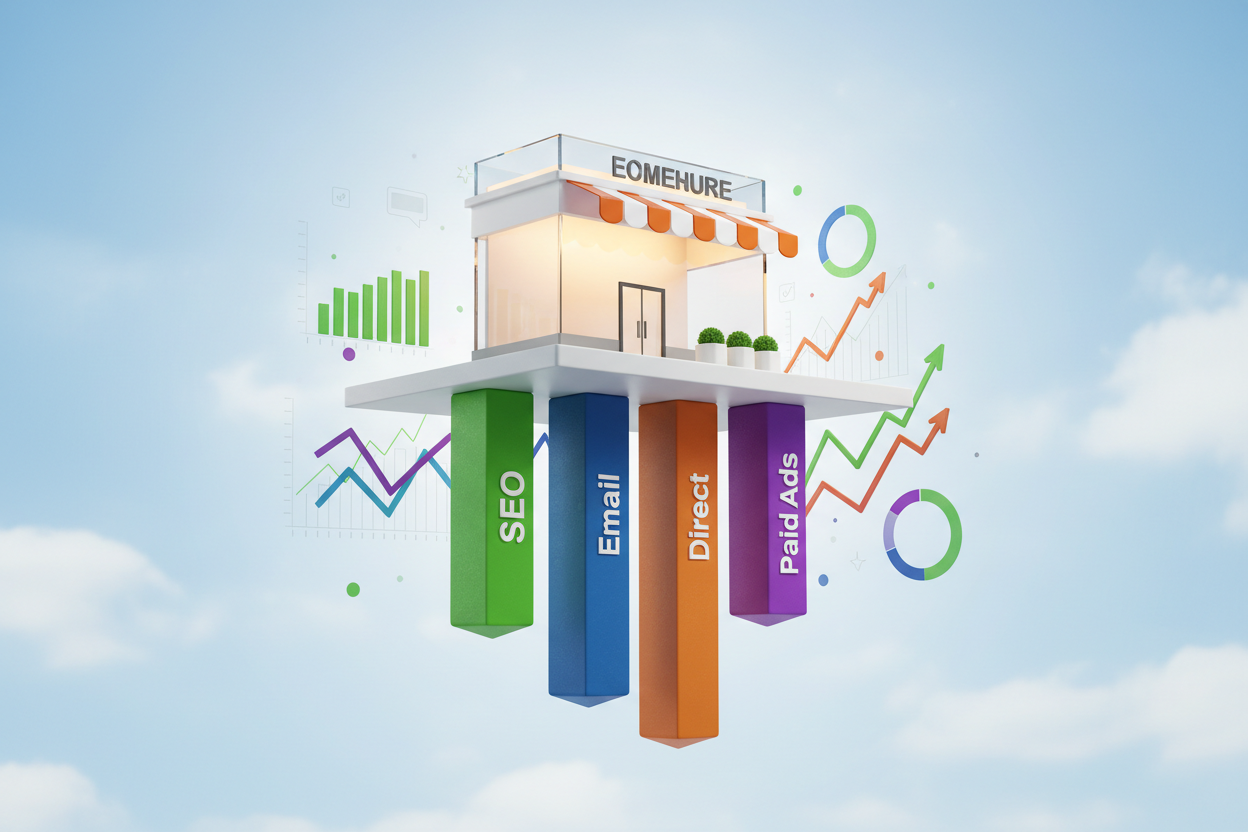
Will Revenue Collapse If Ads Stop? The Paid Traffic Trap Buyers Need to See Clearly
BLUF (Bottom Line Up Front)
Quick Answer: When evaluating a readymade dropshipping for sale business, one of the biggest risks is paid traffic dependency. If most sales only happen while Meta or Google ads are running, then you may not be buying a real brand at all — just rented traffic that disappears the moment ad spend stops. Before buying, verify the traffic split carefully so you know whether the business has real organic strength, direct traffic, and repeat customers behind the revenue.
Let’s be real for a second.
One of the biggest fears buyers have when looking at an online business is not whether the store looks good. It’s this:
“What happens if I stop the ads?”
Because a store can show strong top-line revenue and still be dangerously fragile underneath. That’s especially true when nearly all sales are coming from paid traffic. If the business only works while money is being poured into Meta or Google every single day, you may not be buying a brand at all. You may be buying a rented stream of customers.
Imagine this.
You find a store doing $50,000 a month. The seller proudly talks about highly optimized Facebook and TikTok campaigns. The numbers look exciting. You buy the business. Then a week later, the ad account gets flagged, the campaigns pause, and daily sales fall off a cliff.
That’s the rented traffic fear, and honestly, it’s a smart fear to have. If the store has a heavy paid traffic dependency, revenue can collapse the moment the ad engine stumbles.
Paid Ads Are a Growth Engine, Not a Foundation
Verdict: Paid ads are great for growth, but dangerous as the only foundation of a business.
Here’s the technical truth, friend:
Paid ads are amazing for growth. But they are a terrible foundation if they are the only thing holding the business up.
If 95% of a store’s traffic comes from Meta or Google Ads, then the business is basically renting attention. The second you stop paying rent, you get evicted from the market. And even before that happens, rising acquisition costs can quietly crush the margins. If the algorithm shifts and your Customer Acquisition Cost (CAC) spikes, your profit can disappear fast.
That’s why you cannot just ask, “How much revenue does the store make?”
You need to ask:
What percentage of sales are generated from paid traffic?
Because that number tells you how much of the business is real brand strength and how much is just fuel being burned.
And even then, there’s another layer: if the product itself sits in a fading niche, heavy ad spend may just be masking weak demand. That’s why it helps to pair this audit with our guide on:
Is the Niche Already Saturated? How to Validate Ongoing Product Demand
Not All Business Models Carry the Same Traffic Risk
Key takeaway: Different models carry different traffic risk profiles. The goal is not zero paid traffic. The goal is not being dependent on only one acquisition channel.
This is where it helps to zoom out.
If you’re looking at a readymade dropshipping for sale business, expect more reliance on paid social. That’s normal. The key is not eliminating paid traffic entirely. The key is checking whether those campaigns are efficient and whether the business is building some kind of owned audience, like an email or SMS list, so customers don’t vanish the second ads stop.
If you’re exploring amazon businesses for sale, the risk profile is a bit different. Amazon gives you platform-native search traffic and built-in buyer intent, so you are less dependent on external Meta campaigns.
And if you want to reduce paid traffic risk as much as possible, an affiliate marketing business for sale may fit better. Those businesses live or die more by SEO and content than by daily ad spend, which means traffic does not disappear the moment you close your wallet.

How to Audit the Traffic Split Properly
Verdict: You must inspect traffic sources directly. Screenshots are not enough.
This is the part buyers should never skip.
First, get read-only access to Google Analytics. Then go to Acquisition > All Traffic > Source/Medium and look at the mix. A healthier, more defensible brand usually has at least 20–30% of traffic coming from Direct or Organic Search. That tells you the business has some life outside paid campaigns.
Second, inspect the referral traffic carefully. This is where undisclosed or sketchy traffic sources often hide. If you see weird spikes from low-quality sites, strange foreign domains, or traffic patterns that don’t make sense, that can be a sign the seller used click farms or bot traffic to inflate visitor counts before listing the business.
Third, don’t stop at traffic. Check the hidden marketing stack too. A store can look profitable until you realize it depends on expensive software for affiliate programs, retargeting, SMS, and email flows. If you want the backend version of that audit, read:
What Apps Are Installed? The Hidden Cost Trap Most Store Buyers Miss

Buy Brands, Not Just Campaigns
Key takeaway: If the business has zero organic traffic, zero direct traffic, and zero returning customer base, it is fragile and should be priced like a fragile asset.
That’s the real takeaway.
If the business has zero organic traffic, zero direct traffic, and zero returning customer base, then yes — revenue probably will collapse if ads stop. That does not automatically make it a bad business, but it does make it a fragile one, and you should price it like a fragile one.
A stronger acquisition is one where paid traffic is part of the engine, not the entire engine.
At Ecom Chief, that’s exactly why traffic diversity matters so much. We want buyers stepping into businesses with verifiable, resilient acquisition channels — not stores that look strong only while the ad budget is switched on.
If you want to browse more traffic-diversified opportunities, start with our Ecommerce Businesses for Sale collection:
And if you’re leaning toward platform-native demand instead of heavy paid social, take a look at our Amazon FBA Business For Sale collection too:
Stop worrying about your revenue collapsing overnight. Audit the channels, verify the split, and make sure you are buying a brand — not just an ad funnel.
Video Recommendation
Verdict: This is a strong follow-up if you want a practical due-diligence lens for spotting fake growth, weak referral traffic, or dangerous paid dependencies.
This video is a strong follow-up because Jaryd Krause gets into the exact tools buyers should use to verify where traffic is really coming from. It’s especially useful if you want to spot sketchy referral traffic, fake growth, or heavy paid dependencies before you risk your capital.
Related reading
All articles


Free Online Business Calculators
Estimate costs, profits, ROI, affiliate earnings, and business value before you spend money.