
ShopifyStores
What Apps Are Installed? The Hidden Cost Trap Most Store Buyers Miss
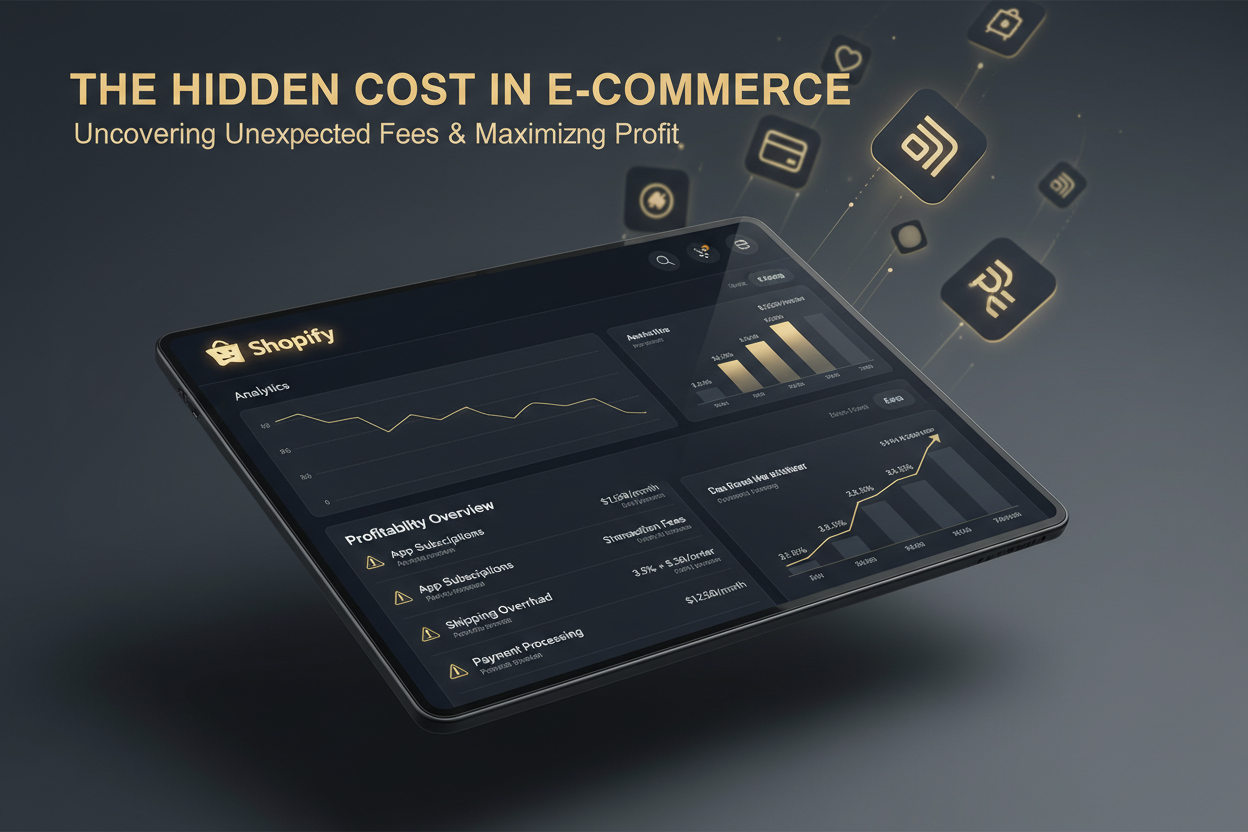
A dropshipping store can look profitable on paper and still bleed cash once hidden app subscriptions, gateway fees, and returns hit your card. Here’s how to audit the real operating stack before...
What Apps Are Installed? The Hidden Cost Trap Most Store Buyers Miss
Key takeaway: A store’s real profitability is not just product cost + ads + Shopify. The app stack, gateway fees, and operational leakage can quietly crush margins.
Let me tell you one of the easiest ways to get fooled when buying a dropshipping store.
A seller shows you a clean-looking Shopify dashboard, says the store is doing $10k a month, and claims the margins are around 30%. Then they casually mention the product cost, maybe ad spend, and the Shopify dropshipping store base platform fee.
Sounds simple.
But then you take over the store, and your credit card starts getting hit from every direction.
One charge for email marketing. Another for SMS upselling. Another for review management. Another for the page building app. Then there are payment gateway cuts, small transaction fees, and the usual return costs that nobody seemed too eager to talk about before the sale.
And suddenly you realize the store isn’t clean and lean at all.
It’s bleeding cash.
That’s the technical truth most sellers conveniently skip. A modern store rarely runs on just Shopify’s base fee. It runs on a whole engine of third-party apps, and if you don’t audit that engine properly, the seller can very easily artificially inflate Net Profit and justify a much bigger valuation multiple than the business really deserves.
So let’s walk through this like friends, but surgically. Because this is exactly how you figure out the true monthly software subscription costs and protect your money before the deal closes.
The “Bleeding Cash” Fear
Verdict: The problem is not just revenue. The problem is the hidden operating stack behind the storefront.
Here’s the classic scenario.
You’re looking at a beautiful dropshipping store doing decent revenue. The seller says the costs are straightforward: cost of goods, ads, and the Shopify monthly fee.
You buy it.
Then Month 1 hits.
Now you’re paying for half a dozen tools the seller either barely mentioned or didn’t explain properly. Maybe there’s a premium email platform. Maybe a paid SMS tool. Maybe upsell software, landing page software, advanced analytics, loyalty apps, subscription tools, helpdesk apps, product review tools, and a bunch of smaller usage-based services quietly running in the background.
That’s when you realize the problem wasn’t revenue.
The problem was that nobody showed you the real operating stack.
And if you don’t understand that stack, you don’t understand the real profit margins.
The “Easy” Assets
Key takeaway: The storefront, domain, and even some backend integrations may transfer smoothly — but that does not tell you what the store actually costs to run.
To be fair, some parts of the transfer are simple.
The storefront and domain can move over quickly. The supplier integrations often transfer without much drama. Even the ad accounts can be handed over, although that comes with its own risks, which is exactly why this is worth reading before you assume your traffic engine is safe after takeover:
How to Fix a Google Merchant Center Suspension After Buying a Store
That handover side is often more fragile than it looks.
And before you even get too excited about the storefront itself, it helps to understand the operating logic behind it. That’s why this is such a useful read:
The Truth About Buying a General Dropshipping Store: It’s Not Sell Everything
It helps you see that the store architecture is not just “a website,” but part of a deeper strategy.
But even if all that transfers smoothly, it still doesn’t answer the question that matters most:
What apps are installed, and what do they really cost every month?
The Hard Asset: The App Stack Nobody Wants to Talk About
Key takeaway: If the store relied on a serious software stack to convert and retain customers, that stack is not optional — it is part of the business.
Here’s the cold truth: revenue is vanity, margin is sanity.
A lot of sellers know that buyers get impressed by top-line numbers. So right before listing the business, some of them “clean up” the appearance of the store. They might uninstall expensive apps, downgrade plans, or lump multiple costs into vague categories so the bottom line looks prettier than it really is.
That’s the trap.
Because if the store was relying on a serious software stack to maintain its conversion rate, that stack is not optional.
Take out the premium email marketing tool and your retention drops. Remove the SMS upselling engine and abandoned cart recovery weakens. Strip out review management and trust drops. Remove the page building tool and your landing pages stop converting like they used to.
So no, you cannot evaluate profitability by looking only at product costs and the Shopify monthly fee.
You have to evaluate the software engine driving the business.

Why Top-Line Revenue Lies
Verdict: A store that looks like a 30% margin business on paper can shrink to 8% once hidden software and operational leakage are included.
This is where a lot of buyers get burned.
They calculate margins using product cost and ad spend, maybe with a rough platform fee added in. But they ignore the micro-costs:
- monthly app costs
- Shopify transaction fees
- payment gateway percentages
- small per-order fees
- return costs
- replacement costs
So a store that looked like a 30% margin business on paper can suddenly shrink to 8% once the real software subscriptions and operational leakage are included.
And that’s before you even factor in annual contracts, usage-based app billing, or a high refund month.

The Profitability Audit
Key takeaway: You need a forensic billing review — not a seller summary — to know whether the reported profit is real.
If you want to protect yourself, here’s the audit framework.
Step 1: Get the full app inventory
Ask for a screenshot of the Shopify Billing section and the installed Apps section.
Then cross-check every app against the seller’s P&L.
If an app is installed but missing from the P&L, that is a major red flag. It usually means the numbers are being dressed up.
Step 2: Check for locked contracts
Some apps are month-to-month. Others are not.
Ask clearly: Am I inheriting annual software contracts, or are these flexible monthly subscriptions?
That matters because a store can look cheap to run until you realize you’re locked into a large annual commitment you didn’t price into the deal.
Step 3: Stress test the numbers
Never accept gross margin as net profit.
Build a proper model that subtracts:
- around 3% for payment gateway and transaction fees
- around 5% for return costs or replacements
- the exact cost of the required app stack
If the business still looks healthy after that, great.
If not, walk away.

Don’t Buy an Empty Shell
Key takeaway: A high valuation only makes sense if the net profit is real, verified, and durable after all software and operating costs are included.
That’s the real message here.
A high valuation only makes sense if the net profit is real, verified, and durable.
If the store depends on hidden software subscriptions that weren’t properly disclosed, then the business is not as profitable as it looks. It’s just been dressed up nicely for sale.
At Ecom Chief, this is exactly why we look closely at billing dashboards, software stacks, and backend overhead before listing stores. Because the last thing you want is to buy a pretty storefront that starts quietly draining cash from Day 1.
If you want examples of transparent opportunities, take a look at our Beauty & Makeup Dropshipping Business For Sale or our Handbag Dropshipping Business For Sale listings. The goal is not just to buy revenue — it’s to buy a business where the numbers actually hold up once the real monthly overhead is included:
Beauty & Makeup Dropshipping Business For Sale
Handbag Dropshipping Business For Sale
So before you wire money, ask the simple question most buyers forget:
What apps are installed?
Because that one question can save you from buying a store that only looked profitable because the real costs were hiding under the surface.
Video recommendation
Verdict: Watch this with the seller’s P&L in mind, and compare every “small” fee they ignored against the real operating stack you’re inheriting.
This video is a strong follow-up because it shows, in practical terms, how hidden Shopify costs pile up and quietly destroy margins. Watch it with your seller’s P&L in mind, and compare every “small” fee they ignored against the real operating stack you’re inheriting.
Related reading
All articles


Free Online Business Calculators
Estimate costs, profits, ROI, affiliate earnings, and business value before you spend money.