
ReadyMadeApps
Why Should I Pay for a SaaS Template When Open-Source Code is Free?
Free boilerplates give you parts. Paid templates give you wiring. Here’s why “free” often costs more once you count the time spent stitching Stripe, auth, database, and emails into a real production-ready...
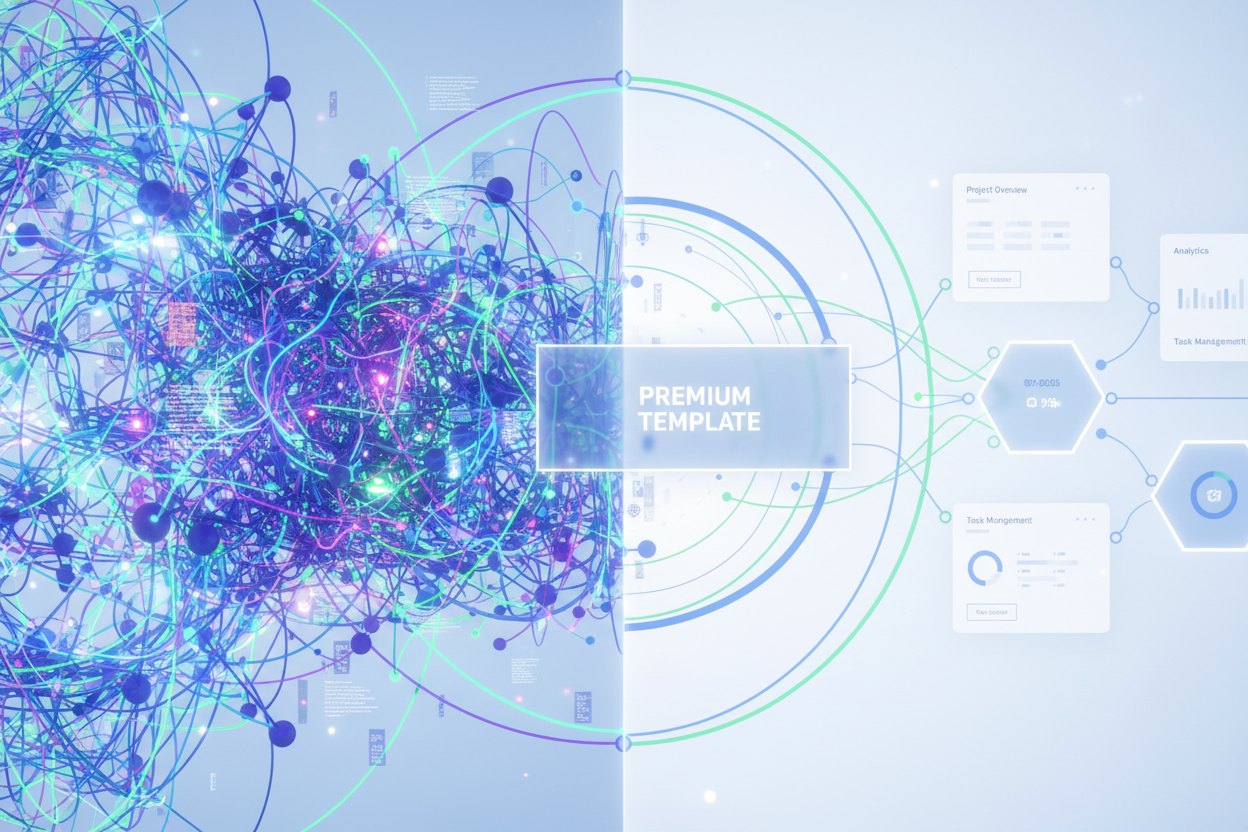
Why Free SaaS Boilerplates Usually Cost More Than Paid Templates
Key takeaway: Open-source gives you ingredients. Paid templates give you wiring — pre-integrated billing, auth, emails, and backend logic that saves weeks of non-revenue work.
Let’s be honest, friend.
If you’re even a little technical, this objection shows up almost instantly.
You find a polished app/template in the SaaS starter template market priced at $500, maybe a bit more, and your first thought is:
“Why should I pay for this when open-source boilerplate code is free?”
That sounds reasonable.
After all, the stack usually looks familiar — Next.js, React, Tailwind, Prisma, maybe Supabase. Nothing magical. Nothing you haven’t seen before. So it’s easy to assume you’re just being sold a thin wrapper around free frameworks.
But here’s the technical truth: the value is not in the ingredients. The value is in the wiring.
The “I Can Build That” Trap
Verdict: The “free” route isn’t free — it’s unpaid engineering time spent stitching infrastructure together.
Picture this.
You’re an Indie Hacker browsing templates. You see a readymade app priced at $500. You glance at the tech stack and think, “I can build that myself.” So instead of buying it, you clone a free GitHub repo and decide to save the money.
At first, it feels smart.
Then the real work starts.
Now you’re stitching together authentication, database logic, Stripe checkout, webhook handling, user sessions, account upgrades, password resets, and transactional emails. Suddenly the “free” route is not free at all. It’s just unpaid engineering time.
That’s the real Value Proposition Objection in this market. Technical buyers think they are being charged for code they could theoretically assemble themselves. What they miss is the hidden price of tedious infrastructure setup.
And that setup is exactly where most projects stall.
What Open Source Actually Gives You
Key takeaway: Frameworks are free. Product behavior is not. Free parts do not automatically become a working SaaS.
To be fair, open source does give you a lot.
You can get the core frameworks for free. React, Vue, Next.js, Laravel — no problem. You can pull Tailwind UI patterns or basic component libraries. You can grab Prisma or Drizzle and start sketching your database.
But free parts do not automatically become a real product.
That’s why this matters so much: just because the code exists doesn’t mean it’s a business. That same idea is explained really well here:
Buying SaaS Code vs. Buying a Software Business: Avoid the “Toy App” Trap
The Hard Asset: The Integration Value
Key takeaway: You’re not paying for features. You’re paying for invisible integration work that makes the app behave like real SaaS.
This is the part sellers often fail to explain clearly.
You are not really paying for the visible features. You are paying for the invisible integration value.
A free boilerplate gives you puzzle pieces.
A premium template gives you the puzzle already connected.
That means the auth layer is already speaking to the database properly. The billing system is already tied into user state. The subscription logic is already updating access. The email system is already firing when something important happens.
The product doesn’t just “look like SaaS.” It behaves like SaaS.
That’s the difference.
Why Free Code Becomes a Time Sink
Verdict: Most builders don’t fail because they can’t code — they fail because infrastructure drains time and energy before launch.
Here’s what usually happens when someone chooses the free route.
They download a bare-bones boilerplate and tell themselves they’ll launch quickly. Then they spend the next three weeks reading Stripe docs, debugging schema mismatches, chasing session bugs, and trying to figure out why the password-reset flow keeps throwing a 500 error.
That’s the real cost.
Not money. Time.
And time is usually more expensive than the template.
By the time you finally get the plumbing working, your energy is gone. Meanwhile, someone else bought a premium setup, skipped the backend headache, and launched before you.
That’s why paying for a pre-integrated foundation is often the smarter financial decision. You are not buying code. You are buying speed.

How to Audit the “Out-of-the-Box” Value
Key takeaway: If you pay for a template, it must prove it handles billing edge cases, secure auth, and transactional messaging — not just a pretty UI.
If you’re going to pay for a premium template, then yes — it should actually handle the hard stuff.
1) Pre-wired Stripe billing
A real template should not stop at a Stripe checkout button. It should already handle webhook events, subscription upgrades, downgrades, prorations, failed payments, and billing state properly.
If that logic is missing, you’re still buying a half-finished foundation.
2) Bulletproof authentication
The template should come with secure, properly configured auth and protected routes already working. That means real session handling, not just a login screen that looks finished.
And this ties directly into this topic, because a template only saves time if it also respects the security side of the build:
Is the App Genuinely Production-Ready? Auditing SaaS Security Infrastructure
3) Transactional emails
This is one of the most annoying parts to build from scratch. A strong template should already be connected to something like Resend or SendGrid so welcome emails, receipts, and password resets work without you touching raw email HTML.
That’s real value. Because none of that work makes your product more unique — it just delays launch.

Buy Time, Not Just Code
Key takeaway: The smartest purchase is the one that gets you to launch faster — because speed beats perfection in early-stage SaaS.
That’s really the whole point.
Free open-source code gives you building materials. A premium SaaS template gives you the wired-up structure underneath the walls.
You are paying to skip the boring, non-revenue-generating work so you can focus on your actual product, your customers, and your launch.
At Ecom Chief, that’s why we look closely at the infrastructure behind software assets before listing them. The goal is to make sure you’re getting something robust, practical, and ready to move — not just a pretty repo with extra marketing around it.
If you want to explore fully wired software assets, start with our Ready-Made Apps collection. And if you want a concrete example of what a structured, workflow-driven product can look like, the AutoMarketing White-Label AI Marketing Agent is a strong reference point because the value is in the integrated system, not just the interface:
AutoMarketing White-Label AI Marketing Agent
So no — the question is not really, “Can I find free code?”
The real question is:
Do I want to spend the next three weeks wiring modules together, or do I want to ship?

Related reading
All articles


Free Online Business Calculators
Estimate costs, profits, ROI, affiliate earnings, and business value before you spend money.