
ShopifyStores
How to Fix a Google Merchant Center Suspension After Buying a Store
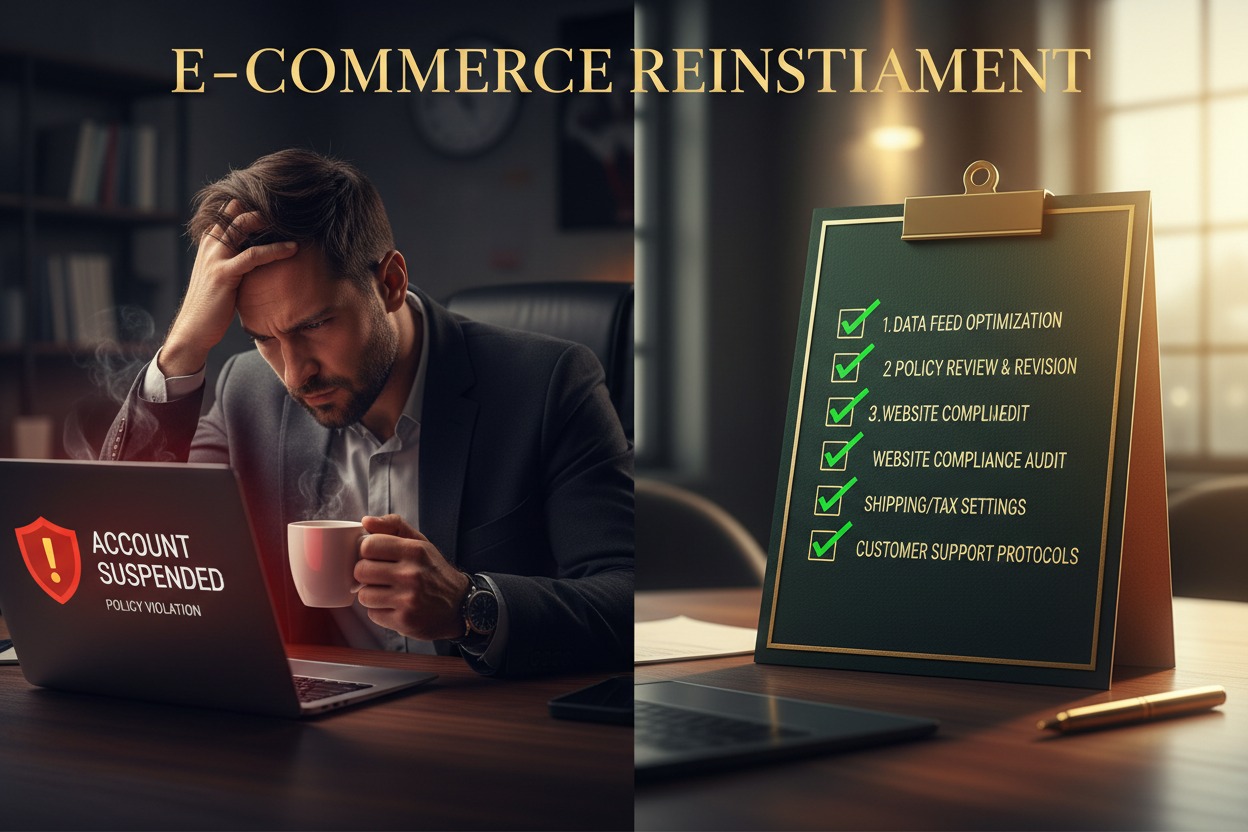
Buying a store is exciting… until Google slaps you with a “Circumventing Systems” suspension 10 minutes after you update billing. Here’s why it happens, what to check before you buy, and the...
The “Dead on Arrival” Fear (And Why It’s Rational)
Key takeaway: The real risk in electronics isn’t the storefront — it’s DOA complaints, refunds, and chargebacks caused by weak suppliers.
Picture this: you’re evaluating a live asset like Digital Elektronics (digitalelektronics.com). The site looks clean. The catalog is exactly what you’d expect from a modern tech gadget dropshipping brand — smart home gear, audio products, wearable tech, accessories.
And then the real thought hits you:
“What happens when a customer says their $150 smartwatch arrived broken? Am I stuck refunding everything and getting yelled at all day?”
That fear isn’t paranoia. It’s the most rational question you can ask before you buy electronics dropshipping store assets.
Electronics are fragile. They’re also complicated. If you buy a readymade electronics store that’s tied to low-tier, unvetted suppliers, you’ll spend most of your time doing customer service triage — refunds, replacements, Dead-on-Arrival (DOA) complaints, angry emails, and review damage control.
So here’s the promise: this is the “technical truth” version of buying an electronics dropshipping business for sale. Not the hype. The backend reality — how to verify supplier quality control, how to manage returns, and how to protect yourself from payment gateway bans triggered by chargebacks.
The “Easy” Assets (What Transfers Instantly)
Verdict: The domain, storefront, catalog, and theme usually transfer fast — but that isn’t the business.
When you buy a store like this, a few things usually transfer fast and clean:
- Domain transfer: pushed into your GoDaddy/Namecheap account (Digitalelektronics.com can transfer in about an hour).
- Storefront + catalog: moves instantly with Shopify ownership transfer — keeping curated categories (audio, smart home, accessories) intact.
- Theme architecture: the trust-building layouts that make the store feel like a real tech retailer, not a disposable pop-up site.
All of that is “easy.”
But none of that is the actual business.
The “Hard” Asset: Supplier Vetting & QA (The Grey Area)
Key takeaway: Your entire brand sits on your supplier’s QA. If their QA is sloppy, your store becomes a complaint department.
Here’s the cold truth: in electronics dropshipping, you don’t control the factory line. Your entire business sits on top of your supplier’s Quality Assurance (QA). If their QA is sloppy, your brand becomes the complaint department.
So the real evaluation is this: what does the store’s fulfillment backend look like?
This is where your supplier vetting process needs to be ruthless. Go straight to the apps and order routing. Are they pushing orders to random AliExpress sellers with mediocre ratings? Or are they working through proper systems — AutoDS, Zendrop, or a private sourcing agent — where product inspection, controlled sourcing, and defined return handling actually exist?
If you want to know whether you’re buying a smooth operation or a customer service nightmare, use this quick supplier audit:
- Do they offer inspection (photo/video checks before shipment)?
- Do they have local/US warehouse options for key products?
- Do they have a written policy for defective units (who pays, how it’s proven, how fast it’s resolved)?
- Can you run test orders and get consistent packaging + tracking quality?
- Do they respond within 24–48 hours when there’s a problem?
If those answers are vague, you’re not buying a store. You’re buying future refunds.

The Chargeback Risk: Why Cheap Tech Is Dangerous
Verdict: Cheap tech creates failures, failures create chargebacks, and chargebacks can get your payments restricted or banned.
Now for the part most people don’t want to hear.
Cheap tech is where stores go to die.
Selling $5 charging cables, bargain earbuds, or mystery-brand adapters sounds easy… until they fail. And when they fail, customers often don’t request a replacement. They go straight to their bank and file a chargeback.
That’s how you get flagged.
Once chargebacks creep toward levels processors consider “high risk” (often around 1%), you’re in danger territory. Funds get frozen. Accounts get restricted. In the worst cases, you get shut down — hello payment gateway bans.
So the fix is not “better customer service.”
The fix is a smarter catalog strategy: build around high-ticket electronics dropshipping (or at least mid-ticket) where margins can absorb friction.
Examples that actually work:
- $80 ergonomic keyboards
- $150 smart security cameras
- $120 premium audio accessories
- $90 smart lighting kits
Why these? Because you can afford a no-drama replacement when something goes wrong. That keeps customers happy, keeps disputes low, and keeps your merchant account safe.
If your margins can’t comfortably handle a replacement sometimes, your business is fragile.
What If a Customer Demands a Return? (The “Frictionless” Fallback)
Key takeaway: The goal isn’t “zero issues.” The goal is a fast RMA SOP that prevents disputes and protects your brand reputation.
Even with great suppliers, electronics will occasionally malfunction. The goal isn’t “zero problems.” The goal is mitigating dropshipping returns so problems don’t spiral into disputes.
Here’s the RMA strategy that actually protects your brand:
You do not tell customers to ship defective items back to China. That’s basically begging for a bad review.
Instead, your SOP should say:
- Customer submits photo/video proof (10–20 seconds is enough) + packaging label.
- You approve fast (same day if possible).
- For defective items under your cost threshold, you issue an instant replacement or refund.
- You claim the defective-unit credit with your vetted supplier/agent based on the proof.
This is “frictionless RMA.” You absorb the first bit of friction so your brand reputation stays clean.

Final Line in the Sand: Don’t Buy a Customer Service Nightmare
Key takeaway: In electronics, the storefront is the easy part — the real asset is the supplier + QA + RMA system that prevents disputes.
So here’s the real line in the sand:
Selling electronics is lucrative only if you’re not selling junk.
When you’re looking at an electronics dropshipping business for sale, the storefront is the easy part. The real asset is the supplier setup: the inspection process, the defect handling, the replacement rules, and how cleanly the operation prevents disputes.
A store padded with cheap novelty tech is usually a return factory.
A meticulously structured readymade electronics store backed by reliable sourcing agents is a real business.
And if you want to skip the guesswork and take over a tech store that’s built to run safely (with supplier integrations designed to prevent chargeback chaos), that’s exactly how we set them up at Ecom Chief.
Stop guessing if the products you sell will actually work. Secure a tech brand built on verified suppliers and start capturing the massive electronics market safely — check out this electronics dropshipping business for sale:
View the Listing: Electronics Dropshipping Business for Sale
Related reading
All articles


Free Online Business Calculators
Estimate costs, profits, ROI, affiliate earnings, and business value before you spend money.