
ShopifyStores
The Truth About Buying a General Dropshipping Store (It’s Not “Sell Everything”)
Most people fail with general stores because they try to sell everything to everyone. Here’s the real way to run a dollar discount store: use it as a product-testing lab, market one...
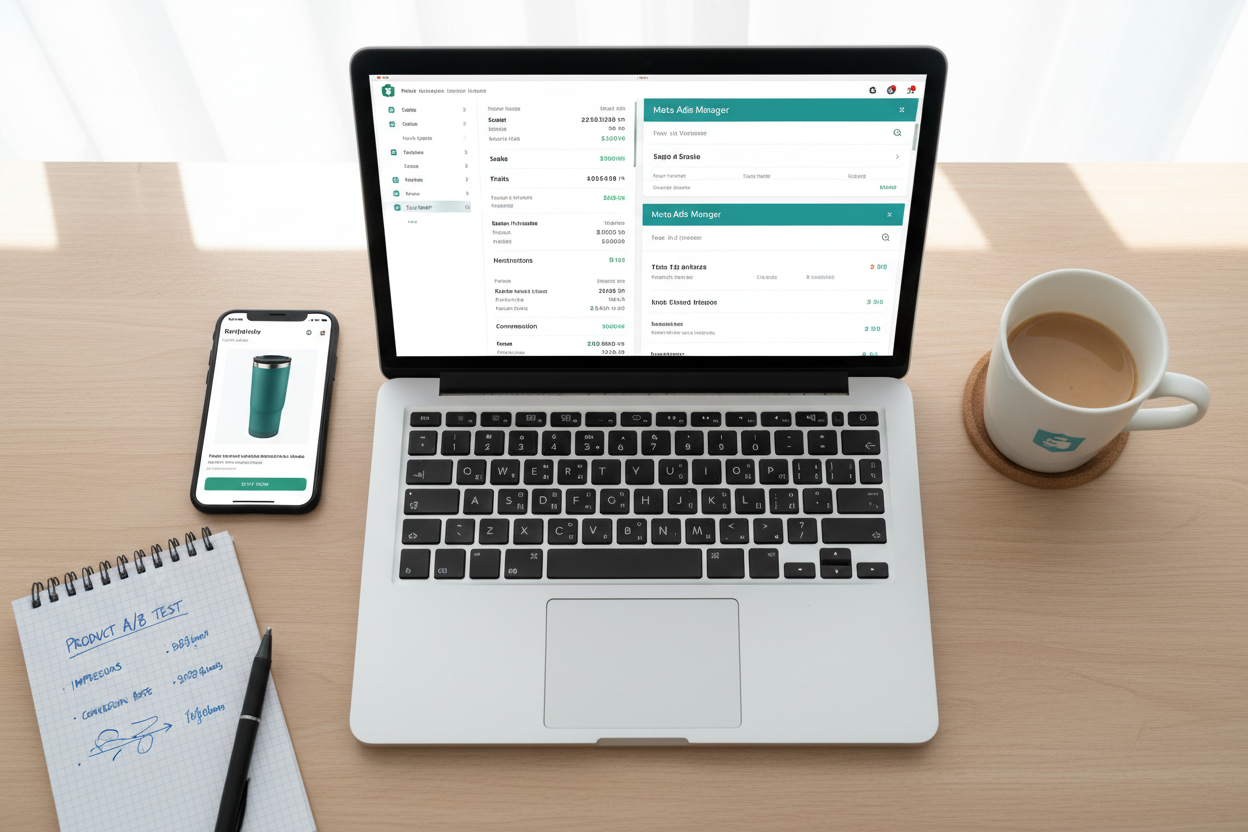
The Truth About Buying a General Dropshipping Store (It’s Not “Sell Everything”)
Let me guess what you’re thinking.
You look at a general discount store like Bargain Pouch and the fear hits instantly: “Why would anyone buy from me when Amazon and Temu exist?”
That fear is valid… if your plan is to compete on shipping speed, price, or catalog size.
But that’s not what a dollar discount dropshipping business is for.
A good general store isn’t a “brand” on Day 1. It’s a product-testing laboratory. A place where you can launch fast, collect data fast, and find winners without rebuilding a new store every week.
Here’s how to think about it (and how to run it without burning money).
What you’re really buying (the parts that matter)
When you buy a readymade dropshipping store, a few things transfer instantly and cleanly:
- The domain (your asset, in your Namecheap/GoDaddy account)
- The Shopify store ownership (admin rights under your email)
- Supplier integration (automation so orders flow to suppliers without you touching inventory)
That’s the easy part.
The hard part—the part most buyers get wrong—is the operating strategy.
The real strategy: stop marketing the “store” and start marketing the “product”
Here’s the cold truth:
If you run ads saying “Check out our discount store!” Meta has no idea who to target. Your pixel can’t learn, your CPMs rise, your clicks get messy, and your budget disappears.
That’s the junk-drawer version of a general store.
The profitable version uses a strict protocol.
The “Impulse Protocol” (the only way this works)
- Pick one problem-solving impulse item (something that makes a person say “I need that”).
- Run micro-budget tests (small ad sets, clean data, fast decisions).
- Send traffic to the single product page, not the homepage.
- Judge performance on simple signals: CTR, add-to-cart rate, checkout starts, purchases.
- Kill losers quickly. Scale winners slowly.
The store sits in the background as the trust layer—policies, product pages, checkout, support—while your ads stay laser-focused on one item at a time.
This is how you avoid “competing with Amazon.” Amazon is a marketplace. You’re running a focused impulse funnel.

Why broad ads bleed money (and why single-product funnels don’t)
Broad store ads fail because they’re unfocused. The algorithm doesn’t know which buyer profile you want:
- kitchen gadget people?
- pet owners?
- car accessory buyers?
- home organization shoppers?
So Meta tests randomly… and you pay for the confusion.
Single-product funnels win because the algorithm can learn faster. One item = one audience angle = cleaner feedback.
That’s how you keep ad spend under control while you hunt for products that can scale.

What happens when a product goes viral (the smart “spin-off” move)
Sometimes a winner pops.
A kitchen gadget catches fire. A pet accessory starts printing sales. Suddenly, one item is doing most of the revenue.
At that point, you don’t keep it buried inside a general store forever.
You do the smart move:
- Keep Bargain Pouch running as your testing engine
- Spin off the winner into a dedicated branded store (one niche, one theme, one story)
- Take your proven pixel data, creatives, and audience signals with you
Now you have two assets:
- a lab for testing
- a brand for scaling
That’s how real operators use a dollar discount store: it’s the machine that keeps producing your next winner.
The bottom line
A general store is only “junk” when it’s run like a garage sale.
Run it like a testing lab, and it becomes one of the fastest ways to find profitable products without guessing niches for months.
If you want a ready-to-run setup that’s built for this exact strategy, you can take over the Dollar Discount Dropshipping Business here:
Dollar Discount Dropshipping Business
Bonus: 3 ready-to-launch Day 1 test funnels
Funnel 1: “Problem-Solver Kitchen”
Angle: “Stop the mess / save time.”
Hook: “If your kitchen counter looks like this… you need this.”
Ad copy: “One simple tool that makes cooking cleaner and faster. People buy it because it fixes an annoying daily problem. Tap to see how it works.”
Targeting (simple): Home cooking, meal prep, kitchen gadgets, moms/dads, organization.
Funnel 2: “Car Convenience Fix”
Angle: “Make driving easier / cleaner.”
Hook: “Your car shouldn’t feel messy after 2 days. This fixes it.”
Ad copy: “Small upgrade, big difference. Easy install. Makes your car feel new again. Tap to see the before/after.”
Targeting (simple): Car accessories, car detailing, road trips, commuters.
Funnel 3: “Pet Owner Relief”
Angle: “Reduce chaos / make pet life easier.”
Hook: “Pet owners will instantly understand this problem.”
Ad copy: “If you have a dog/cat, you’ve dealt with this. This little item makes daily life easier in 30 seconds. Tap to see it.”
Targeting (simple): Dog owners, cat owners, pet accessories, pet training, pet care.
Related reading
All articles


Free Online Business Calculators
Estimate costs, profits, ROI, affiliate earnings, and business value before you spend money.