
BuyDropshippingBusiness
Ready-Made Dropshipping Stores: What's Included and How to Choose
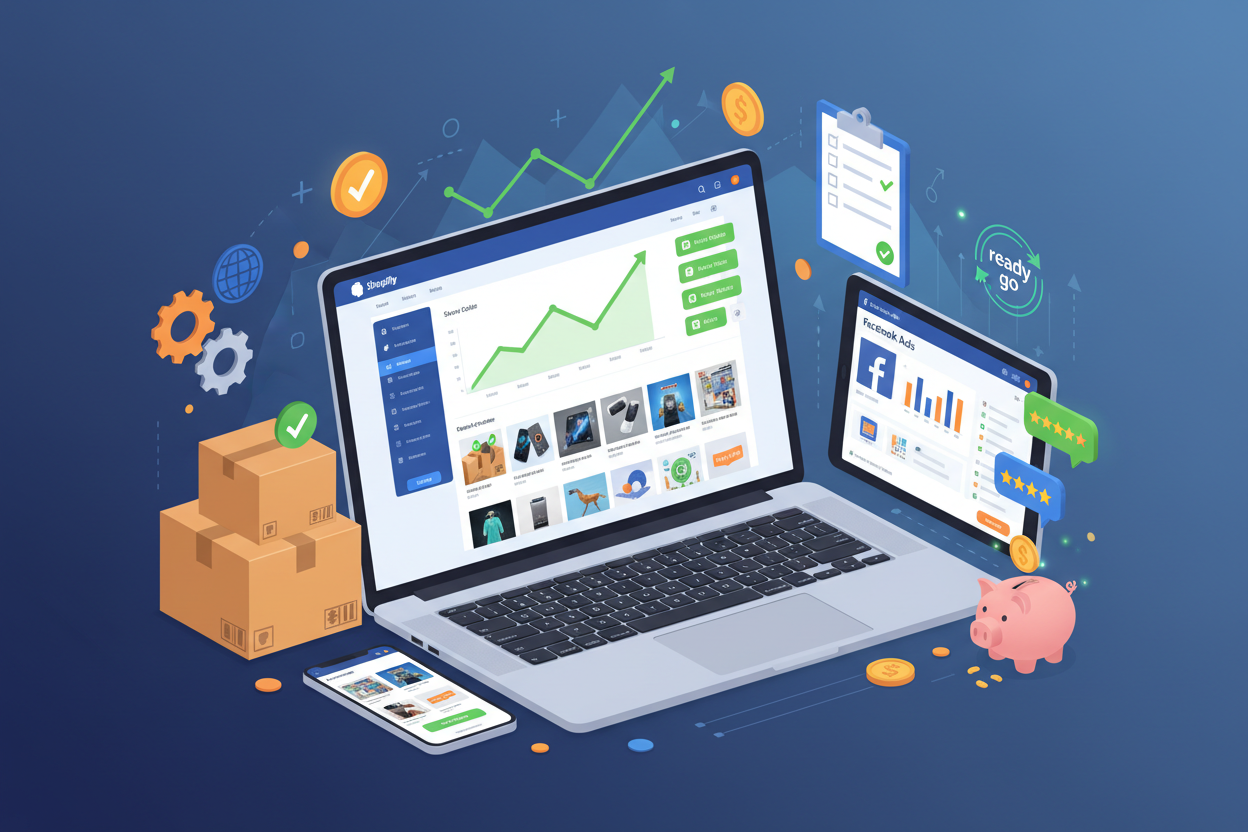
Thinking about buying a ready-made dropshipping store? Smart move—but knowing exactly what you're getting and how to choose the right one is critical to your success. Unlike building from scratch, buying a turnkey dropshipping business gives you immediate revenue, proven products, and established systems.
This comprehensive guide reveals everything included in a ready-made dropshipping store and how to choose the perfect one for your goals. Whether you're a complete beginner or experienced entrepreneur, you'll know exactly what to look for when buying an online business.
What is a Ready-Made Dropshipping Store?
A ready-made dropshipping store is a fully operational ecommerce business that's already built, tested, and generating revenue. Instead of spending months building from scratch, you buy an established store with everything in place—products, suppliers, marketing systems, and customers.
Key Characteristics:
- Fully operational: Store is live and accepting orders
- Proven revenue: 6-24 months of verified sales history
- Established suppliers: Vetted dropshipping partners ready to fulfill orders
- Active marketing: Working ad campaigns and traffic sources
- Immediate transfer: You take over and start earning from day one
What's Included in a Ready-Made Dropshipping Store?
When you buy a dropshipping store for sale, here's exactly what you should receive:
1. Fully Configured Shopify Store
What you get:
- Complete Shopify store with premium theme (usually $180-$350 value)
- Professional store design and branding
- Mobile-optimized, conversion-focused layout
- All essential apps and plugins installed and configured
- Custom domain name (or ability to transfer)
- Legal pages (Privacy Policy, Terms of Service, Refund Policy)
- Payment gateway integration (Stripe, PayPal, etc.)
Why it matters: You skip weeks of design work, theme customization, and technical setup. The store is ready to accept orders immediately.
2. Curated Product Catalog
What you get:
- 10-100+ proven products that already sell
- Professional product descriptions optimized for conversions
- High-quality product images and photography
- Competitive pricing already tested and validated
- Product variants (sizes, colors, options) configured
- Inventory synced with suppliers
Why it matters: Product research is the hardest part of dropshipping. You're buying products with proven demand and conversion rates—no guessing required.
3. Established Supplier Relationships
What you get:
- Vetted supplier contacts and account information
- Negotiated pricing and terms
- Proven shipping times and reliability data
- Quality control processes already established
- Direct communication channels with suppliers
- Backup supplier options for key products
Why it matters: Finding reliable suppliers takes months of trial and error. You inherit relationships that already work, with proven quality and shipping times.
4. Working Marketing Systems
What you get:
- Proven Facebook/Instagram ad campaigns with performance data
- Ad creatives (images, videos, copy) that convert
- Tested audience targeting and demographics
- Email marketing sequences and automation
- Abandoned cart recovery flows
- Customer retention campaigns
- SEO optimization and organic traffic (if applicable)
Why it matters: You know exactly what works. Customer acquisition cost (CAC), conversion rates, and ROI are proven—no expensive testing required.
5. Customer Base and Email List
What you get:
- Email subscriber list (typically 500-10,000+ contacts)
- Customer purchase history and data
- Product reviews and testimonials
- Social media followers (if accounts transfer)
- Returning customer base
Why it matters: Customer acquisition costs continue rising. Inheriting an audience gives you immediate marketing opportunities and recurring revenue potential.
6. Analytics and Performance Data
What you get:
- Google Analytics access showing traffic history
- Shopify analytics with sales data
- Facebook Ads Manager performance history
- Conversion rate data
- Customer behavior insights
- Best-selling products and trends
Why it matters: Data-driven decisions from day one. You know what works, what doesn't, and where to focus your efforts.
7. Standard Operating Procedures (SOPs)
What you get:
- Step-by-step guides for daily operations
- Order processing workflows
- Customer service templates and scripts
- Supplier communication procedures
- Marketing campaign setup guides
- Troubleshooting documentation
Why it matters: You're not figuring things out alone. Clear documentation ensures smooth operations from day one.
8. Training and Transition Support
What you get:
- 30-90 days of seller support and training
- Video walkthroughs of key processes
- Supplier introductions and handoffs
- Access to seller for questions during transition
- Recorded training sessions for reference
Why it matters: The seller's insider knowledge is invaluable. You learn what took them months or years to figure out.
How Much Does a Ready-Made Dropshipping Store Cost?
Pricing varies based on revenue, profit, traffic, and growth potential:
Pricing Tiers:
Starter Stores ($5,000-$15,000):
- Monthly revenue: $2,000-$8,000
- Monthly profit: $500-$2,000
- Age: 3-12 months
- Best for: First-time buyers, limited budgets
Established Stores ($15,000-$50,000):
- Monthly revenue: $8,000-$30,000
- Monthly profit: $2,000-$8,000
- Age: 12-24 months
- Best for: Experienced operators, serious income goals
Premium Stores ($50,000-$150,000+):
- Monthly revenue: $30,000-$100,000+
- Monthly profit: $8,000-$30,000+
- Age: 24+ months
- Best for: Investors, portfolio builders, scaling entrepreneurs
Valuation Formula:
Most dropshipping stores for sale are valued at 20-35x monthly net profit.
Example: A store earning $3,000/month profit typically sells for $60,000-$105,000.
How to Choose the Right Ready-Made Dropshipping Store
Step 1: Define Your Budget and Goals
Before browsing online businesses for sale, clarify:
- Investment budget: How much can you invest upfront?
- Income goals: How much monthly profit do you need?
- Time commitment: How many hours weekly can you dedicate?
- Experience level: Are you a beginner or experienced?
- Growth ambitions: Do you want passive income or aggressive scaling?
Step 2: Evaluate the Niche and Products
Look for:
- Evergreen products: Year-round demand, not seasonal fads
- Healthy profit margins: 30-50%+ markup potential
- Low return rates: Under 5% indicates quality products
- Passionate audience: Niches with engaged communities
- Growth potential: Room to expand product line
Avoid:
- Oversaturated niches (phone cases, generic jewelry)
- Fad products with declining interest
- Products with trademark/legal issues
- Items with high return rates or quality complaints
Step 3: Verify Financial Performance
Request and review:
- 12-24 months of revenue and profit data
- Bank statements or payment processor reports
- Shopify analytics screenshots
- Profit and loss statements
- Expense breakdowns (ads, apps, subscriptions)
Red flags:
- Declining revenue for 3+ consecutive months
- Seller refuses to provide financial proof
- Profit margins below 15%
- Unexplained revenue spikes (viral moments don't repeat)
Step 4: Analyze Traffic Sources
Request Google Analytics access to verify:
- Total monthly visitors and trends
- Traffic source breakdown (paid, organic, social, direct)
- Bounce rate (should be under 70%)
- Average session duration
- Geographic distribution
Ideal traffic mix:
- 40-60% paid advertising (Facebook, Instagram, Google)
- 20-40% organic and direct traffic
- 10-20% social and referral traffic
Warning signs:
- 100% paid traffic (revenue stops when ads stop)
- Sudden traffic drops in recent months
- High bounce rates (80%+)
- Traffic from irrelevant countries
Step 5: Assess Supplier Quality and Reliability
Critical checks:
- Order samples: Test product quality, packaging, and shipping times yourself
- Verify shipping times: Should be under 14 days (ideally 7-10 days)
- Check supplier responsiveness: Email suppliers with questions
- Review supplier agreements: Understand terms and transferability
- Confirm backup suppliers: Multiple options for key products
Deal breakers:
- Shipping times over 3 weeks
- Poor product quality or packaging
- Unresponsive or unprofessional suppliers
- Single-supplier dependency with no alternatives
Step 6: Review Marketing Performance
Request access to:
- Facebook Ads Manager (performance history)
- Email marketing platform (open rates, click rates)
- Ad creatives and copy that convert
- Customer acquisition cost (CAC) data
- Lifetime value (LTV) metrics
What to look for:
- CAC under $30 for most niches
- LTV at least 3x higher than CAC
- Email open rates above 15%
- Proven ad creatives with performance data
- Documented marketing workflows
Step 7: Evaluate Growth Potential
Ask yourself:
- Can I expand the product line with related items?
- Are there untapped marketing channels (TikTok, Pinterest, influencers)?
- Can I improve conversion rates with better design or copy?
- Is there international expansion potential?
- Can I build a brand and increase customer loyalty?
Best opportunities:
- Stores with low-hanging fruit for optimization
- Underutilized marketing channels
- Strong foundation but room to scale
- Passionate niche with expansion potential
Step 8: Check Legal and Compliance
Verify:
- No trademark infringement on products or branding
- Proper business registration and tax compliance
- No Shopify policy violations or warnings
- Domain ownership and transferability
- All content and images are legally owned
- No pending lawsuits or disputes
Common Mistakes to Avoid
1. Buying Based on Revenue Instead of Profit
A store doing $50,000/month in revenue but only $2,000 profit is worse than a $10,000/month revenue store with $3,000 profit. Focus on net profit, not vanity metrics.
2. Skipping Product Testing
Always order samples before buying. Poor product quality kills businesses—verify quality yourself.
3. Ignoring Traffic Trends
Declining traffic for 3+ months is a major red flag. Make sure traffic is stable or growing.
4. Overlooking Time Commitment
Dropshipping isn't 100% passive. Budget 15-25 hours weekly for ads, customer service, and operations.
5. Not Negotiating Transition Support
Insist on at least 30 days of seller support. Their knowledge is invaluable during the transition.
Ready-Made Dropshipping vs. Other Business Models
Wondering if dropshipping is right for you? Here's how it compares to other online businesses for sale:
Dropshipping vs. Affiliate Websites
Dropshipping:
- Higher revenue potential ($5K-$100K+/month)
- More active management (15-25 hours/week)
- Lower profit margins (15-30%)
- Full brand control
- Lower revenue potential ($500-$10K/month typically)
- More passive (5-10 hours/week)
- Higher profit margins (70-90%)
- No brand control
Dropshipping vs. Amazon FBA
Dropshipping:
- No inventory investment required
- Full control over branding and customer experience
- More marketing effort required
- Lower startup costs ($5K-$50K)
- Requires inventory investment ($20K-$200K)
- Amazon controls customer experience
- Less marketing effort (Amazon provides traffic)
- Higher startup costs
Dropshipping vs. Digital Agencies
Dropshipping:
- Product-based business model
- 15-25 hours weekly commitment
- $5K-$50K investment range
- Moderate passive income potential
- Service-based business model
- 30-50 hours weekly commitment
- $50K-$500K investment range
- Low passive income potential (active client work)
Your Ready-Made Dropshipping Store Checklist
Before buying, verify you're getting:
- ✅ Fully configured Shopify store with premium theme
- ✅ 10-100+ proven products with professional descriptions
- ✅ Established supplier relationships with contact info
- ✅ Working Facebook/Instagram ad campaigns
- ✅ Email list and customer database
- ✅ 12-24 months of verified financial data
- ✅ Google Analytics access showing traffic history
- ✅ Standard operating procedures (SOPs)
- ✅ 30-90 days of seller training and support
- ✅ All legal pages and compliance documentation
- ✅ Domain name transfer or ownership
- ✅ No trademark violations or legal issues
Start Your Dropshipping Journey Today
Ready to buy a ready-made dropshipping store? You now know exactly what to look for, what to avoid, and how to choose the perfect store for your goals.
Browse our curated marketplace of verified dropshipping businesses:
- Ready-Made Dropshipping Stores for Sale - Verified financials, proven products, immediate revenue
Looking for other business models? Explore our full marketplace:
- Affiliate Websites for Sale - Maximum passive income potential
- Amazon FBA Businesses for Sale - Established brands with inventory
- Digital Agencies for Sale - Active clients and recurring revenue
Every listing on our online business marketplace includes complete transparency: verified financials, traffic analytics, supplier information, and growth potential analysis.
Stop wasting time building from scratch. Buy a proven, profitable dropshipping store and start earning from day one. Your entrepreneurial journey begins today.
Related reading
All articles


Free Online Business Calculators
Estimate costs, profits, ROI, affiliate earnings, and business value before you spend money.