
ShopifyStores
Logistics Fragility: Is Your Dropshipping Supplier Exclusive or Just an AliExpress Link?
A “verified supplier” isn’t an asset if it’s just a public AliExpress link. This guide shows how to audit supply chain fragility, reduce chargeback risk, and demand a Supplier Transfer Agreement so...
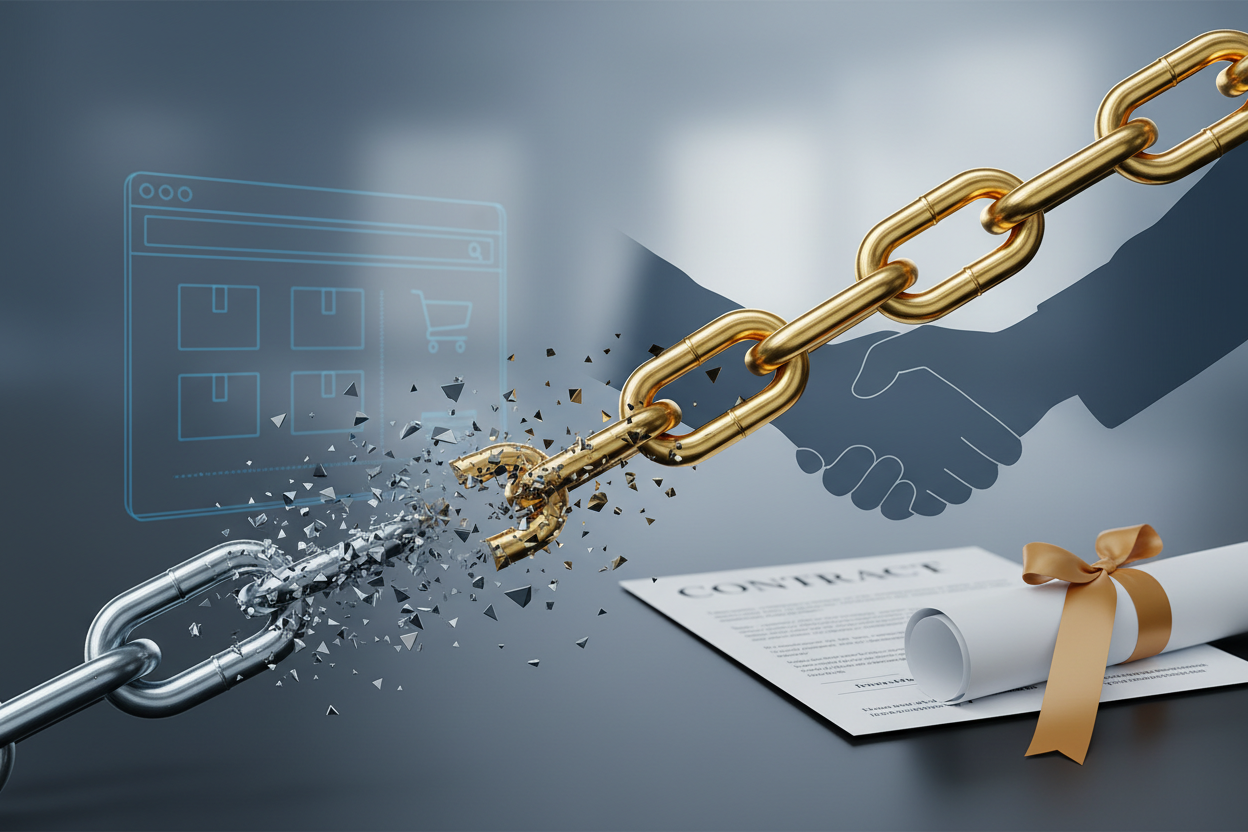
Logistics Fragility: Is Your Dropshipping Supplier Exclusive or Just an AliExpress Link?
Key takeaway: If your “supplier” is just a public AliExpress link, you don’t own a supply chain—you own a fragile funnel that competitors can copy overnight.
Here’s the scenario that destroys buyers:
You buy a dropshipping store doing $10k/month. The seller says, “We have verified suppliers.” Then they hand you the “supplier”… and it’s a public AliExpress product page with 15,000 orders.
At that moment, you didn’t buy a business. You bought a temporary marketing funnel.
Why? Because you have zero exclusivity. Any competitor can find the exact same product, copy your creatives, and undercut your price by tomorrow morning.
That’s logistics fragility: when your entire supply chain is accessible to anyone with a browser, you have no defensive moat.
The “Verified Supplier” Trap (and the Middleman Risk)
Verdict: “Verified” usually means “we checked reviews”—not “we have a relationship.”
Listings love the phrase “verified suppliers dropshipping,” but most of the time “verified” simply means:
- the seller checked the AliExpress rating
- the product page had decent reviews
- the supplier shipped a few test orders
That is not a supplier relationship. That’s a public marketplace link.
And here’s the real risk: the supplier has zero loyalty to the new owner. So your biggest buyer fears are valid:
- What if the supplier stops shipping?
- What if they raise the price overnight?
- What if quality drops and returns explode?
If all you have is a public link, you have no leverage.

The Silent Killer: Chargebacks (and the Amazon Price Check)
Key takeaway: Slow shipping and price comparison crush trust—then payment processors punish you with disputes and restrictions.
Public AliExpress sourcing usually brings two brutal problems:
1) Slow shipping = chargebacks risk
If shipping takes 20–30 days, modern customers will not wait. If tracking isn’t updated quickly, disputes start. Too many disputes and you can lose Stripe/PayPal—sometimes permanently.
That’s the dropshipping chargebacks risk most buyers don’t calculate until it’s too late.
2) “Is this cheaper on Amazon?” is usually yes
Customers do the Amazon price check. If your product is a public AliExpress link, it’s often already on Amazon/Walmart with:
- faster delivery
- similar pricing
- more trust
To compete long-term, you need a private sourcing setup that can deliver at least one advantage:
- faster shipping (7–10 days vs 20–30)
- better pricing (true wholesale)
- custom packaging / bundles / inserts
- consistent quality control
The Fix: Demand a Supplier Transfer Agreement
Verdict: If the seller can’t document supplier terms, the “supplier” isn’t an asset—it’s a liability.
This is the part most buyers miss.
If the supplier relationship is real, the seller should be able to prove it with structure—not vibes.
During due diligence, require a Supplier Transfer Agreement (even a simple one) that clearly states:
- Who the supplier/agent is (name + contact method like WhatsApp/WeChat/Skype)
- Confirmed COGS / pricing rules (what you pay per unit)
- Shipping + processing expectations (SLA: dispatch time + delivery range)
- Quality control responsibility (what happens if items arrive defective)
- Continuation confirmation (they will keep supplying under the new owner)
If the seller can’t provide any of this, then the “supplier” isn’t an asset. It’s a risk you’re inheriting.

Why Sellers Really Exit (Sometimes It’s Logistics, Not Ads)
Key takeaway: Many exits happen because fulfillment is breaking—ads are just the symptom buyers notice first.
A lot of sellers say they’re “moving on.” Sometimes the truth is uglier:
- stockouts they can’t solve
- supplier quality slipping
- refunds piling up
- chargebacks about to hit
- a bad batch coming that will nuke the store’s reputation
Supply chain breakdowns are a massive hidden reason for exits—and it connects directly to the other half of the story here:
Why sell a profitable Shopify store? The truth about dropshipping ad fatigue
And if you want the full acquisition blueprint (including what to ask for during supplier audits), use:
Shopify Store for Sale: How to Buy an Ecommerce Business in 2026
Conclusion: Buy the Infrastructure, Not Just the Funnel
Verdict: A beautiful Shopify store means nothing if fulfillment is duct-taped to a public marketplace link.
If you’re buying a dropshipping business, your #1 job is to verify:
- the supplier is private (or at least relationship-based)
- shipping times are realistic
- pricing is stable
- and the handover is documented
That’s how you avoid buying a store that collapses the moment you touch it.
Video: why AliExpress sourcing breaks businesses
Want a more stable setup? Take over a business with reliable fulfillment here:
Related reading
All articles


Free Online Business Calculators
Estimate costs, profits, ROI, affiliate earnings, and business value before you spend money.