ShopifyStores
Do I Own the Intellectual Property? How to Audit IP Risks When Buying an Online Business
Buying an online business can go sideways fast if the “growth” came from stolen creatives, shady trademarks, or unclear SaaS licenses. Here’s the simple IP checklist to run before you send a...
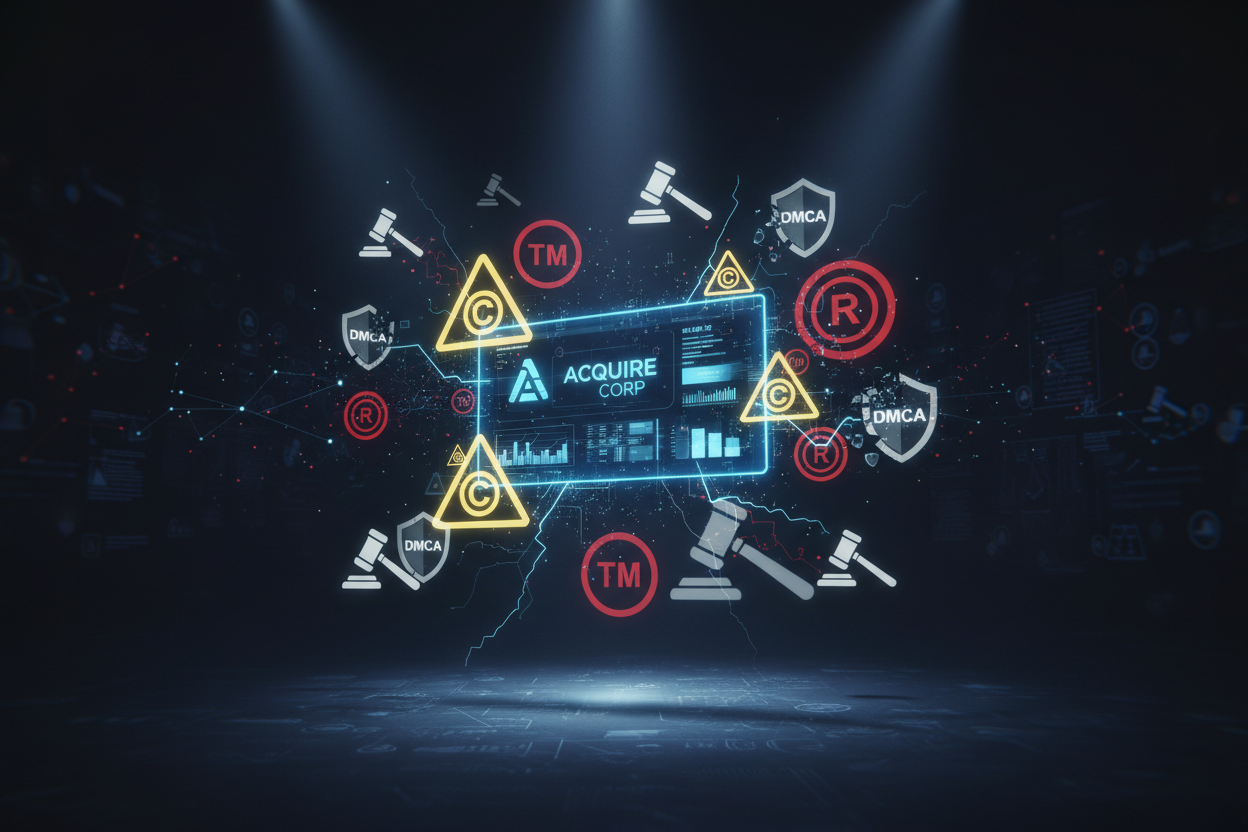
Do I Own the Intellectual Property? How to Audit IP Risks When Buying an Online Business
Let me tell you the worst kind of deal.
You buy a business that looks amazing. Sales are up. Ads are “crushing.” The seller is friendly and says they’re “moving on to new projects.”
Then, a few weeks after you take over, one of these happens:
- You get a cease-and-desist from a major brand.
- Your Meta ad account gets disabled for IP violations.
- Your Shopify store gets hit with DMCA takedown requests.
- Or you realize the SaaS code you bought… was never legally transferable.
At that point, revenue screenshots don’t matter. You’re not running a business. You’re doing damage control.
Key takeaway: IP is the quiet deal-killer. If you don’t audit it before you buy, you can end up buying a lawsuit.
This is the IP liability minefield most buyers don’t audit. Here’s how to avoid it.

1) Buying a business vs. buying a lawsuit
Most listings sell you the dream with top-line numbers: revenue, traffic, ROAS, “low work hours.”
What they rarely show you is the stuff that can kill the business overnight:
- Stolen ad creatives
- Copyrighted product images
- Trademark issues (brand name, domain, logos)
- SaaS license ambiguity (what you’re allowed to resell)
Harsh truth: if the seller used risky tactics to inflate growth, those problems transfer to you the moment the asset is in your name.
2) Dropshipping’s dirty secret: stolen creatives and copyrighted images
This one is everywhere.
A store is doing $30k/month off TikTok and Meta. The seller shows you “winning creatives” and says, “Just keep running these.”
What they don’t tell you:
- those creatives were ripped from competitors,
- or made using unlicensed UGC,
- or the product page is filled with copyrighted images pulled from Google, Amazon listings, or brand websites.
Why this is brutal: in dropshipping, you’re the seller of record. The supplier in another country won’t take the hit. You will.
What happens when you take over:
- Copyright strikes start landing
- Your ad account gets flagged
- Your payment processors start asking questions
- Revenue drops like a rock
If you want the bigger picture on ad account fragility (even when the niche is fine), read:
Why Sell a Profitable Shopify Store? The Truth About Dropshipping Ad Fatigue
What to audit before you buy
- Ask for proof of ownership of the top 10 creatives (raw project files, original creator agreements, or commercial licenses).
- Check product pages for brand-owned imagery (big red flag).
- Look for “too perfect” UGC that feels copied from a competitor’s ad library.
Verdict: If they can’t prove it, assume it’s stolen. Period.

3) SaaS license clarity: who actually owns the code?
If you’re buying a Micro-SaaS or a “ready-made app,” the biggest trap is not the code quality. It’s the rights.
A seller might say: “It’s proprietary.” But many apps are built on:
- restricted open-source libraries
- single-use commercial templates
- components licensed for one project only
- code written by freelancers without proper IP assignment
So the real question becomes: do you legally own the IP, and do you have the right to resell it or run it commercially?
What to demand (non-negotiable)
- A signed IP Assignment Agreement (seller confirms they own and can transfer the code)
- Proof of licenses for any paid templates/components
- Confirmation that any contractors signed “work-for-hire / IP assignment” terms
If you’d rather avoid the whole “code ownership” headache, service models can be cleaner because you’re buying delivery systems, not a codebase. Example:
Buy a Digital Marketing Agency: Inside Bold Branding’s Drop-Servicing Model

4) Trademark landmines: domains and brand names that can get seized
This one is sneaky.
A site can have great SEO and steady traffic, but if it uses a name or domain that’s too close to a big brand (or uses protected terms), you’re exposed.
If the name infringes a trademark, the brand can file a domain dispute (like a UDRP process) and take the domain. If that happens, you don’t just lose a URL—you lose:
- rankings
- backlinks
- branded searches
- customer trust
What to check before you buy
- Search the business name in the USPTO trademark database
- Check if the logo resembles an existing brand identity
- Scan products for brand terms (Nike, Apple, Disney, etc.) in titles/descriptions
Verdict: If it smells like “borrowed authority,” walk away.

5) Your simple IP Due Diligence checklist (run this before you send money)
Use this as your fast “don’t get burned” checklist:
A) Creative ownership
- Ask for proof they own or licensed the top ads and images
- Confirm UGC rights (creator permission in writing)
B) Trademark safety
- Check brand name + domain in USPTO
- Avoid anything that “rides” a famous brand’s name
C) Product legitimacy
- Confirm products aren’t knockoffs or branded replicas
- Ask where products come from and if there are any restrictions
D) SaaS licensing
- Get written IP assignment
- Verify template/component licenses
- Ensure contractor IP transfer is clean
And yes—your IP risk is tied to your supply chain risk too. If sourcing is messy, counterfeit/trademark problems jump. This guide connects those dots well:
Logistics Fragility: Is Your Dropshipping Supplier Exclusive or Just an AliExpress Link?
6) The bottom line
A business is only valuable if it’s defensible.
If the “growth” is built on stolen creatives, trademark gray zones, or unclear SaaS licenses, the business can disappear with one email from a lawyer—or one platform ban.
That’s why we care less about hype and more about clean, transferable assets.
If you want to browse stores that are built like real assets (not legal roulette), see our vetted listings here:
Related reading
All articles

Free Online Business Calculators
Estimate costs, profits, ROI, affiliate earnings, and business value before you spend money.