AmazonFbaBusiness
Amazon FBA vs Dropshipping: Which Business Model Should You Buy in 2026?
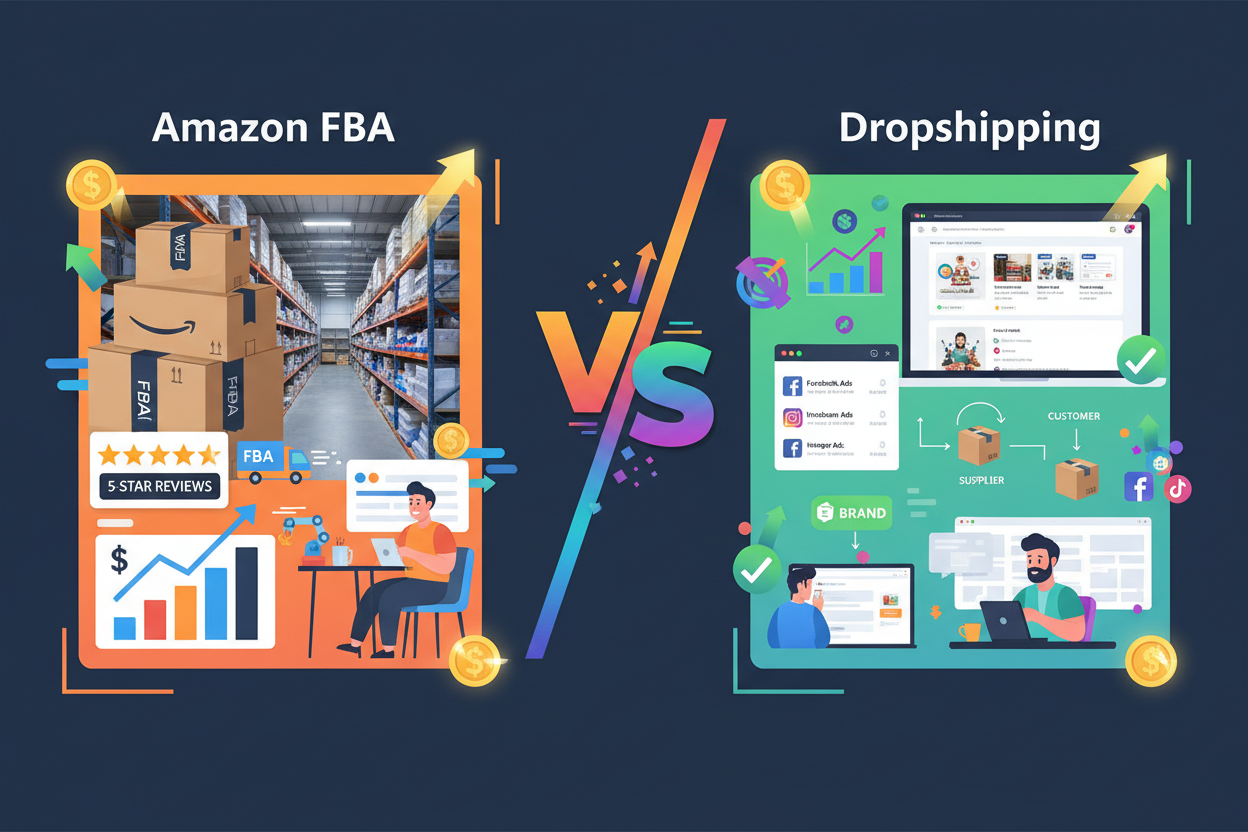
Choosing between Amazon FBA and dropshipping is one of the biggest decisions you'll make when buying an online business. Both models can generate six-figure incomes, but they operate completely differently—with distinct advantages, challenges, and ideal owner profiles.
This comprehensive comparison reveals everything you need to know about Amazon FBA vs dropshipping in 2026, helping you choose the right business model for your goals, budget, and lifestyle.
Amazon FBA vs Dropshipping: Quick Overview
Amazon FBA (Fulfillment by Amazon)
You source products, send inventory to Amazon's warehouses, and Amazon handles storage, packing, shipping, and customer service. Your products are listed on Amazon's marketplace with access to 300+ million Prime members.
Key characteristics:
- Requires inventory investment ($10K-$200K+)
- Amazon handles fulfillment and customer service
- Access to Amazon's massive customer base
- Higher startup costs, lower ongoing effort
- Branded products with reviews and rankings
Dropshipping
You run your own Shopify store, market products, and when customers order, suppliers ship directly to them. You never touch inventory—suppliers handle storage and fulfillment.
Key characteristics:
- No inventory investment required
- You handle marketing and customer service
- Build your own brand and customer base
- Lower startup costs, higher ongoing effort
- Full control over branding and customer experience
Head-to-Head Comparison: 15 Key Factors
1. Startup Investment Required
Amazon FBA: $30,000-$200,000+
- Initial inventory: $10,000-$100,000
- Product samples and testing: $500-$2,000
- Photography and listing optimization: $500-$2,000
- Amazon PPC launch budget: $3,000-$10,000
- Trademark and legal: $500-$2,000
- Business acquisition cost: $50,000-$500,000
Dropshipping: $5,000-$50,000
- No inventory investment needed
- Shopify and apps: $200-$500/month
- Marketing budget: $2,000-$10,000
- Product samples: $200-$500
- Business acquisition cost: $10,000-$100,000
Winner: Dropshipping (10x lower startup costs)
2. Monthly Operating Costs
Amazon FBA: $2,000-$10,000/month
- Amazon fees: 15-20% of sales
- FBA storage fees: $500-$3,000/month
- Amazon PPC: $1,000-$5,000/month
- Inventory replenishment: Ongoing
- Software and tools: $200-$500/month
Dropshipping: $1,500-$8,000/month
- Shopify and apps: $200-$500/month
- Facebook/Instagram ads: $1,000-$5,000/month
- Email marketing: $50-$200/month
- Customer service VA: $600-$1,200/month
- Product costs: Paid after customer orders
Winner: Dropshipping (slightly lower fixed costs)
3. Profit Margins
Amazon FBA: 20-40% net profit margins
- Product cost: 30-40% of sale price
- Amazon fees: 15-20%
- PPC and advertising: 10-20%
- Shipping to Amazon: 5-10%
- Net profit: 20-40%
Example: $50 product → $10-20 profit
Dropshipping: 15-30% net profit margins
- Product cost: 40-50% of sale price
- Advertising: 20-30%
- Payment processing: 3-5%
- Apps and tools: 2-5%
- Net profit: 15-30%
Example: $50 product → $7.50-15 profit
Winner: Amazon FBA (higher profit margins)
4. Time Commitment
Amazon FBA: 10-20 hours/week
- Inventory management and reordering
- PPC campaign optimization
- Supplier communication
- Competitor monitoring
- Product listing optimization
- Amazon handles customer service
Dropshipping: 20-30 hours/week
- Daily ad management and optimization
- Customer service (10-30 inquiries daily)
- Supplier communication
- Email marketing
- Website updates and testing
- Shipping issue resolution
Winner: Amazon FBA (50% less time required)
5. Passive Income Potential
Amazon FBA: 7/10 passive score
- Amazon handles fulfillment and customer service
- Requires inventory management and PPC optimization
- Can hire VA for routine tasks
- More passive than dropshipping
Dropshipping: 5/10 passive score
- Requires active marketing and ad management
- Customer service demands daily attention
- Can delegate to VAs but still needs oversight
- Less passive than Amazon FBA
Winner: Amazon FBA (more passive income)
6. Scalability
Amazon FBA: High scalability with capital
- Scale by adding more products
- Expand to international Amazon marketplaces
- Limited by inventory capital requirements
- Amazon's infrastructure handles growth
Dropshipping: High scalability without capital
- Scale by increasing ad spend
- Add unlimited products without inventory risk
- No capital constraints
- Limited by marketing effectiveness
Winner: Tie (different scaling mechanisms)
7. Brand Control
Amazon FBA: Limited brand control
- Amazon controls customer experience
- Limited customization of product pages
- Can't collect customer emails directly
- Amazon owns customer relationship
Dropshipping: Full brand control
- Complete control over website design
- Own customer data and email list
- Build brand identity and story
- Control entire customer journey
Winner: Dropshipping (full brand ownership)
8. Customer Acquisition
Amazon FBA: Easier customer acquisition
- Access to 300+ million Prime members
- Customers already searching for products
- High buyer intent on Amazon
- PPC drives immediate sales
Dropshipping: Harder customer acquisition
- Must build traffic from scratch
- Rely on paid ads (Facebook, Instagram, TikTok)
- Lower buyer intent (cold traffic)
- Requires strong marketing skills
Winner: Amazon FBA (built-in customer base)
9. Competition Level
Amazon FBA: High competition
- Millions of sellers on Amazon
- Price wars and race to bottom
- Difficult to differentiate
- Established sellers dominate rankings
Dropshipping: High competition
- Low barrier to entry attracts many sellers
- Same products sold by multiple stores
- Ad costs increasing due to competition
- Branding helps differentiate
Winner: Tie (both highly competitive)
10. Risk Level
Amazon FBA: Higher financial risk
- Large inventory investment at risk
- Unsold inventory loses value
- Amazon policy changes can hurt business
- Account suspension risk
Dropshipping: Lower financial risk
- No inventory investment to lose
- Can test products with minimal risk
- Easy to pivot if products don't sell
- Platform dependency (Shopify, suppliers)
Winner: Dropshipping (lower financial risk)
11. Product Quality Control
Amazon FBA: Full quality control
- Inspect products before sending to Amazon
- Control packaging and presentation
- Ensure consistent quality
- Build reputation with quality products
Dropshipping: Limited quality control
- Rely on suppliers for quality
- Can't inspect products before shipping
- Quality inconsistencies possible
- Supplier mistakes reflect on your brand
Winner: Amazon FBA (better quality control)
12. Shipping Speed
Amazon FBA: Fast shipping (1-2 days)
- Prime 2-day shipping standard
- Same-day delivery in many areas
- Customer expectation: fast delivery
- Competitive advantage with Prime badge
Dropshipping: Slower shipping (7-14 days)
- Typical shipping: 7-14 days
- International suppliers: 14-30 days
- Customer complaints about slow shipping
- Must manage expectations clearly
Winner: Amazon FBA (much faster shipping)
13. Customer Service Burden
Amazon FBA: Minimal customer service
- Amazon handles 90% of customer service
- Amazon manages returns and refunds
- Seller only handles specific issues
- Huge time saver
Dropshipping: Heavy customer service
- Handle all customer inquiries
- Manage shipping issues and delays
- Process returns and refunds
- 10-30+ inquiries daily
Winner: Amazon FBA (Amazon handles it)
14. Business Valuation
Amazon FBA: 2.5-4x annual profit
- Typical multiple: 2.5-4x annual profit
- Example: $100K profit = $250K-$400K valuation
- Branded products valued higher
- Established reviews increase value
Dropshipping: 20-35x monthly profit
- Typical multiple: 20-35x monthly profit
- Example: $5K/month profit = $100K-$175K valuation
- Branded stores valued higher
- Diversified traffic sources increase value
Winner: Tie (similar valuations relative to profit)
15. Long-Term Sustainability
Amazon FBA: More sustainable long-term
- Branded products build lasting value
- Reviews and rankings compound over time
- Less dependent on paid advertising
- Amazon's growth benefits sellers
Dropshipping: Less sustainable long-term
- Heavily dependent on paid ads
- Ad costs increasing year-over-year
- Product saturation over time
- Requires constant product testing
Winner: Amazon FBA (more sustainable)
Comparison Summary Table
| Factor | Amazon FBA | Dropshipping | Winner |
|---|---|---|---|
| Startup Investment | $30K-$200K+ | $5K-$50K | Dropshipping |
| Profit Margins | 20-40% | 15-30% | Amazon FBA |
| Time Commitment | 10-20 hrs/week | 20-30 hrs/week | Amazon FBA |
| Passive Income | 7/10 | 5/10 | Amazon FBA |
| Brand Control | Limited | Full | Dropshipping |
| Customer Acquisition | Easier | Harder | Amazon FBA |
| Financial Risk | Higher | Lower | Dropshipping |
| Shipping Speed | 1-2 days | 7-14 days | Amazon FBA |
| Customer Service | Minimal | Heavy | Amazon FBA |
| Long-Term Sustainability | Higher | Lower | Amazon FBA |
Which Business Model Should YOU Choose?
Choose Amazon FBA If:
- ✅ You have $30K-$200K+ to invest upfront
- ✅ You want more passive income (10-20 hrs/week)
- ✅ You prefer higher profit margins (20-40%)
- ✅ You want Amazon to handle customer service
- ✅ You're comfortable managing inventory
- ✅ You want faster shipping and Prime badge
- ✅ You prefer long-term sustainability over quick wins
- ✅ You're detail-oriented and operations-focused
- ✅ You want access to Amazon's 300M+ customers
- ✅ You're building for long-term wealth
Choose Dropshipping If:
- ✅ You have limited capital ($5K-$50K)
- ✅ You want full brand control and ownership
- ✅ You're comfortable with active management (20-30 hrs/week)
- ✅ You have strong marketing and advertising skills
- ✅ You want to test products with minimal risk
- ✅ You prefer building your own brand vs selling on Amazon
- ✅ You're creative and enjoy marketing
- ✅ You want to own customer data and email lists
- ✅ You're willing to handle customer service
- ✅ You want lower financial risk
2026 Trends: Which Model is Hotter?
Amazon FBA in 2026
What's hot:
- International expansion (India, Brazil, Middle East)
- Private label brands with strong differentiation
- Subscription products and replenishment
- Amazon Advertising mastery
Growth potential: 80-150% for well-positioned brands
Dropshipping in 2026
What's hot:
- TikTok Shop integration (fastest-growing channel)
- Sustainable and eco-friendly products
- Hyper-niche specialization
- AI-powered customer service and marketing
Growth potential: 150-300% for TikTok-native stores
2026 verdict: Dropshipping has higher growth potential in 2026 due to TikTok Shop explosion, but Amazon FBA offers more stability.
Hybrid Strategy: Why Not Both?
Many successful entrepreneurs run both models simultaneously:
The Portfolio Approach:
Core business (70% of capital): Amazon FBA business for stable, predictable revenue
Growth play (30% of capital): Dropshipping store for high growth and brand building
Benefits:
- Diversified revenue streams
- Amazon FBA provides stability
- Dropshipping provides growth
- Learn both models
- Hedge against platform risk
Example Portfolio:
Investment: $100,000 total
Amazon FBA: $70,000 → $8,000/month profit (stable)
Dropshipping: $30,000 → $4,000/month profit (growing)
Total monthly profit: $12,000
Time commitment: 25-30 hours/week combined
Real Success Stories: Amazon FBA vs Dropshipping
Amazon FBA Success: Jennifer's Kitchen Brand
Investment: $285,000
Starting profit: $95,000/year
After 24 months: $180,000/year profit
Time commitment: 15 hours/week
Growth: 89% profit increase
Key strategies: Optimized PPC, expanded product line, launched in UK and Canada
Dropshipping Success: Sarah's Home Decor Store
Investment: $52,000
Starting profit: $2,400/month
After 12 months: $8,200/month profit
Time commitment: 20 hours/week
Growth: 242% profit increase
Key strategies: Optimized Facebook ads, added email marketing, launched influencer partnerships
Common Mistakes to Avoid
Amazon FBA Mistakes:
- ❌ Choosing oversaturated products
- ❌ Underestimating inventory capital needs
- ❌ Ignoring PPC optimization
- ❌ Poor supplier vetting
- ❌ Not protecting brand with trademark
Dropshipping Mistakes:
- ❌ Choosing generic, saturated products
- ❌ Not testing product quality before selling
- ❌ Underestimating customer service demands
- ❌ Relying on single traffic source
- ❌ Ignoring shipping times and quality
The Verdict: Which Should You Buy in 2026?
For most buyers, Amazon FBA is the better choice if:
- You have sufficient capital ($30K+)
- You want more passive income
- You prefer stability over rapid growth
- You're building long-term wealth
Dropshipping is better if:
- You have limited capital (under $30K)
- You want full brand control
- You have strong marketing skills
- You're chasing high growth in 2026
The ideal strategy: Start with one model that matches your capital and skills, then add the other as you grow.
Ready to Choose Your Business Model?
Now you know the complete truth about Amazon FBA vs dropshipping in 2026. Both models can generate life-changing income—the right choice depends on your capital, skills, and goals.
Browse our marketplace of verified businesses in both models:
- Amazon FBA Businesses for Sale - Established brands, proven products, Prime shipping
- Dropshipping Stores for Sale - Full brand control, lower investment, high growth potential
Looking for other business models? Explore our full marketplace:
- Affiliate Websites for Sale - Maximum passive income potential
- Digital Agencies for Sale - Active clients and recurring revenue
Every listing on our online business marketplace includes verified financials, traffic analytics, and complete transparency—helping you make the right choice between Amazon FBA and dropshipping.
Stop guessing. Start with data. Choose the business model that matches your goals and buy a proven, profitable business today.
Related reading
All articles

Free Online Business Calculators
Estimate costs, profits, ROI, affiliate earnings, and business value before you spend money.