ShopifyStores
Turnkey Dropshipping vs Starting From Scratch 2026 Guide
Thinking about buying a turnkey dropshipping store instead of building from scratch? This guide explains what to check before buying, what is included, what costs remain, and how to avoid beginner red...
Bluf
Quick Answer: Turnkey dropshipping vs starting from scratch 2026 comes down to speed, clarity, and risk. A ready made dropshipping store can help you skip the slow setup phase, but buyers must still check the platform, products, suppliers, domain, payment setup, traffic claims, support, monthly costs, and red flags before buying. A prebuilt store is a launch foundation, not guaranteed income.
Buying a turnkey dropshipping store can be smart if you know exactly what you are getting. The danger is buying blindly from sellers who only say “buy now” without explaining ownership, products, suppliers, monthly costs, or what work remains after purchase.
This guide breaks down the real buyer checklist so beginners can compare a prebuilt dropshipping store for sale against building from scratch. The goal is simple: protect your budget, avoid weak sellers, and start with clear expectations.
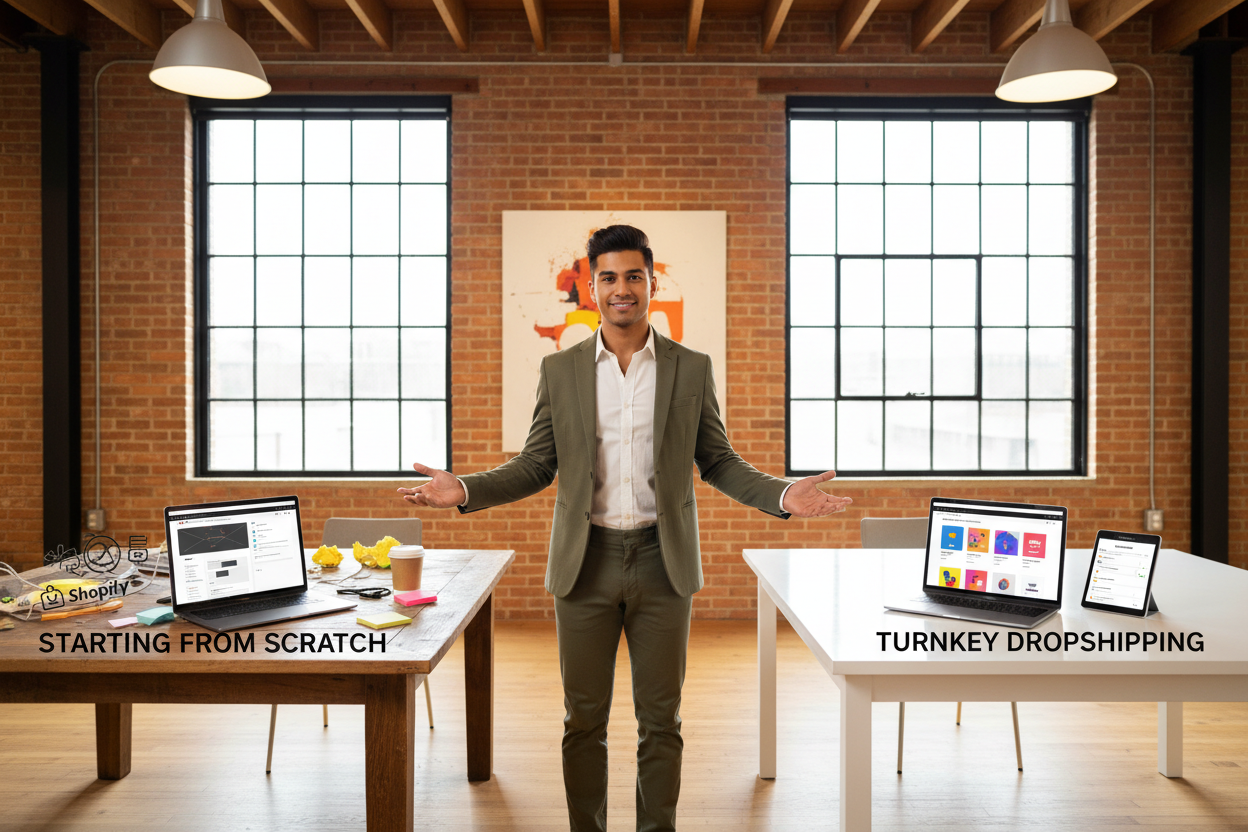
Turnkey Dropshipping vs Starting From Scratch: The Real Difference
Key Takeaway: Building from scratch gives more control, but turnkey dropshipping gives a faster starting foundation.
Starting from scratch means you handle everything yourself: Shopify setup, theme design, products, suppliers, apps, pages, policies, images, product descriptions, checkout testing, and mobile formatting.
Buying a ready made dropshipping store means much of that foundation is already prepared. You are not buying guaranteed customers. You are buying a faster launch base so you can focus sooner on traffic, product testing, content, pricing, and conversion.
If your goal is learning how to start a dropshipping store fast, the biggest benefit of buying ready-made is bypassing shopify setup phase friction. But you still need to operate the business like a real owner.

What Platform Is The Store Built On?
Key Takeaway: Before buying, confirm the platform because it affects ownership, monthly cost, apps, checkout, and future edits.
The first question should be simple: what platform is the store built on?
Many ready-made ecommerce stores are built on Shopify because it is beginner-friendly, supports product pages, apps, checkout, themes, payments, and store ownership transfer. But you should never assume. Ask clearly before buying.
Check:
- Is the store built on Shopify, WordPress, WooCommerce, or another platform?
- Will you receive admin access?
- Do you need your own Shopify account?
- Can you edit products, pages, prices, images, and collections?
- What monthly platform cost will you need after handover?
EcomChief’s ready-made ecommerce and dropshipping stores are presented as turnkey dropshipping and ecommerce businesses, with multiple store categories available for buyers to compare.
Are Products Already Uploaded?
Key Takeaway: A useful prebuilt store should already have product structure, but buyers should still review product quality, pricing, and niche fit.
Product setup matters because a dropshipping store without products is not launch-ready. Before you buy dropshipping store assets, check whether products are already uploaded and organized into collections.
Ask:
- Are products already uploaded?
- Are product titles, images, and descriptions included?
- Are products organized into collections?
- Can you edit product prices later?
- Are the products relevant to the niche?
- Are there too many random products with no clear customer?
A focused niche is easier to market than a random general store. For example, a Video Gaming Dropshipping Store gives a clear product direction around gaming accessories and gear, while a Leggings Dropshipping Store gives a more focused activewear angle.

Are Suppliers Included?
Key Takeaway: Supplier guidance is important, but buyers should confirm exactly how products will be fulfilled after the first sale.
Supplier clarity is one of the most important parts of buying a dropshipping business for sale.
Ask whether suppliers are included, recommended, or already connected through an app or product sourcing workflow. You need to know how orders will be fulfilled before customers start buying.
Check:
- Are supplier details included?
- Are products connected to supplier sources?
- Do you need to create your own supplier account?
- How are orders processed after a customer buys?
- Are shipping times clear?
- Can you replace suppliers if needed?
The store design may look strong, but weak supplier clarity can create problems after launch. Always understand fulfillment before running ads.
Is The Domain Included?
Key Takeaway: Do not assume the domain is included; check whether it transfers, must be purchased separately, or needs DNS connection.
The domain is your store’s web address. It helps the business look real and trustworthy.
Some packages may include a domain, some may offer domain help, and some may require you to buy or connect your own domain separately. Ask before buying.
Check:
- Is a domain included in the purchase?
- If included, how is it transferred?
- If not included, do you need to buy one separately?
- Will you get help connecting DNS records?
- Is the domain brandable and easy to remember?
A domain is not just a technical detail. It affects trust, brand memory, ads, email setup, and customer confidence.

Are Payment Gateways Set Up?
Key Takeaway: A store may be prepared for checkout, but the buyer usually needs to connect their own payment processor and billing details.
Payment setup is ownership-specific. Even when the store foundation is ready, you usually need to connect your own payment gateway after transfer.
This is normal because payments involve your business, bank account, identity, location, and compliance settings.
Check:
- Is checkout structure already prepared?
- Do you need to connect Shopify Payments, PayPal, Stripe, or another gateway?
- Are payment gateways available in your country?
- Do you need business documents or bank details?
- Have you tested checkout before sending traffic?
Never run paid ads before testing the checkout flow. A broken or incomplete checkout can waste your traffic budget fast.
Is Traffic Or Revenue Included?
Key Takeaway: Most low-cost turnkey dropshipping stores do not include existing customers or guaranteed revenue unless clearly stated.
This is where many buyers get confused. A prebuilt dropshipping store for sale usually gives you the foundation, not automatic customers.
Ask directly:
- Does the store come with traffic?
- Does it come with revenue?
- Is traffic optional or included in a higher package?
- Is the traffic guaranteed to convert?
- Are sales or profit guaranteed?
Be careful with any seller promising guaranteed sales, guaranteed profit, or instant passive income. A real shortcut saves setup time. It does not remove the need for marketing, testing, and execution.
EcomChief’s buyer questions page explains that ready-made stores usually give you the foundation, while customers and traffic usually need to be generated after launch. That is the healthy expectation for beginners.

What Support Is Included?
Key Takeaway: Good support should help buyers understand handover and setup, but it should not be confused with someone running the business for you.
Support is important because beginners often need help understanding what to do after purchase.
Ask:
- Is post-purchase support included?
- How do you contact support?
- Does support help with handover and setup questions?
- Does support explain where to update business details?
- Does support include marketing advice or only technical handover help?
- What is not included?
Good support should reduce confusion. But support does not mean someone will run the business, create your traffic, handle every customer, or guarantee profit.
For more clarity, review the Ready-Made Online Business FAQ and 150 Online Business Buyer Questions Answered.
What Are The Monthly Running Costs?
Key Takeaway: Buyers should calculate platform fees, domain renewal, apps, payment fees, marketing, product samples, and content costs before buying.
The purchase price is only one part of the budget. Every online business has ongoing costs.
Common monthly or recurring costs can include:
- Shopify subscription or platform fee
- Domain renewal
- Email tools
- Optional Shopify apps
- Payment processing fees
- Ad spend
- Influencer testing
- Product samples
- Content creation
- Freelancer help if needed
Before buying, use the Online Business Startup Cost Calculator to estimate your launch budget. For dropshipping specifically, use the Dropshipping Profit Calculator before running ads.

What Red Flags Should Beginners Avoid?
Key Takeaway: Red flags usually involve vague deliverables, unrealistic promises, unclear ownership, no supplier clarity, and hidden monthly costs.
Some sellers make prebuilt stores sound easier than they are. That is where beginners get burned.
Avoid these red flags:
- Guaranteed profit claims
- Guaranteed sales claims
- No clear explanation of what is included
- No handover process
- No supplier information or supplier guidance
- No mention of monthly running costs
- No explanation of whether payment gateways must be connected by you
- No support details
- Fake urgency with no real product clarity
- Stores that look nice but have no clear niche or buyer
The safest seller is usually the one that explains the work honestly. You want clarity, not hype.
Is Buying A Prebuilt Shopify Store Worth It?
Key Takeaway: It can be worth it if you understand that you are buying setup speed, not guaranteed income.
Is buying a prebuilt shopify store worth it? For many beginners, yes, if the goal is to skip setup friction and start testing faster.
But it is only worth it when:
- You understand what is included.
- You know what you must set up yourself.
- You have a plan for traffic.
- You understand monthly costs.
- You can review products and pricing.
- You are not expecting automatic income.
A turnkey store is useful because it gives you a starting point. The real growth comes from product testing, content, customer trust, traffic, conversion, and consistent execution.
Examples Of Turnkey Dropshipping Assets To Compare
Key Takeaway: Compare stores by niche, product direction, buyer audience, operating cost, and your ability to market the offer.
The best dropshipping store is not always the most exciting-looking one. It is the one you can understand, market, and improve.
For example, a Men’s Lifestyle Dropshipping Store may fit buyers who want a masculine lifestyle, fashion, and gear angle. A Video Gaming Dropshipping Store may fit buyers who understand gaming audiences and product trends. A Leggings Dropshipping Store may fit buyers who want a focused activewear niche.
You can compare more options in the EcomChief Turnkey Digital Asset Marketplace Collection.
Video Recommendation
Key Takeaway: This video supports the article by helping beginners understand the practical reality of launching and evaluating dropshipping stores.
Recommended video: Turnkey Dropshipping vs Starting From Scratch
This video fits the topic because beginners need to understand what matters before buying or building a dropshipping store: platform setup, product readiness, supplier clarity, checkout flow, monthly costs, traffic expectations, and red flags. The store is only the foundation. Growth depends on the work after launch.
The Bottom Line
Key Takeaway: A turnkey dropshipping store can save setup time, but smart buyers still audit every detail before purchase.
Turnkey dropshipping vs starting from scratch 2026 is not about laziness. It is about using your time and capital correctly.
Building from scratch gives more control, but it can drain weeks of work before you even test the market. Buying ready-made gives speed, but only if you know what you are getting.
Before you buy, check the platform, products, suppliers, domain, payment setup, traffic claims, revenue claims, support, monthly costs, and red flags. That is how you avoid hype and make a cleaner decision.
Start With A Clear Dropshipping Foundation
Key Takeaway: Buy the foundation only after you understand what is included, what costs remain, and what work you must do after handover.
Skip the blank-page phase without skipping due diligence. Compare ready-made dropshipping stores, review buyer questions, and calculate your costs before launching traffic.
Helpful EcomChief Resources
Key Takeaway: These resources help you compare turnkey dropshipping stores, understand buyer responsibilities, and calculate your launch numbers before spending money.
Here are useful links to continue your research:
- Browse ready-made ecommerce and dropshipping stores
- View the Men’s Lifestyle Dropshipping Store
- View the Video Gaming Dropshipping Store
- View the Leggings Dropshipping Store
- Read 150 Online Business Buyer Questions Answered
- Read the Ready-Made Online Business FAQ
- Use the Dropshipping Profit Calculator
- Use the Online Business Startup Cost Calculator
- Explore all free online business calculators
- Visit the EcomChief Help Center
- Read Prebuilt Dropshipping Store for Sale: Beginner Guide 2026
- Read Are Prebuilt Shopify Stores a Scam?
- Read How to Calculate Dropshipping Profit Before Running Ads
The smartest beginner does not buy the loudest promise. They buy the clearest foundation, understand the costs, verify the handover, and then put their energy into marketing, trust, and execution.
Related reading
All articles


Free Online Business Calculators
Estimate costs, profits, ROI, affiliate earnings, and business value before you spend money.