Marketing
Mountain Dew Sold Out in 8 Minutes on TikTok Shop: 7 Ecommerce Marketing Lessons You Can Copy
Mountain Dew reportedly sold out its limited Baja Leo TikTok Shop launch in just eight minutes. Here are seven practical ecommerce marketing lessons Shopify owners can adapt without having a global-brand budget.
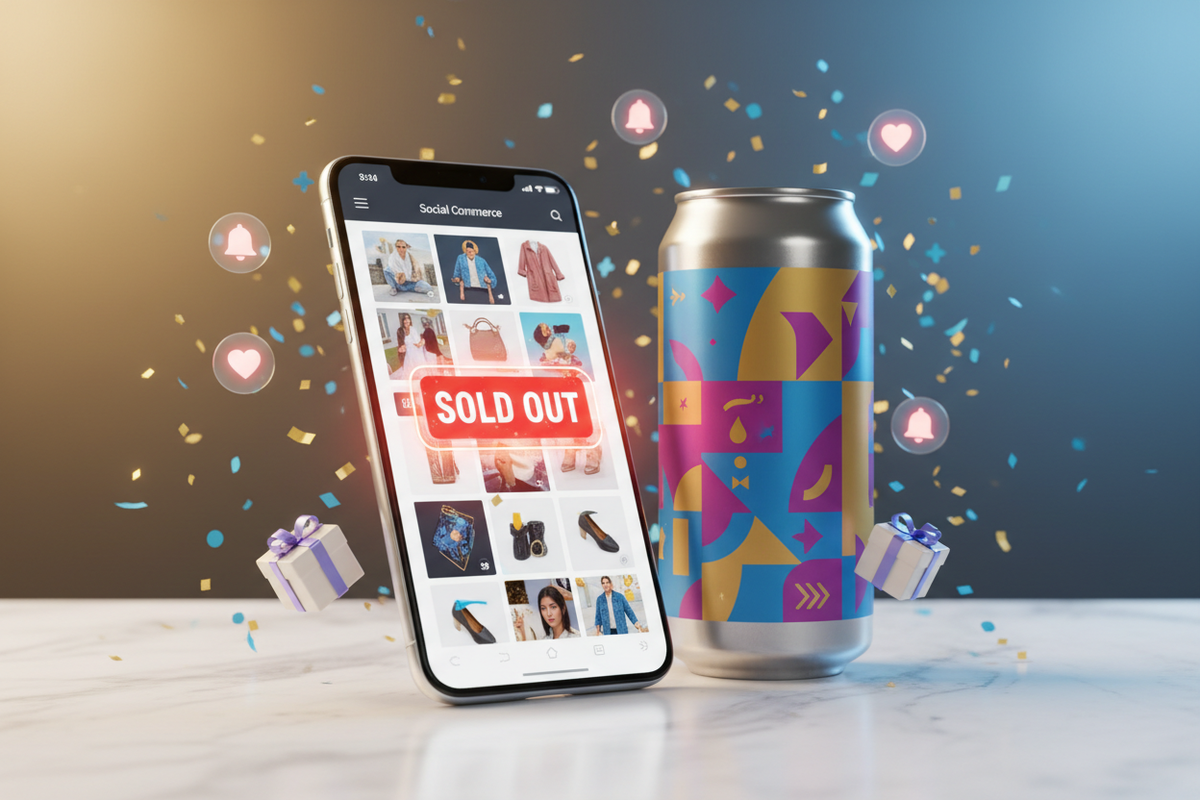
Ecommerce marketing lessons from Mountain Dew's recent TikTok Shop launch are surprisingly useful for smaller online stores. The brand reportedly sold through its limited Baja Leo inventory in just eight minutes on August 12, 2026. You do not need Mountain Dew's audience to copy the underlying principles: scarcity, product drops, exclusivity, bundling, social commerce, FOMO and coordinated relaunches can all work on a much smaller scale.
What This Means for You
The important story is not simply that a huge drinks brand sold a lot of product. Large companies already have enormous reach. The useful question is how the launch was structured.
Mountain Dew did not simply place another drink on a shelf and hope people noticed it. Baja Leo was presented as a limited product, connected to a specific occasion, launched through a specific platform and made difficult to obtain. According to August 2026 reporting, the first 500 cans went in roughly one minute and the full TikTok Shop inventory was gone within eight minutes.
That gives smaller ecommerce businesses something much more useful than another viral-brand story: a practical example of how product presentation, availability and distribution can make the launch itself part of the marketing.
Source note: The launch timing and sellout details in this case study are based on August 2026 reporting by Allrecipes covering Mountain Dew Zero Sugar Baja Leo.
1. Scarcity Gives People a Reason to Act Now
Scarcity marketing works because availability becomes part of the buying decision. A customer who believes a product will still be available next month has little reason to make a decision today. When availability is genuinely limited, waiting has a consequence.
Mountain Dew's launch combined a special flavor with limited inventory. That transformed the purchase from "I might try this sometime" into "I may miss this completely."
For a smaller Shopify store, scarcity does not mean pretending that ten products remain when you actually have thousands. Fake scarcity damages trust. Instead, use real constraints such as:
- A genuine limited production quantity.
- A seasonal product that will leave the store on a defined date.
- A limited bundle available only during a campaign.
- A launch price available for a specific period.
- A bonus available only to the first group of buyers.
The best limited edition marketing gives customers a truthful reason for the limitation. The restriction should make sense rather than looking like an artificial countdown timer added to every product page.

2. Turn a Product Release Into a Product Drop
A product launch becomes more interesting when customers know when something is happening. This is one reason product drops have become powerful in fashion, collectibles, beauty, sneakers and increasingly mainstream ecommerce.
A normal product release quietly adds another item to a catalog. A drop creates a moment.
That distinction can completely change an ecommerce product launch. Instead of uploading the product on Monday and beginning promotion afterwards, reverse the process:
- Introduce the idea before the product is available.
- Show part of the product without revealing everything.
- Announce the launch date.
- Build an email or SMS waiting list.
- Publish short-form content before launch.
- Release the product at a defined time.
- Continue content during and immediately after the launch.
This gives your marketing a narrative. Customers see something coming, understand when it becomes available and have a reason to return.
For small businesses, this is one of the easiest ecommerce marketing strategies to adapt because it relies more on coordination than budget.
3. Platform Exclusivity Can Make the Channel Part of the Offer
TikTok Shop marketing can work differently when the platform is not merely another checkout option. Mountain Dew made TikTok Shop part of the launch itself by initially making Baja Leo available there.
That is an important distinction. If the same promotion is available everywhere at exactly the same time, customers have little reason to follow a particular channel. Exclusivity can turn the channel into part of the experience.
A Shopify business could adapt the principle without copying the exact execution. For example:
- Release one bundle first to your email subscribers.
- Give Instagram followers early access.
- Launch a TikTok-specific promotional bundle.
- Give existing customers 24-hour advance access.
- Offer an influencer's audience a unique package.
This approach also demonstrates why social commerce is more than posting product photos on social networks. The strongest campaigns reduce the distance between discovery, excitement and the buying decision.
If you are launching a store and still deciding where your marketing budget should go, use EcomChief's Marketing ROI Calculator before scaling paid promotion. It helps you think about ad spend, revenue, costs and estimated marketing return rather than judging a campaign only by attention.
4. Bundling Can Increase the Perceived Value of the Drop
A limited launch does not have to depend on a completely new product. Sometimes the offer itself can be new.
Mountain Dew's Baja Leo promotion used a bundle rather than treating the special can as a completely isolated purchase. This is an important lesson for smaller stores because creating a new bundle is often easier than developing a new product.
Consider a Shopify store selling fitness products. Instead of discounting individual items, it could create a "30-Day Home Training Drop" combining resistance bands, a workout accessory and a downloadable training checklist. A beauty store could package several existing products into a seasonal skincare set. A pet store could create a puppy starter bundle.
The individual products may already exist. The combination, presentation and positioning make the offer feel new.
Bundling can support a stronger product launch strategy because it gives you several marketing angles at once: convenience, theme, gifting, value and limited availability.

5. Packaging Can Become Marketing Content
Special packaging gives customers something worth showing before, during and after the sale. That matters because a limited-edition campaign needs more than a product page. It needs visual material that can travel across social media.
You do not necessarily need custom manufacturing. Smaller ecommerce stores can create the same effect through:
- Limited bundle presentation.
- Seasonal inserts.
- Custom digital bonuses.
- Campaign-specific landing-page graphics.
- Gift packaging.
- Special product combinations.
The question to ask is simple: Does this launch look different enough for someone to notice it in a feed?
If the campaign looks exactly like everything else you sell, the customer may not understand why this particular release deserves attention.
6. FOMO Works Best When the Deadline Is Real
FOMO is strongest when customers understand exactly what they might miss. The Mountain Dew campaign had a straightforward consequence: limited inventory could disappear.
Good FOMO communicates a genuine limitation. Bad FOMO simply adds "HURRY!" to every page.
A smaller store can create credible urgency by communicating:
- How long a promotion lasts.
- When early access closes.
- When a seasonal bundle disappears.
- When a launch bonus ends.
- Whether another batch is planned.
Customers should never need to decode the offer. A strong campaign explains what is available, why it is special, when it launches and what changes when the launch period ends.
If your wider goal is to increase Shopify sales, urgency should support a strong product and offer rather than trying to compensate for a weak one.
7. One Successful Drop Can Lead to the Next Launch
A product drop can generate information as well as sales. You learn which creative gets attention, which channel sends traffic, which message receives clicks, which products customers prefer and whether people respond to scarcity or bundling.
Mountain Dew's TikTok Shop release was followed by another limited opportunity through Walmart.com. For a smaller brand, the exact platforms will be different, but the principle of cross-platform distribution is useful.
Your first launch might target your email list. The second could involve creators. The next could use paid social. Another could coincide with a seasonal event.
This is where repeat launches become more valuable than constantly searching for a completely new marketing trick. Each launch can improve the next one.
That also means a failed drop is not automatically a failed business. If traffic was low, the problem may be distribution. If traffic was high but purchases were weak, the offer, pricing, trust or product page may need work. Treat the campaign as a test.
For entrepreneurs still building their ecommerce foundation, EcomChief's guide to buying a turnkey Shopify store under $100 explains the difference between getting a starter store and actually doing the marketing required to grow it.

The EcomChief Small-Store Product Drop Framework
You do not need millions of followers to experiment with these ideas. A small Shopify business can turn the Mountain Dew case study into a much simpler seven-part launch framework.
- Choose one hero offer. Do not try to launch your entire catalog simultaneously.
- Create a reason for the campaign. Use a season, event, customer problem, theme or new bundle.
- Define genuine scarcity. Decide what is actually limited: inventory, time, bonus, access or bundle availability.
- Build anticipation. Start content before the launch rather than beginning promotion after the product is already available.
- Choose one primary launch channel. Concentrate attention instead of spreading a small audience across too many channels.
- Redistribute the campaign. Use email, short-form video, retargeting, creators, SEO content or paid ads to extend the launch.
- Study the result. Look at traffic, engagement, add-to-cart behavior, conversion, advertising cost and actual profit before planning the next campaign.
This approach makes your marketing measurable. You are no longer "posting more" and hoping something works. You are creating a campaign with a beginning, an offer, a deadline and a result you can evaluate.
If you want more of your budget available for marketing and testing rather than spending it all on initial website construction, compare that trade-off in EcomChief's ready-made store vs. building from scratch guide.
The Bigger Lesson: The Launch Is Part of the Product
The most useful lesson from Mountain Dew's eight-minute TikTok Shop sellout is not that every business needs to go viral. Most will not, and they do not need to.
The lesson is that strong ecommerce marketing strategies can change how customers experience a product before they even buy it. Scarcity creates a decision. A product drop creates an event. Exclusivity gives people a reason to follow a channel. Bundling changes perceived value. Special presentation creates content. FOMO adds timing. Repeat launches turn one campaign into a system.
These principles are not reserved for global brands. A smaller Shopify store can use the same psychology at a realistic scale: 50 bundles instead of 50,000, a niche creator instead of a celebrity, an email waiting list instead of a huge audience, or a three-day product drop instead of a national campaign.
The goal is not to imitate Mountain Dew. The goal is to understand why the launch gave customers a reason to pay attention now rather than later.
Ready to put the strategy into practice?
If you would rather begin with the ecommerce foundation already created and spend more of your time on products, content, traffic and launch campaigns, explore EcomChief's ready-made Shopify and dropshipping businesses.
A ready-made store is a starting asset, not a guarantee of traffic or sales. Your results still depend on the offer, marketing, product demand, customer experience and execution.
```
Related reading
All articles

Free Online Business Calculators
Estimate costs, profits, ROI, affiliate earnings, and business value before you spend money.