BuyingGuide
I've Set Up Stores Across 8 Different Niches — Here's What Each One Taught Me About Online Business
Most niche guides are written by people who researched niches. This one is written by someone who built stores in eight of them. Smart home, men's grooming, hip-hop streetwear, beauty, digital agencies,...
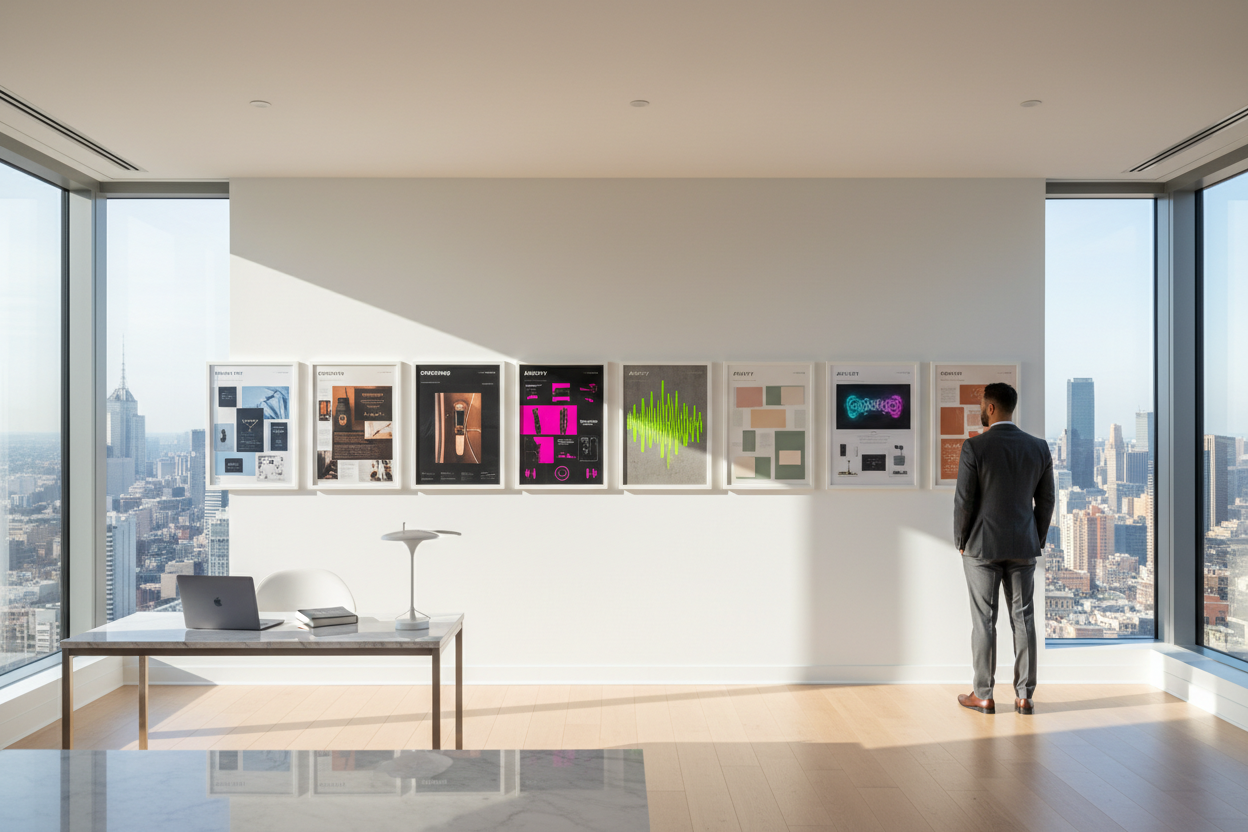
Quick Answer: The best ready made online business niches in 2025 are ones where buyer intent is high, product-market fit is proven, and the store design can credibly signal authority to the target customer. I've built custom stores across eight niches — smart home, men's grooming, streetwear, beauty, digital agencies, affiliate blogs, gaming, and home decor — and the lessons from each one apply directly to choosing which ready-made business to buy. EcomChief's catalog covers all of these categories with stores built to a consistent design standard across every niche.
Most niche advice is written by people who read about niches. They look at trend reports, run keyword research, check AliExpress bestseller lists, and tell you what looks promising on paper. I've done some of that too. But the thing that actually changed how I think about niches is spending months building real stores in eight of them — researching the buyer psychology, designing the aesthetic system, sourcing the products, and building sections that had to communicate authority to a specific type of customer. You learn things from that process that no trend report can tell you. This post is the honest version of what I learned — what surprised me, what confirmed what I expected, and what I would tell someone trying to decide which ready-made business niche to start in.

Niche 1 — Smart Home Technology: The Design Credibility Problem
Key Takeaway: Smart home is a high-intent niche where buyers are technically literate and design-sensitive — a store that looks consumer-grade will lose to one that looks like it belongs in the same category as the products it sells.
Smart home was the niche that taught me the most about design credibility. The buyers in this category — people spending $100 to $400 on smart devices, security systems, and home automation — are not impulse purchasers. They research. They compare. They look at multiple stores before deciding where to buy. And they notice, even if they can't articulate it, when a store looks like it was built to any lower standard than the products it sells.
The design system I landed on for Smart Home World used a deep navy base, electric blue and purple accents, and a dark-mode-first aesthetic that referenced the visual language of the technology brands these buyers already trust. Syne and Outfit as the typeface pairing — modern, clean, slightly technical. The lesson was specific: in a niche where the products are premium and the buyer is informed, the store design has to signal that the seller operates at the same level. A generic theme with swapped colors does not do that. A custom design system that references the buyer's existing visual world does.
Browse our ready-made ecommerce stores to see what this looks like applied to a production store — the smart home option in the catalog reflects this design standard directly.
Niche 2 — Men's Grooming: Aspiration Sells, Not Function
Key Takeaway: Men's grooming buyers are not purchasing products — they are purchasing an identity. The store design has to sell the aspiration first and the product second, or the conversion rate reflects the gap.
Beast Mode taught me something about men's grooming that changed how I approach every product-led store after it. Men buying premium grooming products are not primarily motivated by function. The razor does not need to perform better than what they already use — it needs to make them feel like a different version of themselves when they buy it. That is an identity purchase, not a utility purchase. And designing for an identity purchase is fundamentally different from designing for a utility purchase.
The aesthetic system for Beast Mode used Playfair Display for editorial headlines, Barlow Condensed for product labels, a near-black ink base, and copper and gold accents. No stock imagery of men in bathrooms. Editorial photography that referenced fashion and lifestyle more than grooming. The tone was confident, slightly austere, not friendly. Because the buyer this store was designed for does not want friendly — they want to feel like they're buying from somewhere that understands what they're aspiring to.
The lesson: the design brief for a men's grooming store should start with the customer's identity aspiration, not the product category. That principle applies to every store in this niche regardless of which specific products it carries.
Niche 3 — Hip-Hop Streetwear: Maximum Identity, Maximum Risk
Key Takeaway: Streetwear is the highest-identity niche I've worked in — the design has to be as committed to the aesthetic as the buyer is to the culture, or it reads as inauthentic and converts at a fraction of its potential.
Drip was the most challenging store I built — and the most instructive. Streetwear buyers have the most developed aesthetic literacy of any niche I've worked in. They know the references. They know when something is genuine and when it is a superficial imitation of the culture they're buying into. A streetwear store that plays it safe converts poorly because safe reads as inauthentic in a niche where authenticity is the entire point.
The design system for Drip referenced Supreme, Palace, and — interestingly — Bloomberg Terminal simultaneously. Hot Magenta, Electric Blue, Acid Lime, and Royal Purple against a dark navy base. Bebas Neue for the primary headline face. The visual approach was maximalist and deliberate — not chaotic. Every element had a reason to be there. The lesson: in high-identity niches, restraint reads as timidity. Commitment reads as credibility. And credibility is what converts.
This is also the niche that taught me the most about the relationship between design risk and conversion potential. The stores that make the strongest design commitments — the ones that will alienate some visitors — convert the visitors they do attract at a significantly higher rate. That trade-off is worth understanding before you choose a niche.

Niche 4 — Digital Agencies: The Service Business Design Problem
Key Takeaway: Agency stores have a fundamentally different conversion challenge — the buyer is evaluating the seller's competence, not a product. The design has to demonstrate capability before a single service is described.
Building the SEO agency store and the AI automation agency for EcomChief taught me that service business design operates on completely different logic from product business design. When someone lands on a product store, they evaluate the product. When someone lands on an agency website, they evaluate the agency — and in the first ten seconds, design is the only signal they have about whether this is a competent operation or an amateur one.
The agency designs I built use dark bases — deep navy or near-black — with high-contrast neon accents. Neon Lime, Electric Indigo, Ocean Cyan. Syne and Outfit as the typeface pairing. The visual language is intentionally technical and modern — referencing the aesthetic world of the software companies these agency buyers want to work with. Not the agency world of ten years ago, which was all gradients and stock photography. The current world, which looks like a SaaS product landing page crossed with an editorial magazine.
The lesson: for agency stores, the design is the first deliverable the buyer evaluates. If it looks like a template, the implicit message is that the agency's work also looks like a template. You can browse EcomChief's ready-made digital agency businesses to see what this standard looks like applied to actual products — the AI automation agency in particular reflects this design logic directly.
How Do I Choose a Niche for My Online Business — The Framework
Key Takeaway: Choose your niche based on three factors in this order — buyer identity intensity, your ability to credibly design for that buyer, and product margin. Most people reverse this order and choose margin first, which produces stores with no emotional resonance.
After building stores across eight niches, the framework I use for niche selection is simpler than most guides suggest — and it starts with a different question than most guides ask. Most niche selection frameworks start with "what has the best margin" or "what is trending right now." I start with: who is the buyer and how strongly do they identify with their purchase?
High-identity purchases — streetwear, men's grooming, gaming, beauty — convert at higher rates when the design matches the buyer's self-image because the store becomes part of the identity being purchased. Low-identity purchases — general merchandise, commodity products — convert based on price and convenience because there is no identity signal to align with. If you are choosing a niche for a ready-made business, choose one where the buyer has a strong identity relationship with the category. That relationship is what gives good design leverage over conversion rate.
Second factor: your ability to credibly operate in this space. Not your passion for it — your ability to credibly represent it. A men's grooming store operated by someone who has never thought seriously about the aesthetic world of premium grooming will make decisions that undercut the design credibility the store was built to project. You don't need to be an insider. But you need to be a credible student of the buyer's world. The stores in EcomChief's dropshipping catalog are built with this consideration embedded in the design — the aesthetic system is already calibrated to the buyer. Your job is to operate it consistently.
Third — and only third — margin. High-margin niches that don't match the first two criteria produce stores that technically have good economics and actually have poor conversion because the design or the positioning fails to connect with the buyer emotionally. Get the first two right and margin becomes an optimisation problem. Get only margin right and you have a store nobody particularly wants to buy from.
Niches 5 Through 8 — Gaming, Beauty, Affiliate, Home Decor
Key Takeaway: Gaming, beauty, affiliate blogs, and home decor each have distinct buyer psychology patterns — and the design system that works in each one reflects those patterns explicitly rather than defaulting to a generic ecommerce aesthetic.
The gaming accessories store taught me that gaming buyers have the most developed visual literacy of any niche after streetwear — they live in HUD interfaces, space aesthetics, and dark-mode-everything. The store I built used deep space black with cyan, magenta, and gold accents. Orbitron for headlines — a typeface that literally looks like it belongs in a game UI. The lesson: meet the buyer in their visual world, not in your interpretation of what an ecommerce store should look like.
Beauty was the opposite lesson — the GlowCella store taught me that beauty buyers respond to restraint and editorial elegance over maximalism. Navy, electric blue, clean white space, premium serif typography. The visual reference was high-end skincare editorial, not cosmetics retail. The buyer in this category is making a trust purchase — they are putting something on their skin. The design has to communicate safety and expertise, not excitement.
Affiliate blogs taught me the most about content architecture. The lesson was that affiliate content converts when it answers a real question the reader was already asking — and fails when it is clearly written to place a link rather than to genuinely help. The affiliate sites in EcomChief's catalog are built with this in mind — the content architecture is designed around buyer questions, not keyword density.
Home decor was the simplest lesson of all: warmth converts. Warm cream backgrounds, natural textures, lifestyle photography that shows products in real living spaces rather than against white backgrounds. The buyer in this category is imagining how their home will feel, not evaluating product specifications. Design for the feeling, not the product.

Browse Stores Built Across Every Niche Described in This Post
Key Takeaway: Every store in EcomChief's catalog is built to the niche-specific design standard described in this post — not a generic template applied across different categories, but a custom aesthetic system calibrated to the buyer psychology of each individual niche.
The stores in EcomChief's catalog are built using the exact method described in this post. Not templated. Not assembled from a page builder. Custom sections, locked design systems, production-ready Liquid — the same standard I hold my own theme to. If you want to own a store built this way without spending months developing the method yourself, this is where to start.
The Bottom Line
Key Takeaway: The best ready made online business niches are not the ones with the highest margin — they are the ones where the buyer has a strong identity relationship with the category, the design can credibly reflect that identity, and the operator can sustain that credibility through every customer interaction.
Eight niches. Eight stores. Eight distinct lessons about buyer psychology, design credibility, and what actually drives conversion in each category. The pattern that holds across all of them is simpler than most niche selection guides suggest: buyers convert when the store feels like it belongs to their world — not like a generic ecommerce site that happens to sell something they need. That feeling is produced by design decisions made specifically for each buyer type, not by applying a template across different product categories. Every store EcomChief sells reflects this principle — built to its niche, not adapted to it. If you are trying to decide which niche is right for you, start with the buyer identity question, browse the live previews in our full catalog, and choose the one where the design already reflects the world you are prepared to credibly operate in.
Helpful EcomChief Resources
Key Takeaway: These links help you browse stores across every niche covered in this post, understand what's included at handover, and get answers before choosing which business model is right for you.
Here are useful links to continue your research:
- Ready-Made Dropshipping & Ecommerce Stores
- Ready-Made Digital Agency Businesses
- Ready-Made Affiliate Sites
- Ready-Made Amazon Stores
- Ready-Made Apps & SaaS Starters
- Business Bundles
- What's Included in Every Sale
- The Handover Process — Step by Step
- EcomChief FAQ & Help Center
- Talk to EcomChief Before You Buy
- I Built 24 Custom Shopify Sections With No Coding Background
- How I Use Claude as a Senior Developer I Direct, Not a Tool I Operate
- Buying Ready-Made vs Building From Scratch — Cost & Time Breakdown
- How to Launch an AI Automation Agency in 2026 With No Coding
- 5 Hidden Risks of Buying a Starter Website on Open Marketplaces
If you already know which niche you want to operate in, browse the relevant collection above and use the live preview on every listing to check the design credibility against the buyer psychology described in this post. And if you are still deciding, talk to us directly — the right niche depends on more than trend data, and we can help you narrow it down from real operational experience.
Related reading
All articles


Free Online Business Calculators
Estimate costs, profits, ROI, affiliate earnings, and business value before you spend money.