
Marketing
Influencer Marketing for Ecommerce: A Beginner Strategy
Learn how to plan a measured ecommerce influencer campaign: choose creators by fit, define deliverables, and track the commercial outcome.
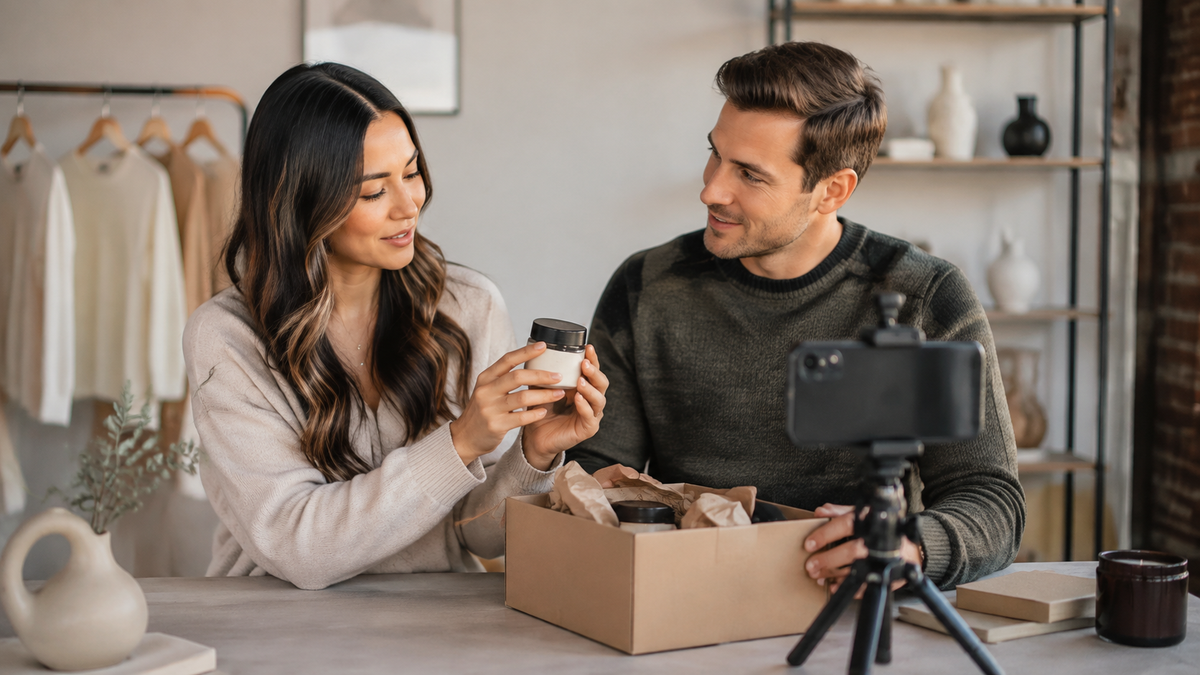
Influencer marketing for ecommerce works best when a creator’s audience, content style, and commercial terms fit a specific customer problem. Start with a small measurable campaign, choose partners for relevance rather than follower count, and track the outcome from content view to qualified visit, sale, and repeat value.
What This Means for You
Influencer marketing is not simply paying for a post. It is a partnership that needs a clear offer, a credible creator fit, usage rights, disclosure expectations, and a way to measure what happened. A small test can reveal more than a large untracked launch.
Set a Business Goal Before You Search for Creators
Decide whether the campaign is meant to generate product discovery, usable content, email signups, first sales, or repeat customers. One campaign can support more than one goal, but one primary decision metric keeps the result interpretable.
Shopify’s current small-business influencer guide emphasizes defined goals, suitable creator types, and measurement. Avoid making broad earnings or conversion promises before your own test data exists.
Choose Creators by Fit, Not Just Reach

Review whether the creator already speaks to the customer you want, makes content in a format that suits the product, and has an audience that interacts in a believable way. Ask for examples of previous brand work, audience context, content turnaround, deliverables, and the method used to report results.
| Check | Why it matters |
|---|---|
| Audience fit | Relevant attention is more useful than broad unrelated reach. |
| Content quality | The product must be explained naturally and accurately. |
| Commercial terms | Deliverables, usage rights, timing, and payment should be clear. |
| Disclosure process | Partnership content must follow applicable advertising rules. |
| Measurement plan | You need a way to distinguish attention from business value. |
Structure a Small First Campaign

- Agree on the product, audience, content format, timeline, rights, and disclosure.
- Give the creator accurate product details and room to preserve their own voice.
- Use a dedicated landing page, code, or tracking method that respects the platform and privacy requirements.
- Review the campaign against the agreed primary goal before expanding it.
A creator is not merely a media placement. Strong partnerships protect credibility by allowing realistic product presentation and by avoiding claims you cannot substantiate.
Measure the Full Commercial Outcome

Reach and engagement may be useful early signals, but they are not the final answer. Shopify’s influencer measurement guide recommends considering visits, conversions, sales, and customer value alongside partnership cost.
Use the marketing ROI calculator to model your own assumptions. Keep product cost, shipping, returns, discounts, creator fees, paid boosting, and support work visible so revenue is not mistaken for profit.
Build a Repeatable Creator Process
Record what worked: creator profile, audience theme, offer, content format, timing, costs, traffic quality, and customer feedback. Over time, this becomes a practical creator brief and helps you avoid repeating a partnership that looked busy but did not advance the business goal.
If you are starting with a ready-made store, first make sure the product page, fulfilment expectation, and support process can handle a campaign. Browse ecommerce businesses with a realistic marketing plan rather than an assumption that an influencer campaign guarantees demand.
Final Decision
Use influencer marketing as a controlled learning channel. Choose creators for customer fit, agree on terms before publishing, measure the complete commercial outcome, and expand only after the evidence supports it.
Related reading
All articles

Free Online Business Calculators
Estimate costs, profits, ROI, affiliate earnings, and business value before you spend money.