
BusinessFinancing
How to Finance Your Online Business Purchase: Options and Strategies 2026
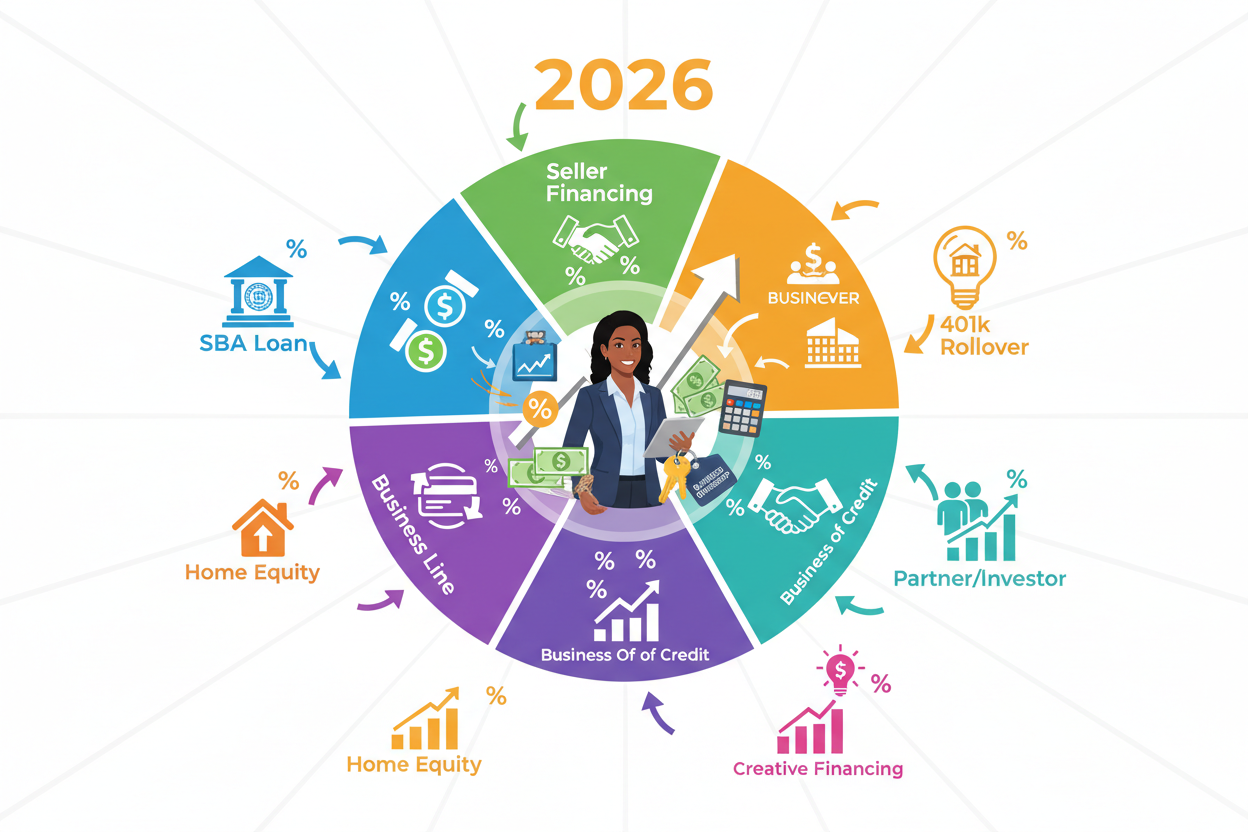
Want to buy an online business but don't have the full purchase price in cash? You're not alone. Most successful business buyers use financing to acquire their businesses—leveraging other people's money to build wealth faster while preserving their own capital.
This comprehensive guide reveals every financing option available in 2026 for buying dropshipping stores, affiliate websites, Amazon FBA businesses, and digital agencies—from traditional bank loans to creative seller financing strategies.
Why Finance Instead of Paying Cash?
Even if you have the cash, financing often makes more financial sense:
Benefits of Financing
- Preserve capital: Keep cash for growth, emergencies, or other investments
- Leverage returns: Use OPM (other people's money) to amplify ROI
- Buy bigger businesses: Afford $200K business with $50K down instead of waiting years to save
- Portfolio building: Buy multiple businesses instead of one
- Tax advantages: Interest payments may be tax-deductible
- Seller confidence: Financing shows you're a serious, qualified buyer
Example: Cash vs Financing
Scenario: You have $100,000 to invest
Option A - All Cash:
- Buy one $100,000 business earning $3,000/month profit
- Annual return: $36,000 (36% ROI)
Option B - Financing:
- Buy $200,000 business with $50,000 down, finance $150,000
- Business earns $6,000/month profit
- Loan payment: $3,000/month (5-year term)
- Net profit after loan: $3,000/month
- You still have $50,000 cash for second business
- Annual return: $36,000 + equity buildup + second business income
Result: Financing lets you build wealth faster while preserving capital.
7 Ways to Finance Your Online Business Purchase
Option #1: SBA Loans (Best for Established Businesses)
What it is: Small Business Administration guaranteed loans through approved lenders. The SBA guarantees up to 85% of the loan, reducing lender risk.
Loan amounts: $50,000-$5,000,000
Down payment: 10-20% typically
Interest rates: Prime + 2.25-4.75% (currently 8-11% in 2026)
Terms: Up to 10 years for business acquisitions
Best for:
- Amazon FBA businesses $100K+
- Digital agencies with recurring revenue
- Established businesses with 2+ years operating history
- Buyers with good credit (680+ score)
Requirements: Personal credit 680+, 10-20% down payment, business profitable 2+ years, debt service coverage 1.25x minimum, personal guarantee and collateral required.
Pros: Lowest interest rates, longest terms (10 years), larger amounts ($50K-$5M), government-backed.
Cons: Lengthy approval (60-90 days), extensive documentation, personal guarantee required, only for established businesses.
Example: Buy $300,000 Amazon FBA business with $60,000 down (20%), finance $240,000 at 9% for 10 years = $3,040/month payment. Business earns $10,000/month, net cash flow $6,960/month.
Option #2: Seller Financing (Most Flexible Option)
What it is: The seller acts as the bank, allowing you to pay over time. You make monthly payments directly to the seller.
Loan amounts: 30-80% of purchase price
Down payment: 20-70% (negotiable)
Interest rates: 5-12% (negotiable)
Terms: 2-5 years typically
Best for: Buyers with limited capital, newer businesses (under 2 years), buyers who don't qualify for traditional loans, fast closings.
Pros: Easier approval, flexible terms, fast closing, seller has skin in game, works for newer businesses.
Cons: Higher interest rates than SBA, shorter terms (2-5 years vs 10), not all sellers offer it, balloon payment often required.
Negotiation tips: Start with 50/50 split, offer higher price for better terms, request longer terms (5 years vs 3), negotiate interest rate to 6-8%, include transition support.
Example: Buy $80,000 dropshipping store with $40,000 down (50%), seller finances $40,000 at 8% for 3 years = $1,254/month payment. Business earns $3,000/month, net cash flow $1,746/month.
Option #3: Business Line of Credit
What it is: Revolving credit line you can draw from as needed, similar to a credit card but with lower rates.
Credit limits: $10,000-$250,000
Interest rates: 8-25% (variable)
Best for: Smaller acquisitions ($10K-$100K), supplementing down payment, working capital after acquisition, bridge financing.
Pros: Fast approval (1-7 days), flexible use, only pay interest on amount used, revolving credit.
Cons: Higher interest rates, variable rates, lower credit limits, personal guarantee required.
Option #4: 401(k) / IRA Rollover (ROBS)
What it is: Rollover for Business Startups allows you to use retirement funds to buy a business without taxes or penalties.
Amount available: Your full 401(k) or IRA balance
Cost: $5,000-$7,000 setup fee + $1,200-$2,000/year maintenance
Best for: Buyers with substantial retirement savings ($50K+), buying larger businesses ($100K-$500K), avoiding debt.
Pros: No taxes or penalties, no debt or interest, access large amounts, no credit check, keep retirement funds invested.
Cons: Complex setup, must use C-Corporation, annual maintenance fees, IRS scrutiny, risk retirement savings.
Option #5: Home Equity Loan or HELOC
What it is: Borrow against equity in your home to fund business purchase.
Loan amounts: Up to 80-90% of home equity
Interest rates: 6-10% (lower than business loans)
Terms: 5-30 years
Best for: Homeowners with significant equity, buyers who want lowest interest rates.
Pros: Lower interest rates, larger loan amounts, longer terms, interest may be tax-deductible, fast approval.
Cons: Home is collateral (risk losing home), reduces home equity, closing costs ($2K-$5K), only for homeowners.
Option #6: Partner or Investor
What it is: Bring in a partner or investor who provides capital in exchange for equity ownership.
Investment amounts: 25-75% of purchase price
Equity given: 20-50% typically
Best for: Buyers with limited capital, larger acquisitions ($200K+), sharing risk, bringing in expertise.
Pros: No debt or interest, shared risk, access to partner's expertise, larger acquisitions possible, no credit check.
Cons: Give up equity and control, share profits forever, potential conflicts, legal complexity.
Option #7: Creative Financing Strategies
Earnout structure: Pay seller based on future business performance instead of fixed payments. Pay 30-50% down, remaining paid as percentage of future revenue/profit.
Asset-based lending: Borrow against business assets (inventory, equipment, receivables). Best for Amazon FBA businesses with significant inventory.
Revenue-based financing: Lender provides capital, you repay as percentage of monthly revenue. Best for businesses with strong, consistent revenue.
Financing Strategy by Business Type
Dropshipping Stores ($10K-$100K)
Best options: Seller financing (50% down, 50% financed), business line of credit, personal savings.
Why: Dropshipping stores are often newer and don't qualify for SBA loans. Seller financing is most common.
Affiliate Websites ($20K-$150K)
Best options: Seller financing (40-60% down), SBA loan (if 2+ years old), home equity loan/HELOC.
Why: Affiliate sites have high profit margins, making seller financing attractive. Established sites qualify for SBA loans.
Amazon FBA Businesses ($50K-$500K)
Best options: SBA loan (best rates and terms), 401(k) rollover (ROBS), seller financing + SBA loan combination.
Why: Amazon FBA businesses are typically established with strong financials, perfect for SBA loans.
Digital Agencies ($100K-$1M+)
Best options: SBA loan (largest amounts), partner/investor (share risk), 401(k) rollover + seller financing.
Why: Digital agencies are high-value with recurring revenue, ideal for SBA loans and attracting investors.
Real Financing Examples
Example 1: First-Time Buyer, Limited Capital
Buyer: Sarah, $30,000 saved, 720 credit score
Target: $60,000 dropshipping store earning $2,500/month profit
Strategy: $30,000 down (50%), $30,000 seller financing at 8% for 3 years = $940/month payment. Net cash flow: $1,560/month.
Example 2: Experienced Buyer, Larger Purchase
Buyer: Marcus, $80,000 saved, 760 credit, owns home
Target: $280,000 Amazon FBA business earning $9,000/month profit
Strategy: $56,000 down (20%), $224,000 SBA loan at 9% for 10 years = $2,840/month payment. Net cash flow: $6,160/month. Kept $24,000 cash reserves.
Example 3: Portfolio Builder
Buyer: Jennifer, $150,000 in 401(k), $50,000 saved
Target: $200,000 digital agency earning $7,000/month profit
Strategy: $150,000 from 401(k) rollover (ROBS), $50,000 seller financing at 7% for 4 years = $1,196/month payment. Net cash flow: $5,804/month. Kept $50,000 cash for second acquisition.
Common Financing Mistakes to Avoid
- Overleveraging: Don't finance 100%. Aim for 50-80% financing maximum.
- Ignoring total cost: Factor in interest, fees, opportunity cost.
- Wrong financing type: Don't use high-interest credit cards for $50K+ purchases.
- No cash reserves: Keep 3-6 months operating expenses after purchase.
- Skipping legal review: Have lawyer review all financing agreements.
Start Your Financing Journey Today
Don't let lack of capital stop you from buying an online business. With the right financing strategy, you can acquire businesses 2-5x larger than your available cash—building wealth faster while preserving capital.
Next steps:
- Determine your available capital and credit score
- Choose 2-3 financing options that match your situation
- Get pre-qualified with lenders before shopping
- Browse businesses knowing your true buying power
Browse our marketplace of verified businesses across all price ranges:
- Dropshipping Stores for Sale - $10K-$100K range, seller financing common
- Affiliate Websites for Sale - $20K-$150K range, high profit margins
- Amazon FBA Businesses for Sale - $50K-$500K range, SBA loan friendly
- Digital Agencies for Sale - $100K-$1M+ range, recurring revenue
Every listing on our online business marketplace includes verified financials and complete transparency—helping you secure financing and buy with confidence.
Your dream business is within reach. The right financing strategy makes it possible. Start exploring your options today.
Related reading
All articles

Free Online Business Calculators
Estimate costs, profits, ROI, affiliate earnings, and business value before you spend money.