
BuyingGuide
How to Choose the Right Niche Before Buying a Ready-Made Online Business
A beautiful website cannot rescue the wrong niche. Use this practical framework to compare demand, margins, competition, content potential and operating fit before you buy.

Quick Answer: Choose a niche for a ready-made online business by checking real customer demand, competition, profit potential, content opportunities, fulfilment risk and whether the daily work fits your skills. Reddit's ecommerce and entrepreneur communities regularly ask for the “most profitable niche,” but there is no universal winner. The best online business niche is one with a clear customer, an ongoing problem and a marketing method you are realistically prepared to use.
Reddit's ecommerce, affiliate marketing and entrepreneur communities are full of beginners asking whether pets, fashion, fitness, technology, beauty, home decor or AI is the best niche to enter.
The honest answer is that a niche cannot be judged by popularity alone.
A beautiful pet store can struggle if the owner dislikes creating pet content. A strong finance affiliate website can fail when the buyer does not understand compliance or research. A useful software app can remain unnoticed when its target customer is too broad.
When you buy a ready-made online business for sale, the website gives you a faster technical starting point. The niche determines who you serve, what you sell, how you attract traffic and how difficult the business will be to operate.
This guide shows you how to compare niches without chasing hype or assuming that any category guarantees sales.
Why Niche Selection Matters More Than Website Appearance
Key Takeaway: Website design can be improved later, but a weak niche affects demand, margins, marketing, content and customer acquisition from the beginning.
Many buyers choose an online business based on the first thing they can see: the homepage design.
Design matters. A slow, confusing or unprofessional website can reduce trust. However, design is only one part of the business.
The niche influences:
- Who the customer is.
- Which products, services or software you can sell.
- How often customers purchase.
- How much customers are willing to spend.
- Which marketing channels are suitable.
- How expensive advertising may become.
- How much useful content you can publish.
- Which suppliers, affiliate programmes or contractors you need.
- Whether legal or advertising restrictions apply.
- How easily you can explain the offer.
A plain website in a well-understood niche can be improved. A polished website targeting customers who do not care about the offer is harder to rescue.
Before selecting a business, ask:
“Can I see exactly who would buy this, why they would buy it and how I would reach them?”
If you cannot answer those questions, the design should not be the deciding factor.
For a broader model comparison, read How to Choose the Right Online Business to Buy in 2026.

Separate the Niche From the Business Model
Key Takeaway: The same niche can support dropshipping, affiliate, agency and software businesses, but the workload and monetisation method will be completely different.
A niche is the market you serve. The business model is how you make money from that market.
For example, the fitness niche could support:
- A dropshipping store selling training accessories.
- An Amazon affiliate website publishing equipment comparisons.
- A digital agency serving gyms and personal trainers.
- An AI business providing automated lead follow-up for fitness studios.
- A micro SaaS app for workout planning or member management.
These businesses share a broad audience, but their day-to-day operations are very different.
| Business Model | What You Sell | Main Growth Work | What Makes a Good Niche |
|---|---|---|---|
| Dropshipping | Physical products | Product testing, content, ads and conversion | Visual products, workable margins and reliable fulfilment |
| Affiliate | Recommendations and referrals | SEO, useful content and trust | Buyer questions, product choice and content depth |
| Digital agency | Business services | Outreach, sales and client fulfilment | Reachable businesses with valuable recurring needs |
| AI agency | Automation and implementation | Demos, outreach and workflow setup | Repetitive costly processes that can be improved |
| Micro SaaS | Access to a focused software tool | User acquisition, onboarding and retention | A repeated problem for an identifiable user group |
Do not ask only, “Is home decor a good niche?”
Ask:
“Is home decor suitable for the particular business model I want to operate?”
Evergreen Niche Versus Trending Niche
Key Takeaway: Evergreen niches offer more stable long-term demand, while trending niches may grow faster but can lose attention quickly.
An evergreen niche is connected to a need, interest or life event that continues over time.
Examples may include:
- Pets.
- Home and garden.
- Beauty and personal care.
- Fitness.
- Fashion.
- Business services.
- Education.
- Travel.
- Productivity.
- Technology accessories.
An evergreen niche does not mean every product or business inside it will succeed. It means the underlying audience and need are unlikely to disappear suddenly.
A trending niche grows quickly because of new technology, a cultural moment, a product craze or a change in customer behaviour.
Examples may include a new type of AI tool, a viral fashion aesthetic or an emerging consumer device.
Trending niches can create opportunity, but they carry additional risk:
- Demand may fall before you recover your marketing investment.
- Suppliers may become overcrowded.
- Advertising costs may rise quickly.
- Competitors may copy the offer.
- The trend may depend heavily on one platform.
A sensible beginner strategy is often to choose an evergreen market with a current angle.
For example:
- Evergreen market: pet care. Current angle: smart pet products.
- Evergreen market: business services. Current angle: AI lead follow-up.
- Evergreen market: home organisation. Current angle: small-space living.
- Evergreen market: fitness. Current angle: home recovery tools.
This gives you ongoing demand without depending entirely on one temporary trend.
How to Identify Genuine Customer Demand
Key Takeaway: Genuine demand appears in searches, purchases, questions, complaints and existing solutions—not only in social-media views.
A niche has demand when people already spend time or money trying to solve a problem, achieve a result or satisfy an interest.
Look for several forms of evidence.
1. Search Behaviour
Use Google, YouTube, Amazon, Reddit, Pinterest and keyword tools to see what people ask.
Look for phrases such as:
- Best product for a particular use.
- Product A versus Product B.
- How to solve a specific problem.
- Alternatives to an existing solution.
- Reviews of products or services.
- Tools for a profession or industry.
- How much a service costs.
Search volume is useful, but it is not the only signal. A lower-volume B2B query can be more valuable than a high-volume entertainment query if each customer is worth more.
2. Existing Purchases
Check whether people already buy products, software or services in the niche.
Competition is evidence that money is changing hands. A niche with no competitors may be undiscovered, but it may also have no buyers.
3. Repeated Complaints
Read reviews, forums and community discussions.
Look for statements such as:
- “This takes too long.”
- “I cannot find a simple option.”
- “The current tool is too expensive.”
- “Customer support is poor.”
- “I wish this worked with my industry.”
- “I have to do this manually every week.”
Repeated frustration can reveal opportunities for products, services, content and software.
4. Advertiser Activity
When businesses consistently advertise in a niche, it suggests that customers may be valuable enough to acquire through paid channels.
Do not copy competitors blindly. Use their activity as one signal that a commercial market exists.
How to Evaluate Competition Without Avoiding It Completely
Key Takeaway: Competition is not automatically bad. The real danger is entering a crowded market without a clear customer, angle or advantage.
Beginners sometimes search for a niche with high demand and no competition.
That combination is rare.
Healthy competition can show that:
- Customers already understand the product or service.
- People are willing to spend money.
- Marketing channels already exist.
- Suppliers or fulfilment specialists are available.
- You can study real customer reviews and objections.
The question is whether you can position the business clearly.
Instead of selling general fitness products, you might focus on:
- Home strength equipment for small apartments.
- Recovery accessories for runners.
- Fitness products for adults over 50.
- Portable equipment for frequent travellers.
Instead of launching a general marketing agency, choose a narrower digital agency niche:
- SEO for independent dentists.
- Short-form video for property agents.
- Email marketing for Shopify fashion brands.
- Website design for fitness studios.
A niche becomes more defendable when the customer can immediately say, “This business is for people like me.”
Product Margins and Repeat-Purchase Potential
Key Takeaway: Revenue alone is not enough. The niche must leave enough money after product, delivery, gateway, advertising, refund and operating costs.
For ecommerce and dropshipping, calculate the full economics before choosing the niche.
Include:
- Product cost.
- Supplier shipping.
- Payment-processing fees.
- Currency-conversion costs.
- Advertising or creator fees.
- Refunds and replacements.
- Software subscriptions.
- Discounts.
- Taxes where applicable.
A product sold for £50 with £35 in combined costs does not create a £50 profit. It leaves £15 before other business expenses.
Higher prices do not automatically create better businesses. Expensive products may require more trust, longer consideration and stronger support.
Repeat-purchase potential can improve the economics.
Examples may include:
- Beauty products used regularly.
- Pet accessories or consumables.
- Specialist coffee products.
- Replacement filters or components.
- Seasonal fashion collections.
- Ongoing business services.
- Monthly software subscriptions.
A one-time product can still work when margins and demand are strong. Repeat purchasing simply gives you more opportunities to earn from customers you have already acquired.
Use EcomChief's free online business calculators to review startup costs, dropshipping margins and affiliate earning assumptions before buying.

Content and SEO Opportunities Within the Niche
Key Takeaway: A strong niche gives you enough real customer questions to support months or years of useful content.
Content potential matters even when SEO is not your only traffic source.
Useful content can support:
- Google search visibility.
- Social-media posts.
- YouTube videos.
- Email newsletters.
- Product education.
- Sales outreach.
- Customer onboarding.
- Trust and authority.
Before choosing a niche, try to write 30 useful content topics.
For an ecommerce niche, these may include:
- Product demonstrations.
- Buying guides.
- Care instructions.
- Gift guides.
- Style combinations.
- Problem-and-solution videos.
- Customer use cases.
For an affiliate marketing niche, look for:
- Best-product searches.
- Comparisons.
- Reviews.
- Alternatives.
- Beginner guides.
- Seasonal buying guides.
- Frequently asked questions.
For an agency or SaaS niche, create content around:
- Industry problems.
- Costs and lost opportunities.
- Implementation guides.
- Case-study formats.
- Tool comparisons.
- Templates and calculators.
- Common mistakes.
If you cannot identify 30 useful topics, the niche may be too narrow—or you may not understand the audience well enough yet.
Supplier and Shipping Considerations for Dropshipping
Key Takeaway: Profitable dropshipping niches need products that can be sourced, shipped and supported reliably—not only products that look attractive in advertisements.
When researching profitable dropshipping niches, buyers often focus on selling price and visual appeal while ignoring fulfilment.
Before buying a dropshipping business for sale, check:
- Whether multiple suppliers offer suitable products.
- Whether stock levels are reliable.
- Which countries can be served.
- Estimated delivery times.
- Whether tracking is available.
- How fragile or bulky the products are.
- Whether products commonly arrive damaged.
- How returns and replacements are handled.
- Whether customs or import restrictions apply.
- Whether product claims require evidence.
Products that are oversized, fragile, personalised or difficult to return may create more customer-service work.
Also consider how easily the products can be demonstrated.
Strong social-commerce products often have:
- A visible before-and-after result.
- A problem people recognise quickly.
- An unusual mechanism.
- A satisfying demonstration.
- An emotional or gift-related angle.
A ready-made dropshipping store can shorten the setup process, but the owner must still test products, content and customer acquisition.
Compare current options in EcomChief's dropshipping and ecommerce collection, then read Dropshipping in 2026: Is Buying a Ready-Made Shopify Store Worth It?
Commission Potential for Affiliate Niches
Key Takeaway: A strong affiliate niche combines buyer intent, useful content opportunities, suitable programmes and commissions that justify the work required.
An affiliate niche should not be chosen only because one programme advertises a high commission.
Commission potential depends on:
- The product price.
- The commission rate.
- Conversion rate.
- Cookie or attribution rules.
- Refunds and cancellations.
- How often products are purchased.
- Whether several programmes are available.
- The amount of traffic required.
A lower percentage on frequently purchased products may outperform a high percentage on an offer that few people trust.
A strong Amazon affiliate business for sale or broader affiliate marketing business for sale should have room for:
- Product comparisons.
- Reviews.
- Buying guides.
- Gift guides.
- Alternatives.
- Problem-solving articles.
- Multiple merchants or affiliate programmes.
Avoid relying entirely on one programme when alternatives are available. Commission terms and programme eligibility can change.
Browse EcomChief's affiliate businesses and read Affiliate Marketing Trends 2026: Why Niche Sites Are Smart Assets.
Client Value for Digital Agency and AI-Business Niches
Key Takeaway: The best agency niche has identifiable businesses, valuable problems, accessible decision-makers and services that can be delivered repeatedly.
A digital agency niche should be evaluated differently from a product niche.
You are not looking mainly for large numbers of consumers. You are looking for businesses that:
- Have a valuable problem.
- Can afford professional help.
- Are easy to identify and contact.
- Need the service repeatedly.
- Can understand the value of the result.
- Have enough potential customers for focused outreach.
Examples of clear agency positioning include:
- Website design for dental practices.
- Social content for property agents.
- Lead generation for home-service companies.
- SEO for independent legal firms.
- Email marketing for ecommerce stores.
- Video editing for business coaches.
The better question is not “Which businesses need marketing?” Almost every business does.
Ask:
“Which type of business has a specific marketing problem I can solve repeatedly?”
Choosing an AI Business Niche
An AI business niche should be based on a workflow or commercial outcome rather than the word “AI.”
Useful opportunities may involve:
- Following up missed calls.
- Answering repeated customer questions.
- Qualifying enquiries.
- Booking appointments.
- Creating routine reports.
- Updating customer records.
- Generating standard content.
- Sending reminders.
A focused AI agency business for sale is easier to market when it connects one automation to one industry.
For example:
- AI appointment follow-up for beauty salons.
- AI lead qualification for property agencies.
- AI support assistants for Shopify stores.
- AI enquiry handling for home-service companies.
A ready made digital agency website or AI agency foundation provides the brand and client-facing structure. It does not include automatic clients, and the owner remains responsible for outreach and fulfilment.
Browse EcomChief's ready-made agencies and read Why Digital Agencies Are Strong Online Businesses to Buy.
Recurring Problems Suitable for Micro SaaS
Key Takeaway: A good micro SaaS niche has one repeated, expensive or frustrating task that software can make easier.
The best micro SaaS niche is usually not the largest market.
It is a clearly defined group with a repeated problem.
Good software-niche signals include:
- The task happens weekly or daily.
- People currently use spreadsheets or manual workarounds.
- Mistakes cost time or money.
- The user already pays for software or services.
- The result can be explained in one sentence.
- The customer can experience value quickly.
- The product has a reason for ongoing use.
Examples include:
- A review-request tool for restaurants.
- An appointment app for mobile beauty professionals.
- An invoice generator for freelancers.
- A simple CRM for consultants.
- A job board for one specialist profession.
- A QR menu tool for independent cafés.
- An AI content planner for small agencies.
General software markets are difficult because customers compare you with large established platforms.
Narrow positioning can make the same underlying app easier to explain.
Instead of “an appointment-booking app,” position it as “a simple booking and reminder app for independent dog groomers.”
Buyers researching no code SaaS starter kits, cheap SaaS businesses for sale or ready-made apps should examine ownership, hosting, payment integration, ongoing costs and support—not only the interface.
Browse ready-made apps and SaaS-style businesses, then read Micro-SaaS for Beginners 2026.

Regulated and High-Risk Niches Beginners Should Approach Carefully
Key Takeaway: Niches involving health, finance, safety, age restrictions or professional advice may create additional legal, platform and advertising responsibilities.
Some niches require more caution because incorrect claims, restricted products or unsuitable advice can cause serious harm.
Beginners should carefully research niches involving:
- Medical products or health claims.
- Supplements.
- Financial advice or investment claims.
- Legal services or legal information.
- Insurance.
- Children's products.
- Age-restricted products.
- Personal data or sensitive customer information.
- Products with safety risks.
- Professional licences or certifications.
These niches are not automatically bad businesses. They simply require more knowledge and stronger compliance.
Before buying, check:
- Whether the products or services are legal in your target market.
- Whether special licences are required.
- Whether your payment gateway accepts the category.
- Whether advertising platforms restrict promotion.
- Whether claims require evidence.
- Whether insurance may be appropriate.
- Whether qualified professional review is needed.
Do not assume that a website being available for sale means every product, advertisement or claim is automatically approved in your country.
Seek qualified legal, tax or compliance advice where necessary.
Should You Choose a Niche You Personally Enjoy?
Key Takeaway: Personal interest helps with consistency, but demand and business economics still matter more than enthusiasm alone.
You do not need to be obsessed with the niche.
However, some level of interest or understanding makes it easier to:
- Create content consistently.
- Understand customer language.
- Evaluate products or services.
- Respond to questions.
- Notice trends and opportunities.
- Stay engaged when growth is slow.
Passion without demand creates a hobby. Demand without any personal fit can create a business you abandon.
Look for the intersection of:
- Customer demand: People actively want the outcome.
- Commercial potential: There is a realistic way to make money.
- Operating fit: You can handle the required daily work.
- Marketing fit: You are willing to use the channels the niche requires.
- Personal tolerance: You can stay interested long enough to improve.
You might enjoy fashion but dislike filming social content. You might enjoy software but dislike customer support. You might understand local businesses but dislike cold outreach.
Choose the entire operating model, not only the subject.
A Simple Niche-Scoring Checklist
Key Takeaway: Score each niche using the same criteria so emotion, design and temporary excitement do not control the decision.
Give each niche a score from 1 to 5 for every factor below.
| Scoring Factor | 1 Point | 3 Points | 5 Points |
|---|---|---|---|
| Customer demand | Little visible interest | Some proven demand | Clear searches, purchases and repeated problems |
| Commercial value | Weak margins or low customer value | Workable economics | Strong margins, commissions or client value |
| Repeat potential | One-time purchase only | Some repeat or upsell options | Strong recurring or repeat demand |
| Content potential | Few useful topics | Enough for a basic plan | Many questions, comparisons and demonstrations |
| Competition opportunity | No clear way to differentiate | Possible positioning angle | Clear underserved customer or problem |
| Fulfilment simplicity | Complex, unreliable or restricted | Manageable with preparation | Reliable and easy to explain |
| Marketing fit | You dislike the required channel | You can learn the channel | It matches your existing strength |
| Personal fit | No interest or understanding | Moderate interest | Strong interest, experience or access |
| Compliance risk | High and unclear | Manageable with research | Low and easy to understand |
| Growth options | Few logical expansions | Several product or service extensions | Strong upsells, content, partnerships and expansion |
How to Interpret the Score
- 41–50: Strong candidate. Complete deeper supplier, competition and compliance checks.
- 31–40: Promising, but investigate the weakest areas before purchasing.
- 21–30: Significant uncertainty. Compare other niches before deciding.
- 10–20: Poor fit for your current skills, resources or risk tolerance.
The score is a decision aid, not a guarantee. A high-scoring niche still requires marketing and execution.

How to Compare EcomChief Businesses Before Choosing
Key Takeaway: Compare businesses by model, customer, workload and growth path—not only by price or homepage design.
EcomChief offers multiple business models and niches, so begin by narrowing the type of work you want.
Choose Dropshipping When:
- You enjoy products and visual marketing.
- You are prepared to test short-form content or advertising.
- You can manage customer questions and fulfilment.
- You want a Shopify-based ecommerce model.
Browse dropshipping and ecommerce businesses.
Choose an Amazon or Affiliate Business When:
- You prefer content, product research and SEO.
- You do not want to fulfil physical orders yourself.
- You are willing to publish and update buying guides.
- You can build trust around recommendations.
Browse Amazon businesses or browse affiliate businesses.
Choose a Digital or AI Agency When:
- You prefer B2B sales.
- You are comfortable with outreach and client communication.
- You want higher-value service contracts.
- You can deliver personally or manage contractors.
Browse ready-made digital and AI agencies.
Choose a Ready-Made App or Micro SaaS When:
- You prefer software over physical products.
- You can identify a narrow user problem.
- You are comfortable with demos, onboarding and support.
- You want recurring subscription or software-resale potential.
Browse ready-made apps and SaaS-style businesses.
Compare These Questions for Every Listing
- Who is the exact customer?
- What problem or desire drives the purchase?
- Which traffic source suits the niche?
- What ongoing costs will I have?
- What does the handover include?
- How will products, services or software be delivered?
- What work will I personally perform every week?
- Which skills must I learn?
- What is the clearest path to the first customer?
- What could make this niche difficult or restricted?
Use the Online Business Buyer Questions and What's Included page before completing a purchase.
A Simple Pre-Purchase Niche Test
Key Takeaway: Spend a few days researching the customer before buying the business, not several months discovering that you chose the wrong market.
Step 1: Write the Customer in One Sentence
Use:
“This business helps [specific customer] achieve or solve [specific outcome or problem].”
If the answer is “everyone,” the niche is too broad.
Step 2: Find 20 Real Customer Questions
Use search engines, marketplaces, forums, reviews and social platforms.
Repeated questions prove that the market has confusion, interest or buying intent.
Step 3: Identify Five Competitors
Review:
- Their products or services.
- Customer reviews.
- Pricing.
- Marketing channels.
- Weaknesses and complaints.
Step 4: Calculate Basic Economics
Estimate:
- Revenue per sale or client.
- Direct fulfilment cost.
- Marketing cost.
- Operating expenses.
- Refund or revision risk.
- Potential repeat revenue.
Step 5: Create Ten Marketing Ideas
If you cannot imagine ten advertisements, videos, articles, outreach angles or partnerships, marketing may become difficult.
Step 6: Describe the Weekly Work
Write the actual tasks—not the income goal.
For example:
- Film three product videos.
- Publish one comparison article.
- Contact 50 business prospects.
- Demonstrate the software to five potential users.
- Review supplier orders and customer messages.
Step 7: Ask Whether You Will Still Do It in Six Months
The right niche is not only exciting before purchase. It is tolerable and manageable after the initial excitement disappears.
Compare Ready-Made Businesses by Niche and Model
Key Takeaway: Start with a professional foundation, but choose the niche based on demand, operating fit and your ability to reach customers.
EcomChief offers ready-made dropshipping stores, Amazon businesses, affiliate websites, digital and AI agencies, and software-style apps across multiple niches. Businesses start from $99 and include ownership-transfer guidance and support. The website foundation can save setup time, but traffic, customers, sales and profit are never guaranteed. Compare the customer, workload, marketing channel and growth path before deciding.
Frequently Asked Questions
Key Takeaway: A profitable niche must fit the customer, business model, economics and owner's ability to execute.
What is the best online business niche for beginners?
There is no universal best niche. Beginners should prioritise clear demand, manageable fulfilment, understandable customers, low compliance risk and a marketing channel they are prepared to use consistently.
How do I choose a niche for a ready-made online business?
Evaluate demand, competition, margins, repeat purchasing, content potential, supplier or fulfilment quality, compliance risk and personal fit. Compare several niches using the same scoring checklist.
Should I choose a broad niche or a micro niche?
A broad niche offers more expansion options, but it can be difficult to position. A micro niche creates clearer messaging, but it must still contain enough customers and growth opportunities.
What are profitable dropshipping niches?
Potentially attractive dropshipping niches usually combine visual products, workable margins, reliable shipping and strong customer interest. Profitability depends on the particular products, costs, traffic and conversion—not the category name alone.
What makes a good affiliate marketing niche?
A good affiliate niche has buyer questions, products or services people compare, multiple content angles, suitable affiliate programmes and commissions that justify the traffic and content required.
What makes a good digital agency niche?
A good agency niche has identifiable businesses, accessible decision-makers, valuable recurring problems and a service that can be delivered through a repeatable process.
How do I choose an AI business niche?
Choose an industry with a repetitive workflow that wastes time, loses leads or creates unnecessary cost. Sell a measurable outcome rather than AI as a vague technology.
What makes a good micro SaaS niche?
A good micro SaaS niche has a specific user, a recurring problem, a clear reason to pay and a product whose value can be understood quickly.
Should I choose a niche I am passionate about?
Interest helps with consistency, but it should be combined with demand, commercial potential and realistic operating requirements.
Is a competitive niche bad for beginners?
Not automatically. Competition can confirm that customers spend money. Beginners should look for a narrower audience, unmet need or clearer positioning rather than trying to find a market with no competitors.
Does buying a ready-made business guarantee the niche will be profitable?
No. A ready-made asset saves setup time, but profitability depends on demand, marketing, costs, execution, customer trust and continuous improvement.
The Bottom Line
Key Takeaway: Choose the customer and operating model first. Treat website design and price as secondary filters.
To choose a niche for a ready-made online business, stop searching for one universally profitable category.
Instead, look for a niche that offers:
- Visible customer demand.
- A clear customer problem or desire.
- Workable margins, commissions or client value.
- Enough content and marketing opportunities.
- Manageable fulfilment and compliance.
- A business model that matches your skills.
- A weekly workload you can sustain.
A pet store, travel affiliate site, digital agency, AI automation service and micro SaaS app can all become valid businesses. They are not valid for every buyer.
The best choice is not the website that looks most impressive today. It is the niche and model you can continue marketing, improving and operating after the excitement of the purchase has passed.
Compare turnkey websites carefully, score each option honestly and buy only after you understand exactly how the business will reach customers.
For a broader comparison, read Best Online Businesses to Buy in 2026: Dropshipping, SaaS and Agencies Compared.
Helpful EcomChief Resources
Key Takeaway: Use these resources to compare business models, niches, costs and operating requirements before purchasing.
Here are useful links:
- Browse All Ready-Made Businesses
- Browse Dropshipping and Ecommerce Businesses
- Browse Amazon Businesses
- Browse Affiliate Businesses
- Browse Digital and AI Agencies
- Browse Ready-Made Apps and SaaS Businesses
- Use the Free Online Business Calculators
- See What's Included
- Read the Online Business Buyer Questions
- Visit the EcomChief Help Centre
- Talk to EcomChief Before You Buy
- How to Choose the Right Online Business
- Best Online Businesses to Buy in 2026
- Is a Ready-Made Dropshipping Store Worth It?
- Affiliate Marketing Trends and Niche Sites
- How to Choose an Amazon Affiliate Niche
- Micro-SaaS for Beginners
- How Much Does It Cost to Start an Online Business?
Unsure which niche fits your skills? Contact EcomChief and share your preferred business model, budget, target country, marketing experience and the type of work you want to perform.
Related reading
All articles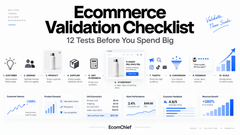

Free Online Business Calculators
Estimate costs, profits, ROI, affiliate earnings, and business value before you spend money.