
AffiliateSites
Dropshipping vs Affiliate Marketing: 2026 Entry Audit
Dropshipping gives you ecommerce control, while affiliate marketing gives you content-led commission income. This guide compares the risks, costs, workload, and best beginner path.

Bluf
Quick Answer: Dropshipping vs affiliate marketing comes down to risk, workload, margin control, and how you want to make money online. Dropshipping gives you more control over your store, pricing, branding, and customer experience, but it also brings supplier, shipping, refund, payment, and advertising responsibilities. Affiliate marketing is usually lighter operationally because you recommend products or services and earn commissions, but it depends heavily on traffic, content quality, click-through rate, and partner payouts. A ready-made online business for sale can help you skip the slow setup phase, but it does not guarantee sales, traffic, rankings, commissions, profit, or success.
Choosing between dropshipping and affiliate marketing is one of the most important beginner decisions in online business.
One model gives you a product-selling storefront. The other gives you a content and recommendation engine. Both can work. Both can fail. The difference is not hype. The difference is how much risk, setup work, traffic building, and daily operation you are prepared to handle.
If you are comparing readymade dropshipping for sale, an affiliate business for sale, an affiliate marketing business for sale, an Amazon affiliate business for sale, or other turnkey online business options, the smartest move is simple: understand what you are buying before you spend money.
At EcomChief, buyers can compare ready-made online businesses across multiple models, including ready-made dropshipping stores, affiliate businesses, Amazon businesses, digital agency websites, AI agency businesses, and ready-made apps.
Dropshipping vs Affiliate Marketing: The Simple Difference
Key Takeaway: Dropshipping is an ecommerce model; affiliate marketing is a traffic and recommendation model.
Dropshipping means you sell products through your own online store. The customer pays you, then the supplier or fulfillment partner ships the product to the customer.
Your work includes product research, pricing, supplier checks, store design, product pages, payment setup, traffic, customer support, refunds, and conversion optimization.
Affiliate marketing works differently. You create content, guides, reviews, comparison pages, or product recommendation pages. When someone clicks your affiliate link and buys through the partner site, you may earn a commission.
Your work includes content creation, SEO, product research, link placement, traffic building, tracking, and content updates.
The easiest way to compare them is this:
- Dropshipping: You control the storefront and customer journey, but you carry more operational responsibility.
- Affiliate marketing: You control the content and traffic, but the partner merchant controls checkout, fulfillment, and commission rules.
Quick Comparison: Dropshipping vs Affiliate Marketing
Key Takeaway: Dropshipping gives more ecommerce control, while affiliate marketing gives a lighter fulfillment model but depends more on content and traffic.
| Factor | Dropshipping | Affiliate Marketing |
|---|---|---|
| Main Model | Sell products through your own store | Recommend products or services and earn commissions |
| Best For | People who like ecommerce, products, ads, and conversion testing | People who like content, SEO, reviews, and comparison guides |
| Main Risk | Supplier issues, ad costs, refunds, shipping delays, thin margins | Low traffic, commission changes, weak content, broken links |
| Workload | More customer-facing work | More content and traffic work |
| Revenue Control | More control over pricing, offers, bundles, and checkout | Less control because commissions depend on partner rules |
| Beginner Fit | Good if you like active testing and store management | Good if you like writing, SEO, and helpful recommendations |
Which Model Is Better For Beginners?
Key Takeaway: Dropshipping is better for beginners who like ecommerce execution; affiliate marketing is better for beginners who like content and SEO.
There is no universal winner. The better model depends on your skill set.
Dropshipping may fit you if you like testing products, building stores, creating short-form ads, managing offers, and improving ecommerce conversion. It can move faster because you can launch traffic quickly, but it also demands strong margin control.
Affiliate marketing may fit you if you like writing, researching products, creating comparison guides, publishing helpful content, and building organic traffic. It may take longer to grow, but it can avoid many fulfillment headaches.
For beginners, affiliate marketing is often simpler operationally. Dropshipping is often more direct commercially. The smart move is choosing the model you can actually execute for 6 to 12 months, not the model that sounds easiest on YouTube.
Where The Risk Hides
Key Takeaway: Each model has a different risk profile, so you should audit the weak points before buying or building.
Operational risk is different across online business models. Dropshipping risk usually hides in suppliers, ad costs, margins, product quality, shipping times, payment fees, and refunds.
Affiliate marketing risk usually hides in search traffic, link accuracy, commission changes, content quality, Google updates, and whether visitors actually click your recommendations.
Here is the practical comparison:
- Dropshipping: More control, but more moving parts.
- Affiliate marketing: Less fulfillment stress, but more dependence on content and traffic.
- Amazon affiliate: Strong buyer trust, but commission and traffic numbers still matter.
- Amazon FBA: More physical operation, inventory planning, platform fees, and account risk.
- Digital agencies: No inventory, but client acquisition and fulfillment matter.
- Micro-SaaS and apps: Software-style leverage, but support, hosting, updates, and user acquisition still matter.
This is why EcomChief gives buyers multiple ready-made online business categories to compare instead of forcing every beginner into one model.

Startup Cost Comparison
Key Takeaway: Dropshipping often needs more testing and ad budget; affiliate marketing often needs more content and SEO effort.
Dropshipping startup costs can include Shopify billing, domain, apps, product samples, ad creatives, payment fees, supplier tools, and traffic testing.
Affiliate marketing startup costs can include domain, hosting or website setup, content, SEO tools, product research, affiliate link management, and regular content updates.
Neither model is free. The difference is where the money goes.
- Dropshipping spending usually goes into store operation, product testing, ads, and conversion.
- Affiliate spending usually goes into content, SEO, link structure, and traffic growth.
Before choosing either path, use the Online Business Startup Cost Calculator to estimate the real launch cost of different online business models.
Profit And Margin Comparison
Key Takeaway: Dropshipping profit depends on product margin; affiliate income depends on traffic, clicks, buying rate, average order value, and commission percentage.
Dropshipping profit is calculated after subtracting product cost, shipping, payment fees, refunds, apps, and ad spend.
That means a product can generate sales and still lose money if your margins are too thin or your ads cost too much.
Affiliate income works differently. Your income depends on how many visitors you attract, how many click your affiliate links, how many buy, average order value, and commission rate.
Affiliate Earnings = Visitors × Click Rate × Buying Rate × Average Order Value × Commission Rate
For dropshipping, use the Dropshipping Profit Calculator before running ads. For Amazon affiliate-style assets, use the Amazon Affiliate Earnings Calculator before setting income expectations.
Traffic Strategy Comparison
Key Takeaway: Dropshipping often relies on active traffic testing, while affiliate marketing often relies on search, content, and long-term buyer intent.
Traffic is the engine for both models. A store with no traffic does not sell. An affiliate website with no traffic does not earn commissions.
Dropshipping traffic usually comes from:
- Meta ads
- TikTok ads
- Google Shopping
- Influencer outreach
- Short-form product videos
- Email campaigns
- SEO blog content
Affiliate marketing traffic usually comes from:
- Google SEO
- Product reviews
- Comparison articles
- Buying guides
- YouTube reviews
- Email newsletters
Dropshipping can give faster feedback because you can send paid traffic quickly. Affiliate marketing can take longer, but strong content can keep working over time if it stays fresh and useful.
Operational Workload Comparison
Key Takeaway: Dropshipping usually has more customer-facing work; affiliate marketing usually has more content and traffic work.
Dropshipping owners must think like ecommerce operators. You are responsible for the store experience.
That may include:
- Product pricing
- Shipping expectations
- Customer questions
- Refunds and complaints
- Supplier quality
- Checkout testing
- Ad performance
- Product page conversion
Affiliate marketers must think like media operators. You are responsible for useful content and qualified clicks.
That may include:
- Keyword research
- Product comparisons
- Buying guides
- Content updates
- Affiliate link testing
- Tracking clicks
- Improving calls-to-action
- Building topical authority
If you hate customer support, affiliate marketing may feel cleaner. If you hate writing content, dropshipping may fit better.

Build From Scratch vs Buy Ready-Made
Key Takeaway: Building from scratch gives control, but buying ready-made helps reduce setup delays and technical friction.
Building from scratch sounds cheaper until you count the time, tools, mistakes, and delays.
For dropshipping, building manually can mean choosing a theme, formatting product pages, installing apps, writing policies, testing checkout, fixing mobile issues, and setting up tracking.
For affiliate marketing, building manually can mean domain setup, hosting, page design, content architecture, affiliate link setup, comparison table formatting, SEO structure, and analytics.
A ready-made online business for sale gives you a faster foundation. That does not mean automatic revenue. It means you can move faster into the work that matters: traffic, content, testing, trust, and conversion.
You can compare EcomChief’s ready-made ecommerce and dropshipping stores or browse the EcomChief affiliate business marketplace if you prefer content-led monetization.
For a deeper affiliate-specific comparison, read Buying an Affiliate Marketing Business vs Starting From Scratch.
Dropshipping: When It Makes Sense
Key Takeaway: Dropshipping makes sense when you want direct ecommerce control and are willing to manage the customer journey.
Dropshipping may be the better model if you want to control the offer, pricing, brand feel, product page, checkout flow, and customer journey.
It may fit you if:
- You like ecommerce and product testing.
- You are comfortable running ads or product videos.
- You can handle customer questions.
- You want control over pricing and bundles.
- You understand that revenue is not profit.
- You can review suppliers and shipping expectations.
For example, the Outdoor Camping Dropshipping Store gives buyers a niche-focused ecommerce foundation around outdoor gear, camping products, and adventure buyers.
A dropshipping store is not a shortcut around marketing. It is a faster starting point for ecommerce execution.
Affiliate Marketing: When It Makes Sense
Key Takeaway: Affiliate marketing makes sense when you prefer content, SEO, product recommendations, and lower fulfillment responsibility.
Affiliate marketing may be the better model if you prefer content and traffic over customer support and supplier management.
It may fit you if:
- You enjoy writing or publishing helpful content.
- You like product research and comparisons.
- You want lower fulfillment responsibility.
- You are willing to learn SEO.
- You can update content over time.
- You understand that commissions depend on traffic and clicks.
For example, the EV Cars Affiliate Business gives buyers a niche affiliate foundation around electric vehicles, product recommendations, and content-led monetization.
An affiliate website gives you a recommendation engine. Your growth comes from content quality, search visibility, trust, and click-through rate.
Amazon Affiliate And Amazon Business Options
Key Takeaway: Amazon affiliate businesses can reduce fulfillment work, but they still require traffic, content, and commission planning.
Many beginners compare affiliate marketing with Amazon businesses for sale because Amazon already has strong buyer trust.
An Amazon affiliate business for sale is usually content-led. Visitors click your product links and buy on Amazon. Amazon handles checkout, fulfillment, returns, and customer service.
An Amazon FBA business for sale is different. It may involve inventory, storage fees, seller account management, PPC, product listings, supplier terms, and account health.
Before buying an Amazon business for sale, always confirm the model. Is it affiliate? Is it FBA? Is inventory included? Do you need your own Amazon account? What exactly transfers?
You can compare available options in EcomChief’s Amazon businesses for sale collection.
The model name matters less than the operating reality.
What About Digital Agencies, AI Agencies, And SaaS?
Key Takeaway: Dropshipping and affiliate marketing are not the only options; service and software-style assets may fit different buyers.
If neither model feels right, compare other ready-made business paths.
A ready made digital agency website may fit you if you prefer B2B services, outreach, discovery calls, retainers, and client fulfillment.
An AI agency business for sale may fit you if you want to sell automation services, chatbots, workflow systems, or business process improvements. But clients still come from outreach, proof, follow-up, and delivery.
No-code SaaS starter kits and Micro-SaaS assets may fit buyers who want software-style leverage, but they still require user acquisition, support, onboarding, and updates.
The right choice is not the trendiest model. It is the model you can operate consistently.
Audit Protocol Before You Choose
Key Takeaway: Before buying or building, audit the setup, traffic plan, costs, handover, and post-purchase work.
Use a simple due diligence checklist before choosing dropshipping or affiliate marketing.
For dropshipping, check:
- What platform is the store built on?
- Are products already uploaded?
- Are suppliers included or recommended?
- Is the domain included?
- Do you need to connect payment gateways yourself?
- What are the monthly running costs?
- Does the store come with traffic or revenue?
- What support is included?
For affiliate marketing, check:
- What niche is the site built around?
- What affiliate programs are used?
- Are links already added or do you connect your own?
- Does the site have traffic?
- Are commissions proven or only projected?
- What content needs to be published next?
- Can you update links and pages easily?
- What monthly costs remain?
For deeper buyer due diligence, read 150 Online Business Buyer Questions Answered and the Ready-Made Online Business FAQ.

Red Flags Beginners Should Avoid
Key Takeaway: Avoid sellers who promise guaranteed sales, guaranteed traffic, or effortless passive income.
Beginner buyers should be careful with any seller that makes the business sound automatic.
Watch for these red flags:
- Guaranteed profit claims
- Guaranteed traffic claims
- Guaranteed sales claims
- No clear explanation of what is included
- No handover process
- No supplier clarity for dropshipping
- No affiliate program clarity for affiliate sites
- No explanation of monthly costs
- No support details
- Pressure to buy without due diligence
A good seller should explain the foundation clearly and set realistic expectations. You are not buying guaranteed income. You are buying a starting structure.
Use Tools Before Spending Money
Key Takeaway: Calculators help you estimate startup cost, profit, commissions, ROI, and business value before committing capital.
Guessing is expensive. Use simple tools before buying, building, or running ads.
EcomChief’s Free Online Business Calculators & Tools page includes beginner-friendly calculators for website cost, dropshipping profit, startup cost, affiliate earnings, marketing ROI, and online business valuation.
Use the Online Business Startup Cost Calculator if you are comparing multiple models. Use the Dropshipping Profit Calculator if you are choosing ecommerce. Use the Amazon Affiliate Earnings Calculator if you are choosing Amazon affiliate-style monetization.
These tools are planning estimates only. They do not guarantee sales, traffic, rankings, commissions, ROAS, profit, valuation, or business success.
Recommended Video
Key Takeaway: This video supports the article by comparing the revenue models, inventory responsibilities, and beginner workload behind dropshipping and affiliate marketing.
Recommended video: Dropshipping Vs Affiliate Marketing - Which Is Better For Beginners?
This video fits the topic because first-time operators need to choose the digital infrastructure that matches their budget, workload, and execution capacity.
FAQs
Key Takeaway: These quick answers help beginners compare dropshipping and affiliate marketing before choosing a business model.
Is dropshipping better than affiliate marketing?
Dropshipping can be better if you want more control over pricing, branding, product pages, offers, and the customer journey. Affiliate marketing can be better if you prefer content, SEO, product recommendations, and lower fulfillment responsibility.
Which is easier for beginners?
Affiliate marketing is usually easier operationally because you do not normally handle shipping, supplier issues, refunds, or customer delivery. Dropshipping can be faster to test with paid traffic, but it brings more customer-facing work.
Which model has lower risk?
Affiliate marketing usually has lower fulfillment risk because the partner merchant handles checkout and delivery. Dropshipping can have higher operational risk because supplier quality, shipping times, refunds, payment fees, and ad costs directly affect your results.
Can I do both dropshipping and affiliate marketing?
Yes. Some operators run a dropshipping store and also publish affiliate-style content. However, beginners should usually focus on one model first so they can learn traffic, conversion, and operations without getting overwhelmed.
Should I buy a ready-made dropshipping store or affiliate business?
Buy a ready-made dropshipping store if you want ecommerce control and product testing. Buy a ready-made affiliate business if you prefer content, SEO, and commission-based monetization. In both cases, the asset gives you a foundation, not guaranteed income.
The Bottom Line
Key Takeaway: Dropshipping gives you ecommerce control; affiliate marketing gives you content-led monetization. Choose based on your strengths, not hype.
Dropshipping vs affiliate marketing is not about which model is magically better. It is about which model fits your budget, risk tolerance, skills, and daily work style.
Dropshipping can be better if you want direct product sales, pricing control, brand ownership, and active ecommerce testing. Affiliate marketing can be better if you want lower fulfillment responsibility and prefer content, SEO, recommendations, and commissions.
A ready-made online business for sale can help you skip the slow technical setup phase and start faster. But no honest seller can guarantee sales, traffic, profit, rankings, commissions, or success.
The smartest buyer chooses the clearest foundation, understands the costs, checks the risks, and then executes with discipline.
Choose The Model That Fits Your Execution Style
Key Takeaway: Pick the business model you can actually operate, then use a ready-made foundation to move faster.
Skip the blank-page phase. Compare dropshipping stores, affiliate websites, Amazon-style businesses, agencies, and apps before building everything from scratch.
Helpful EcomChief Resources
Key Takeaway: These resources help you compare dropshipping, affiliate marketing, Amazon-style businesses, agencies, and turnkey online business models before spending money.
Here are useful links to continue your research:
- Browse ready-made ecommerce and dropshipping stores
- Browse affiliate businesses for sale
- Browse Amazon businesses for sale
- View the Outdoor Camping Dropshipping Store
- View the EV Cars Affiliate Business
- Browse ready-made digital agency websites
- View the AI Agency Business For Sale
- Browse ready-made apps and SaaS-style assets
- Explore all free online business calculators
- Use the Online Business Startup Cost Calculator
- Use the Dropshipping Profit Calculator
- Use the Amazon Affiliate Earnings Calculator
- Read 150 Online Business Buyer Questions Answered
- Read the Ready-Made Online Business FAQ
- Visit the EcomChief Help Center
- Read Buying an Affiliate Marketing Business vs Starting From Scratch
- Read Turnkey Dropshipping vs Starting From Scratch
- Read How to Calculate Dropshipping Profit Before Running Ads
Do not choose the model with the loudest promise. Choose the model you can fund, understand, operate, and grow with consistency.
Related reading
All articles

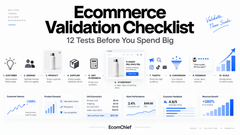
Free Online Business Calculators
Estimate costs, profits, ROI, affiliate earnings, and business value before you spend money.