

CoffeeDropshipping
Coffee Dropshipping in 2026: Lessons From Starbucks' Holiday Launch
Starbucks' 2026 holiday launch sparked major search interest. Discover seasonal coffee ecommerce lessons for independent store owners.
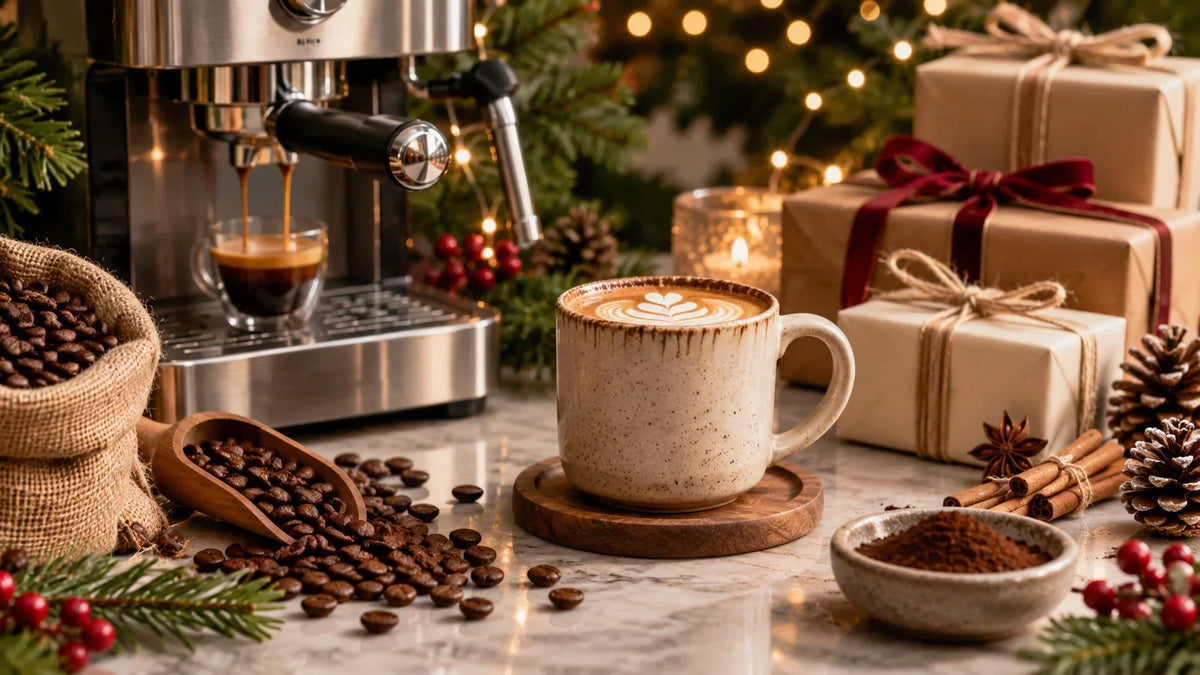
Starbucks officially announced its 2026 US holiday menu on November 4, ahead of its November 5 launch. New and returning drinks, festive cups, coffee products and merchandise created a recognizable seasonal moment. A November 8 US Google Trends export supplied for this article placed the broad search term “starbucks” in a 200K+ seven-day search-volume bucket. That is branded consumer interest—not 200,000 prospective customers for an independent coffee shop, and certainly not evidence of demand for coffee dropshipping businesses.
Still, the launch offers a useful case study for entrepreneurs evaluating coffee dropshipping. Seasonal merchandising can make ordinary products feel timely; gifting can introduce a new audience; and well-planned email campaigns can turn an occasional visitor into a repeat customer. Independent sellers should borrow the underlying principles rather than copy a multinational brand’s imagery, names or products.
Source: Starbucks’ official November 4, 2026 announcement.
What Starbucks’ Holiday Launch Reveals About Seasonal Marketing
The holiday launch combines several different motivations to buy. Returning favorites reward familiar customers; new flavors give curious shoppers a reason to investigate; limited-time presentation creates a calendar-based reason to act; and attractive merchandise makes the brand relevant to gifting. Starbucks’ official announcement includes new Tiramisu Velvet beverages, returning seasonal favorites, holiday cup designs and merchandise.
These elements reinforce each other. A seasonal product is easier to talk about when it arrives with a clear date, recognizable theme, photographic identity and giftable companion items. Small merchants can create a similar sequence—preview, launch, gift guide, reminder and post-holiday follow-up—without pretending they possess Starbucks’ marketing budget or loyal audience.
There is an important limitation: mass-market interest may come from existing brand recognition. An independent coffee ecommerce store must earn attention through search visibility, community, distinctive products or paid acquisition. A holiday design alone does not create distribution.
What Is a Coffee Dropshipping Business?
In a coffee dropshipping business, an ecommerce merchant markets products online while a third-party supplier normally stores, prepares and ships orders. Products might include roasted coffee, brewing accessories, mugs or seasonal gift items. Depending on the arrangement, a private-label roaster may supply coffee in merchant-branded packaging. These are different supply arrangements and should not be treated as interchangeable.
The merchant still owns the customer relationship: product descriptions, checkout, payment disputes, customer service, advertising, returns, subscription representations and applicable legal duties. Supplier fulfillment reduces inventory handling, not accountability. Coffee adds special concerns around product quality, packaging, freshness and delivery time.
The strongest stores solve a specific customer problem—for example, approachable gifts for new home brewers, compact equipment for apartment dwellers, or educational products for people exploring specialty coffee. A broad catalogue without a clear audience can be harder to market than a tightly curated offer.
Five Coffee Ecommerce Niches Worth Researching
1. Specialty Coffee Beans
Customer: home brewers who value origin, roast preference and flavor. Holiday opportunity: tasting flights and gift subscriptions. Repeat purchases are plausible because coffee is consumed, but retention depends on quality. Request roast schedule, packaging samples, origin documentation and shipping tests. Competition is intense; differentiate through education and clear tasting information instead of unverified superlatives.
2. Brewing Tools and Accessories
Customer: beginners upgrading a routine or enthusiasts replacing equipment. Holiday opportunity: starter sets with filters, scales or hand brewers. Repeat ordering may be lower than for beans, although consumables can create add-on purchases. Verify product safety, dimensions, spare parts, compatibility, breakage rates and warranty handling. Demonstration videos can be a credible differentiator.
3. Coffee Mugs and Drinkware
Customer: gift shoppers, office workers and design-conscious drinkers. Holiday opportunity: limited seasonal colors or personalized gifts where licensed and technically supported. Repeat purchases are uncertain. Heavy or fragile items make shipping protection and returns central to margins. Compete with original designs, distinctive materials or customization—not copied branded cups.
4. Coffee Gift Sets
Customer: friends, families and corporate buyers seeking an easy present. Holiday opportunity: clear price-tiered bundles with an obvious recipient and occasion. Supplier coordination is critical: verify whether all items can ship together, who assembles the set and whether packaging survives transit. Gift-set buyers may not reorder, so capture permission for thoughtful follow-up rather than assuming retention.
5. Home Coffee Brewing Essentials
Customer: new home brewers who want a complete system. Holiday opportunity: beginner kits supported by an instruction guide. Filter paper, cleaning products or other replacements may generate follow-on sales. Check product compatibility and claims carefully. Positioning around simplicity can help separate the assortment from generic multi-category retailers.
| Niche | Repeat-purchase outlook | Main operational risk | Differentiation angle |
|---|---|---|---|
| Coffee beans | Potentially recurring | Freshness and consistency | Tasting education |
| Brewing tools | Occasional | Quality and compatibility | Demonstrations |
| Mugs | Infrequent | Breakage and shipping | Original design |
| Gift sets | Seasonal | Bundle assembly | Convenient gifting |
| Home-brewing essentials | Mixed | Product fit | Beginner guidance |
How Small Coffee Brands Can Apply Seasonal Merchandising
Start with customer intent, not a holiday color palette. Someone shopping for a gift needs clear delivery expectations and an easy choice. Someone buying their usual beans wants availability, quality and a familiar experience. Create separate paths for those customers.
- Offer a limited-time collection: group genuinely available products into a concise seasonal catalogue; never invent scarcity.
- Build useful bundles: combine a mug, brewer and appropriate coffee where supplier logistics support it. Explain savings only when the comparison is accurate.
- Use original packaging: festive labels, tissue and inserts can make a shipment giftable without imitating protected cup designs.
- Publish a gift guide: organize by recipient, budget and skill level instead of displaying every product.
- Educate: show grind-size guides, recipe suggestions, equipment comparisons and how to choose a roast.
- Reactivate with permission: email previous buyers useful seasonal recommendations, accounting for consent and unsubscribe requirements.
- Explain delivery cutoffs: display supplier-backed deadlines rather than guaranteeing Christmas arrival without evidence.
A transparent promotion beats an aggressive countdown timer disconnected from stock or deadlines. Measure whether the bundle increases contribution profit, not just the nominal order value.

Seasonal Products Versus Year-Round Coffee Demand
Holiday gift buyers, everyday coffee drinkers, home-equipment shoppers and merchandise collectors often behave differently. A gift buyer might arrive once from a search result. A bean customer may return if the coffee is good and delivery is dependable. Equipment buyers can spend more per transaction but wait much longer before another purchase.
A sensible store combines dependable, year-round products with a restrained seasonal selection. For example, keep three core coffee options and a small brewing-accessory range, then add a holiday gift page that rearranges existing stock into more convenient purchases. That avoids being left with unsold specialty packaging or a storefront that feels irrelevant in January.
Seasonality should inform inventory and marketing plans, not replace customer research. For searches, examine non-branded terms such as coffee gift set, pour-over starter kit or coffee subscription gift. Check conversion intent separately: searches for a famous coffee brand’s menu do not imply customers want an unrelated store.
Is Coffee Dropshipping Profitable?
It can produce a positive contribution per order, but profitability is not guaranteed. The price charged is not the profit retained. For any prospective product, model the full unit economics before spending on advertising.
| Illustrative order economics | Hypothetical USD |
|---|---|
| Retail sale | $45.00 |
| Product cost | −$17.00 |
| Fulfillment and shipping | −$8.00 |
| Payment processing | −$1.70 |
| Refund/replacement allowance | −$1.80 |
| Customer acquisition cost | −$12.00 |
| Contribution profit | $4.50 |
This is a mathematical illustration, not a benchmark or forecast for any EcomChief product. It excludes fixed subscriptions, software costs, labor and taxes. If acquisition costs rise from $12 to $18, this illustrative order loses $1.50 before overhead. Conversely, credible repeat orders may make acquisition economics more attractive—but only when actual retention and repeat margins support that view.
Coffee freshness, packaging quality, supplier consistency, shipping charges and refunds directly influence realized profit. Calculate contribution by SKU and channel, not just blended gross margin. Use small advertising experiments and stop promoting products that cannot cover the fully loaded variable costs.
Supplier and Compliance Considerations
Before accepting orders, obtain product samples and current fulfillment terms. Confirm the actual roast date or production cycle; supported origin and ingredient descriptions; required food labeling for the target market; packaging integrity; and realistic dispatch windows. Test whether bulky or fragile accessories arrive intact. Ask who pays for lost packages, product complaints and returns, and whether appropriate product-liability arrangements exist.
Where subscriptions are offered, verify billing consent, renewal pricing, delivery frequency and a workable cancellation process. Do not claim certifications or regulatory compliance simply because a supplier profile displays a badge. For a deeper operational checklist, read EcomChief’s existing private-label coffee freshness, labeling and subscription guide; this article focuses on marketing decisions rather than repeating that checklist.
How to Build a Coffee Ecommerce Marketing Strategy: A 30-Day Plan
Week 1: Validate the Audience and Fulfillment
Interview prospective buyers or study relevant customer questions. Choose one buyer segment and a specific proposition, then compare at least two suppliers or fulfillment options where practical. Order samples. Build an itemized unit-economics sheet that includes shipping and returns. A go/no-go decision should turn on product quality, reliable fulfillment and a credible contribution margin—not hypothetical search volume.
Week 2: Build a Focused Seasonal Collection
Prepare five to ten accurately described products, a gift-oriented collection, clear shipping information and original photography. Test checkout, mobile navigation, tracking emails and customer support contact options. A gift bundle should be listed only after the supplier confirms all components can be fulfilled as advertised.
Week 3: Create Educational Content and Retention Assets
Publish a gift guide, a simple brewing tutorial and a buyer comparison. Write a short welcome email, an abandoned-checkout sequence where lawful, and a post-purchase care message. Use social examples or creator partnerships only when product experience and rights are clear. Capture email subscriptions voluntarily rather than buying unverified contact lists.
Week 4: Measure and Decide
Review qualified traffic, product-page engagement, add-to-cart behavior, completed orders, average order value, refund signals and contribution profit. If visits are irrelevant, change acquisition targeting. If people add to cart but abandon checkout, inspect delivery price, trust and friction. If there are no economically viable orders, adjust the offer before increasing ad spend. Set the next test budget from what you can afford to lose, not an assumed conversion benchmark.
Build a Coffee Store or Buy a Ready-Made Shopify Business?
| Path | What you acquire | Primary trade-off |
|---|---|---|
| Build from scratch | A storefront you create and configure | Greater control but more setup work |
| Buy a prebuilt store | An existing website foundation and defined deliverables | Faster technical setup does not establish demand |
| Acquire a trading business | An operation that may have customers, suppliers and financial records | Higher diligence burden; verify revenue, profit and transferable assets |
A ready-made coffee Shopify store may be sensible for a buyer who values a prepared design and product structure. It should not be valued as an established cash-generating company unless independently documented sales history exists. Whatever the route, the owner must configure payments, verify supply arrangements, market the offer and handle customers.
How EcomChief Can Help
EcomChief lists a ready-made specialty coffee Shopify business with a storefront, domain and product-oriented package described on its product page. When checked on November 8, 2026, both package options displayed Sold out; the listing therefore should be treated as an example of the ready-made approach, not an immediately purchasable offer. Check the page for any change and verify all current inclusions before ordering.
Prospective buyers can explore the broader EcomChief ecommerce businesses collection, review what is included in a purchase, and read how the handover process works. A separate Amazon coffee business listing illustrates another potential channel; that listing also showed Sold out at the time of review. Validate the exact Amazon model and participation requirements rather than assuming its title establishes an operational FBA or affiliate setup.
Frequently Asked Questions
Can I start coffee dropshipping without inventory?
Potentially. A qualified supplier can prepare and ship orders on your behalf, while you manage customer-facing commerce. You still need to confirm the specific stock, processing, payment and return arrangements.
Is private-label coffee required?
No. A coffee ecommerce business can sell permitted branded coffee, private-label products or non-food accessories. Rights and supplier conditions differ, so verify them before listing products.
Are holiday coffee bundles a good idea?
They can make gifting easier when products fit together and shipping costs are controlled. Test whether a bundle improves contribution profit after assembly, packaging, customer acquisition and refunds.
What are the startup costs?
They vary with the storefront, domain, software, samples, supplier fees, product costs, marketing and customer service. Use a line-item budget with a contingency allowance rather than treating a low website purchase price as the entire startup cost.
Should I buy a ready-made coffee Shopify store?
Consider it if you want to reduce technical setup and the documented deliverables match your needs. Verify availability, ownership transfer, product rights, supplier obligations and ongoing expenses. Buying a prepared store does not buy guaranteed traffic or sales.
Can the Starbucks trend predict sales for my coffee store?
No. The supplied 200K+ figure measures the broad branded Starbucks trend over seven days. It does not establish demand for independent coffee retailers, online stores or a specific product. Validate non-branded commercial search intent and your own customer response.
Conclusion: Build a Seasonal Offer That Fits Your Customers
Starbucks’ November 2026 holiday launch demonstrates how a coordinated calendar, distinctive products, familiar favorites and giftable presentation can capture attention. Independent coffee businesses can adapt the mechanics: select a clear audience, create genuinely helpful seasonal offers, prove fulfillment, tell an original brand story and measure contribution profit.
The objective is not to imitate Starbucks. It is to offer a compelling reason for a particular customer to buy from an independent store. If you are evaluating a prepared launch foundation, browse EcomChief’s current ecommerce store collection and assess the available packages against your budget and operational plan.
Related reading
All articles


Free Online Business Calculators
Estimate costs, profits, ROI, affiliate earnings, and business value before you spend money.